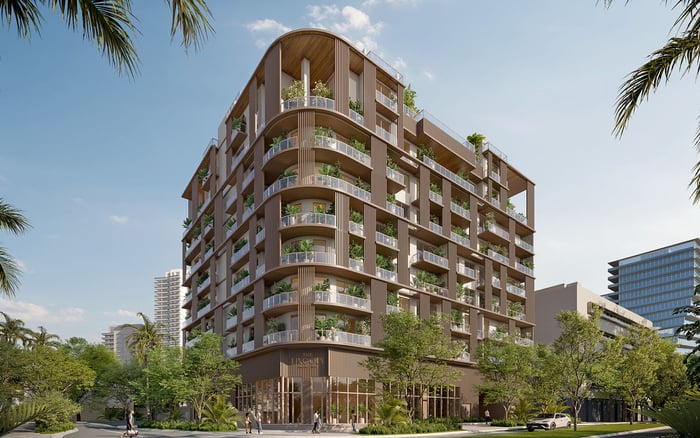
A disciplined Vita at Grove Isle walkthrough should test the residence, waterfront envelope, arrival sequence, building operations, amenities, fees, and correction process before closing.

At Vita at Grove Isle, the most persuasive attributes are immediately apparent: a private-island setting in Coconut Grove, expansive residences, and an amenity program oriented toward Biscayne Bay. Yet the decisive walkthrough questions begin where the visual presentation ends.
Developed by Ugo Colombo’s CMC Group, the seven-story, curved condominium includes three- and four-bedroom residences spanning approximately 2,500 to 6,500 square feet, along with 12 penthouses. Scale introduces its own due diligence. A rigorous inspection should determine whether the home, building, and island function as elegantly as they appear. That means treating a new-construction walkthrough as a live test rather than a ceremonial preview.
Drive the complete arrival sequence as an owner, then repeat it as a guest. Observe the gatehouse procedure, road condition, landscaping, porte-cochère, valet handoff, lobby access, and elevator journey. Note where identities are checked, how visitors are cleared, and whether the residence entry remains private as staff, deliveries, or guests move through the building.
Time the elevator wait and ask whether resident, employee, delivery, and service circulation are separated. A graceful lobby cannot compensate for recurring congestion or an awkward package route. Buyers comparing other Coconut Grove addresses, including Four Seasons Residences Coconut Grove, can apply the same door-to-door test rather than compare presentation spaces alone.
Large-format rooms should be assessed against actual routines. Walk the path from the entry to the kitchen, bedrooms, terraces, and service areas. Check hallway widths, furniture clearances, closet capacity, and whether doors conflict when opened together. In the laundry area, consider appliance access, folding space, ventilation, and the route used for linens.
Seasonal owners should account for luggage, provisioning, package storage, and preparing the residence after an absence. Full-time households should consider daily privacy, staff movement, and storage at peak occupancy. If entertaining matters, trace how guests reach the principal living area and powder room without crossing private bedroom zones. A buyer also considering Park Grove Coconut Grove should repeat the exercise using the same household scenarios, making the comparison functional rather than purely aesthetic.
Salt air, humidity, and direct exposure make windows, sliding doors, and terraces priority inspection points. Open, close, and lock every operable panel. Look for resistance, misalignment, damaged seals, and perceptible drafts. Check the interior perimeter around openings for discoloration, swelling, or other visible indications that warrant closer professional review.
At each terrace, inspect the doorsill transition, surface slope, drains, railings, and adjacent walls. Water should have a clear drainage path, without obvious low points that could encourage ponding. The transition should also feel safe and practical for everyday movement.
Then assess acoustics. Close bedroom and living-area doors and listen for activity from the pool, lounge, marina, elevators, and service routes. Repeat the exercise at another time of day when possible. Pool use, boating activity, traffic, elevator demand, mechanical sound, privacy, and exterior lighting may present differently later in the day.
Do not assume an installed item satisfies the purchase agreement. Compare appliances, built-ins, smart-home functions, and mechanical components line by line with the contract specifications. Record model information where relevant and flag substitutions or omissions for clarification.
Operate HVAC controls, exhaust fans, appliances, outlets, switches, faucets, drains, and toilets. Confirm hot-water delivery and note how quickly sinks and showers drain. Test lighting scenes and controls rather than merely switching fixtures on. The objective is not only to identify failures, but also to uncover slow responses, weak performance, unusual noise, or unintuitive controls.
A licensed inspector experienced with coastal condominiums can bring technical scrutiny to the envelope, moisture conditions, electrical systems, plumbing, HVAC, and terraces. Design pedigree remains valuable, but it does not replace independent judgment about alignment, transitions, and performance.
Vita’s recreational program includes a bayfront pool, Jacuzzi, cabanas, and a residents’ lounge. Walk the route from the residence to each space. Consider convenience, access controls, and whether proximity creates a privacy or noise trade-off. Do the same for tennis, padel, and pickleball, then establish whether access accompanies ownership or depends on club membership, reservations, or separate charges.
For the private marina and its deep-water slips, request written answers on availability, assignment, vessel limits, guest access, and fees. A slip should never be treated as included merely because the marina is part of the broader offering.
Concierge service also warrants operational questions: hours, staffing coverage, guest procedures, package handling, and paid add-ons. Owners who entertain should test the full visitor experience, including security clearance, parking, elevator access, and amenity permissions. This service audit is equally relevant for buyers studying Mr. C Tigertail Coconut Grove or another hospitality-minded residence.
Document every defect by room and exact location, supported by dated photographs. Distinguish cosmetic corrections from operational or moisture-related concerns, then reconcile the complete record against the contract and the developer’s correction process before closing.
Review association charges, club dues, marina costs, valet fees, amenity reservation charges, and optional services line by line. Confirm current terms in the governing documents rather than rely on the experience implied by marketing materials. The strongest walkthrough concludes with a written record, assigned responsibility, and a clear method for verifying completed corrections.
What should a Vita walkthrough inspect first? Begin with the full arrival route from the gatehouse to the residence entry, including security, valet, lobby, and elevator access.
Why test a large residence’s circulation? Generous square footage does not guarantee efficient movement, privacy, storage, or service access for a household’s routines.
Which terrace details deserve attention? Inspect doorsills, surface slope, drains, railings, waterproofing transitions, and nearby interior walls for visible concerns.
Should every window and sliding door be operated? Yes. Test movement, alignment, locks, seals, and drafts in light of the humid, salt-air setting.
How should buyers evaluate sound? Listen with interior doors closed and revisit at another time to compare amenity, marina, elevator, and mechanical activity.
What systems should be tested inside the residence? Operate HVAC, ventilation, appliances, outlets, switches, plumbing fixtures, drains, toilets, and hot-water delivery.
Is an installed appliance automatically contract compliant? No. Compare each appliance, built-in, smart-home feature, and mechanical component with the executed specifications.
What marina questions matter most? Confirm slip availability, assignment rules, vessel restrictions, guest access, and all separate charges in writing.
Which service costs require review? Examine association charges, club dues, valet costs, reservation charges, marina fees, and optional concierge add-ons.
How should defects be recorded before closing? Log each issue by room and precise location with dated photographs, then follow the contractual correction process.
For a confidential assessment and a building-by-building shortlist, connect with MILLION.
If branded residences are on your mind — as a home or as an allocation — we would be glad to share what we are seeing, privately.
Begin a quiet conversation