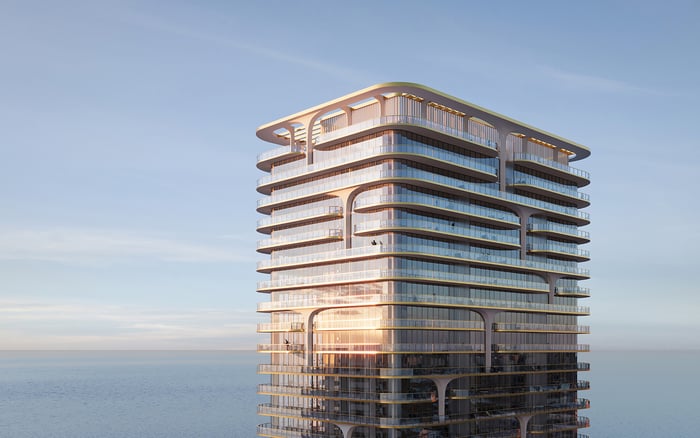
A buyer-focused framework for examining storm resilience at two South Florida developments, emphasizing building-envelope documentation, critical-equipment elevations, emergency-power coverage, fuel planning and post-storm operability.

For buyers comparing Cipriani Residences Brickell with W Pompano Beach Hotel & Residences, storm readiness deserves the same scrutiny as views, service and interior finishes. The decisive question is not simply whether a tower meets applicable requirements, but how its envelope, mechanical infrastructure and emergency-power system are designed to work together if utilities are interrupted and exterior conditions remain difficult.
Broad references to impact-resistant glazing or backup power do not establish the scope of protection. Buyers need to identify the tested exterior assemblies, the location of critical equipment, the loads connected to emergency power and the assumptions behind projected runtime.
The most useful approach is document-led: determine what is protected, where it is located and how the relevant systems are intended to operate.
At Cipriani Residences Brickell, buyers should request project-specific records for the exterior envelope, wind design, mechanical systems and emergency-power infrastructure. Marketing descriptions cannot replace approved product records, signed plans or permit drawings.
For each exterior window, sliding door and other exterior opening, diligence should identify the applicable approval, tested assembly and design criteria. The review should also confirm whether the installed configuration matches the specified system.
Equipment placement requires equal attention. Plans should show the generator, switchgear, fuel system, pumps, electrical rooms, garage entries and loading areas, together with their relevant elevations. A building's overall height or site profile does not answer where these components are located.
The same document-led review can help buyers compare another Brickell option, The Residences at 1428 Brickell. The objective is not to infer resilience from architecture or tower height, but to compare verified systems and operating plans.
At W Pompano Beach Hotel & Residences, buyers should request project-specific drawings identifying the locations and elevations of the lobby, garage entrances, generator, electrical rooms, pumps and fuel infrastructure. They should also confirm the standards used to establish those elevations.
The hotel and residential components make the emergency-power review especially important. Buyers should distinguish power allocated to life-safety functions from power serving residential elevators, access systems, communications, cooling, refrigeration or other owner priorities. A shared hospitality operation does not by itself define household-level continuity.
These questions are also relevant when evaluating The Ritz-Carlton Residences® Pompano Beach. Project-specific documentation is necessary because branding, location and amenity programs do not establish the elevation of critical systems or the extent of backup-power coverage.
A project-specific emergency load schedule should identify the elevators, pumps, lighting, access-control systems, communications equipment, HVAC components and residential circuits connected to backup power. Single-line electrical diagrams can help an engineer understand how generation and distribution are configured.
Fuel planning deserves separate scrutiny. Buyers should ask for the fuel type, onsite storage details, projected runtime assumptions and post-storm refueling plan. Any runtime representation should be reviewed alongside the loads assumed to be operating.
Envelope diligence should include the approvals and specifications for exterior assemblies. Elevation diligence should include signed plans or permit drawings showing finished floors, openings and critical equipment. Operational diligence should address staffing, system testing, communications and restart procedures.
Counsel, an engineer and an insurance adviser can then evaluate the residence as an integrated asset rather than a collection of isolated specifications.
The comparison should use the same categories for both developments: envelope documentation, critical-equipment placement, emergency loads, fuel planning and post-storm operating procedures. Applying a consistent framework makes differences easier to identify without reducing either property to an unsupported conclusion about relative safety.
Buyers should ask whether critical systems are intended to remain accessible and functional, which residential services receive emergency power and what assumptions support the operating plan. Written records are more useful than generalized assurances.
The luxury proposition includes continuity of access, circulation, communications and essential building operations. Precision on these subjects is part of protecting an aspirational purchase.
What is the first resilience document a buyer should request? Start with the project's approved plans and permit drawings, then match them to envelope, mechanical and electrical records.
Why is general impact-glass language insufficient? It does not identify the approved assembly, tested configuration or design criteria applicable to each exterior opening.
Which critical-equipment locations should be confirmed? Confirm the locations and relevant elevations of generators, switchgear, fuel systems, pumps and electrical rooms.
What should an emergency load schedule show? It should identify the specific elevators, pumps, lighting, access controls, communications equipment, HVAC components and residential circuits connected to backup power.
Does backup generation necessarily power residential cooling or refrigeration? Not necessarily. Buyers should verify covered residential loads in the project-specific load schedule and electrical diagrams.
Why should hotel and residential power coverage be reviewed separately? Life-safety and hotel-operational loads may differ from the systems individual residents expect to use after an outage.
Which fuel details matter during diligence? Ask about fuel type, onsite storage, projected runtime assumptions and the plan for post-storm refueling.
Can site or tower characteristics establish equipment resilience? No. Project-specific plans are needed to verify the placement and protection of critical infrastructure.
Who should review the technical records? Buyers can ask qualified counsel, engineers and insurance advisers to assess the documents within their respective areas of expertise.
How should Cipriani and W Pompano Beach be compared? Apply the same framework to both: envelope approvals, equipment elevations, emergency loads, fuel planning and operating procedures.
For a discreet conversation and a curated building-by-building shortlist, connect with MILLION.
If branded residences are on your mind — as a home or as an allocation — we would be glad to share what we are seeing, privately.
Begin a quiet conversation