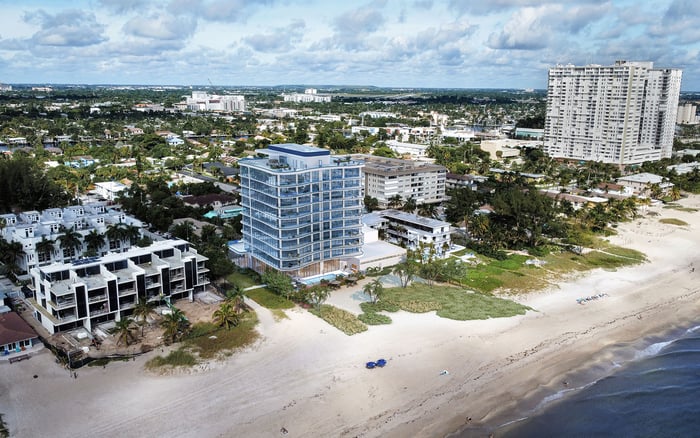
A buyer-focused framework for comparing circulation, public areas, guest access, and residence-owner privacy at two branded developments in Pompano Beach.

For privacy-minded buyers, a hospitality brand does not by itself explain who may enter a property, which spaces visitors can use, or whether residential and hospitality functions intersect. Those questions should be evaluated directly when comparing Armani Casa Residences Pompano Beach and Waldorf Astoria Residences Pompano Beach.
The useful distinction is between branding and operations. Branding may shape service expectations and design language, while operating documents determine access, guest privileges, deliveries, staffing procedures, and the management of shared areas.
A circulation review should begin at the property boundary and follow every step to the front door. Buyers can ask where residents, invited guests, delivery personnel, household staff, contractors, and service teams arrive, park, register, and enter.
Elevator planning is equally important. Confirm whether different user groups share elevators, whether access credentials limit floor selection, and how visitors reach a residence. Private or controlled thresholds can support discretion, but their practical value depends on management procedures and consistent enforcement.
Sales language may refer to lobbies, lounges, pools, wellness spaces, beachfront routes, or other common areas, but buyers should verify who is permitted to use each space. The relevant documents should clarify whether access is limited to residents, extended to invited guests, or subject to reservations and other conditions.
This review should also distinguish a publicly accessible area from a condominium common element. Similar-looking spaces can have different access rules, so conclusions should not be based on renderings, branding, or amenity names alone.
Residence-owner privacy has three connected layers. Physical planning addresses entrances, corridors, elevators, and residential thresholds. Operational controls govern credentials, visitor registration, deliveries, vendors, and staff. Community rules determine guest privileges, events, reservations, and conduct in shared spaces.
A buyer comparing the two named properties should use the same checklist for each rather than assuming that one brand or design approach is inherently more private. The strongest comparison will rely on current, project-specific documents and direct written answers from the appropriate representatives.
For broader Pompano Beach context, buyers may also review Ocean 580 Pompano Beach and W Pompano Beach Hotel & Residences, while treating each property’s ownership, access, and operating structure separately.
Request the current condominium declaration, bylaws, rules, management materials, and any documents governing shared facilities. Ask for written clarification when sales materials and legal documents use different terminology.
Key questions include how visitors are registered, where deliveries are received, which elevators vendors use, how household staff gain access, and whether amenity guests require advance approval. Buyers should also ask how access rules may be amended and who has authority to enforce them.
Finally, test the practical sequence. Walk through a hypothetical resident arrival, guest visit, food delivery, contractor appointment, and amenity reservation. This exercise can reveal where privacy depends on architecture and where it depends on daily management.
Does a hospitality brand mean hotel guests will use the property? Not necessarily. Buyers should confirm the property’s operating structure and access rules in current project documents.
Can branding alone establish that a development is residential-only? No. The applicable legal and operating documents should define the permitted uses and access arrangements.
What is residential circulation? It is the route residents take through arrival areas, parking, lobbies, elevators, corridors, and private thresholds.
Why should buyers review guest circulation separately? Guest registration, parking, elevator access, and amenity privileges may follow different procedures from resident access.
What should buyers ask about elevators? Ask which users share each elevator, how floors are selected, and whether credentials or staff control access.
How can shared amenities affect privacy? Privacy depends on who may enter, whether guests are permitted, and how reservations, events, and access controls are managed.
What should buyers confirm about deliveries? Confirm the receiving location, notification process, permitted route, elevator use, and access to residential floors.
Do private thresholds guarantee complete privacy? No. Physical separation works best when supported by clear visitor, vendor, staff, and security procedures.
Which documents are most useful for evaluating access? Review the current declaration, bylaws, rules, management materials, and any agreements governing shared facilities.
How should buyers compare the two Pompano Beach properties? Apply the same circulation and access checklist to each property, then verify all conclusions through current written documents.
When you're ready to tour or underwrite the options, connect with MILLION.
If branded residences are on your mind — as a home or as an allocation — we would be glad to share what we are seeing, privately.
Begin a quiet conversation