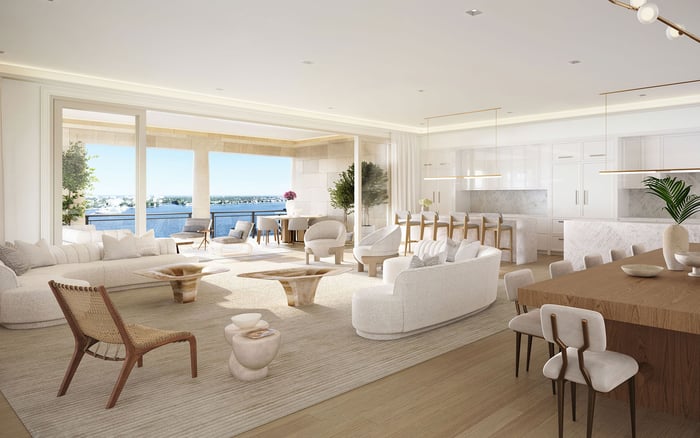
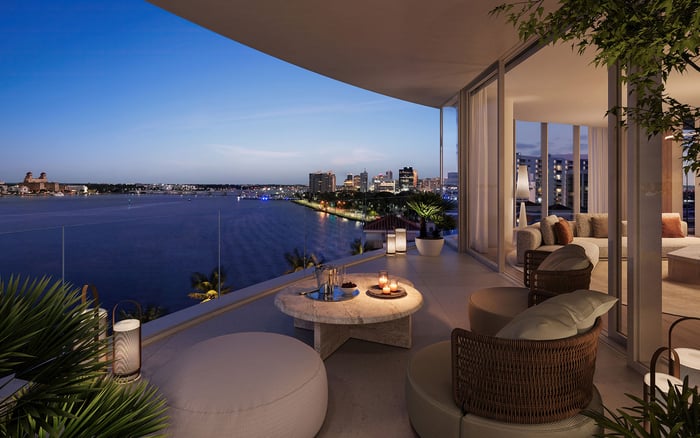
A discreet buyer’s guide to evaluating West Palm Beach residences through the lens of privacy, calm circulation, service culture, and low-density living.
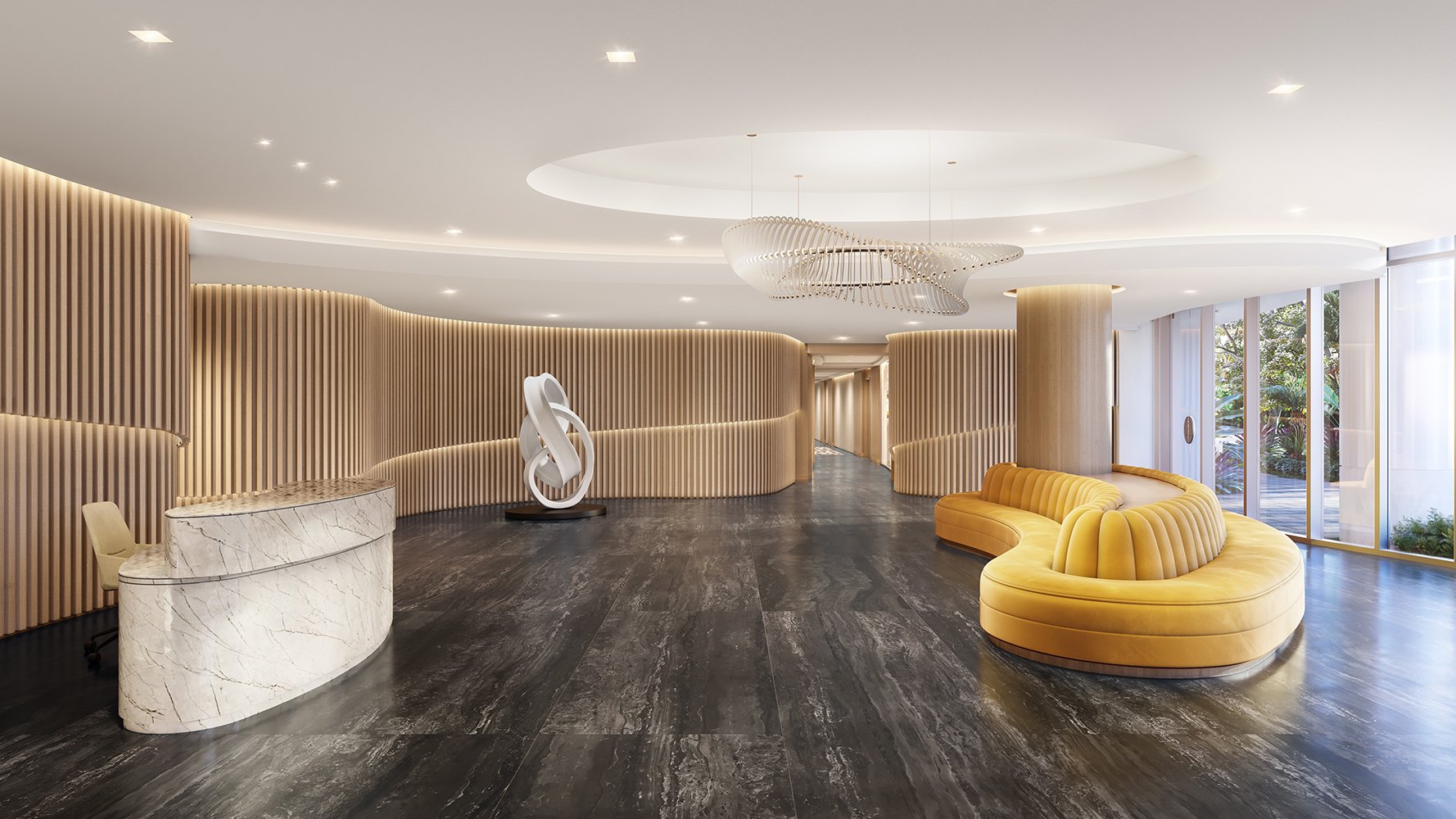
For a certain West Palm Beach buyer, privacy is not a feature to admire after the tour. It is the first filter. A residence may offer gracious proportions, a polished lobby, and postcard views, but the sharper question is quieter: how often will I cross paths with people I do not know, and how effortless is daily life when I want to move unseen?
That is why low-density living has become a defining priority for the ultra-premium audience. It is not only about choosing a smaller building. It is about how a building behaves. A privacy-focused residence should feel composed at the curb, controlled at the entrance, graceful through the elevator sequence, and calm across shared amenity spaces. The best buildings make discretion feel natural, not theatrical.
In West Palm Beach, that conversation often centers on residential projects with a clear private-residence identity, especially those whose names and positioning suggest a more tailored way of living. Buyers considering Alba West Palm Beach, Forté on Flagler West Palm Beach, or Mr. C Residences West Palm Beach should look beyond finishes and ask how each building handles arrivals, guest access, deliveries, staff movement, and peak amenity hours.
1. South Flagler House West Palm Beach - South Flagler identity
South Flagler House West Palm Beach belongs at the top of a privacy shortlist because its identity places it within one of the city’s most closely watched luxury residential conversations. For the privacy-focused buyer, the diligence questions are direct: how residents arrive, how guests are received, and how vertical circulation is separated from service movement.
The strongest appeal is the possibility of evaluating the experience through a private-house lens rather than a resort-through-lobby lens. Buyers should focus on floor-plan separation, elevator access, parking approach, and the degree to which daily living can remain quiet even when the building is fully occupied.
2. Mandarin Oriental Residences, West Palm Beach - branded residential service
Mandarin Oriental Residences, West Palm Beach carries the appeal of a hospitality name in a private residential format. For buyers who value discretion, the important distinction is whether the service culture enhances privacy rather than increasing public-facing activity.
The right branded residence should create a controlled, anticipatory environment. Staff should know how to manage guests without performance, coordinate deliveries without friction, and protect the resident’s sense of retreat. Buyers should ask how service touchpoints are designed, where staff circulates, and whether amenities feel residential in scale.
3. The Ritz-Carlton Residences® West Palm Beach - branded-residence signal
The Ritz-Carlton Residences® West Palm Beach is a natural consideration for buyers who want service assurance with a private residential address. The brand reference is meaningful, but privacy ultimately depends on operating details, not the name alone.
A focused buyer should evaluate whether the arrival experience is calm, whether private and shared areas feel clearly separated, and whether resident-only spaces remain composed during active hours. The best version of this product gives owners the comfort of attentive service while preserving the quiet of a private home.
4. Forté on Flagler West Palm Beach - Flagler Drive orientation
Forté on Flagler West Palm Beach earns its position because the Flagler identity is central to how many buyers understand luxury living in the city. Privacy here should be considered in relation to arrival sequence, views, traffic rhythm, and the practical flow between residence, car, lobby, and amenity spaces.
For buyers who prefer low-density living, the most important questions are not decorative. They are operational. How many residences share a floor? How long is the elevator wait at peak times? Are service corridors planned to reduce overlap? Those details determine whether a building feels genuinely calm.
5. Alba West Palm Beach - West Palm Beach residential focus
Alba West Palm Beach rounds out the list as a project name closely tied to the city’s evolving residential luxury market. Its relevance to the privacy-minded buyer lies in how it can be evaluated against the same standards: discreet access, thoughtful amenity planning, and a residential atmosphere that does not feel overexposed.
For this type of buyer, the best tour is not simply a viewing. It is a rehearsal of daily life. Arrive as you would after dinner, consider how a guest would be announced, imagine a service appointment, and observe whether the building’s rhythm supports a quieter way to live.
Low-density is often treated as a number, but the lived experience is more nuanced. A boutique building can still feel busy if arrivals are compressed, elevators are shared too broadly, or amenities are designed as social stages. Conversely, a larger residence can feel remarkably private when circulation, staff protocol, and spatial hierarchy are handled with discipline.
The buyer should begin with simple questions. How many residences share an elevator bank? Are there semi-private or private elevator arrangements? Is there a separate path for deliveries and building staff? Are guest arrivals visible from the main resident sequence? How are amenity reservations managed? These questions reveal more about privacy than a glossy rendering ever could.
In the current West Palm Beach landscape, projects such as Shorecrest Flagler Drive West Palm Beach and The Ritz-Carlton Residences® West Palm Beach illustrate how buyers are comparing not only architecture and location, but also the feeling of control that comes from a well-managed residential environment.
The most private buildings tend to excel in five areas. First, arrival is choreographed without feeling ceremonious. Residents should be able to move from car to residence with minimal exposure. Second, the front desk or concierge should be positioned to provide security and service without turning the lobby into a waiting room.
Third, vertical circulation matters. Elevator strategy may be the single most important privacy component in a condominium. Fourth, amenities should support owners rather than attract constant movement. A serene pool deck, residents’ lounge, or wellness space can be exceptional when scaled to actual use. Fifth, service protocol should feel invisible. The finest buildings handle everyday needs without making the resident manage the process.
Waterfront orientation can heighten the sense of retreat, but waterfront living does not automatically equal privacy. The better question is whether views, terraces, entrances, and amenity areas are arranged so that the home feels protected. In boutique settings, this distinction becomes even more important because every design decision is felt more directly.
A privacy-focused tour should be slower and more practical than a typical luxury showing. Visit the arrival area, not just the model residence. Stand in the lobby and observe whether it feels like a pass-through space or a social room. Ask where guests wait, where deliveries go, and how staff enters service areas.
Then study the residence itself. Look at the relationship between elevator entry, foyer, entertaining space, bedroom wing, and terrace. A private home should create layers. Guests should not immediately see everything. Service access should not interrupt the owner’s primary rooms. Outdoor areas should feel usable without making the resident feel displayed.
Finally, consider time. Privacy changes throughout the day. Morning fitness traffic, afternoon deliveries, evening guests, and weekend amenity use can create very different atmospheres. The right West Palm Beach building should remain composed across all of those moments.
What does low-density living mean in West Palm Beach luxury real estate? It generally refers to a more private residential experience with fewer points of friction, less crowding, and calmer shared spaces.
Is a smaller building always more private? Not always. Privacy depends on elevator design, arrival sequence, service protocol, and how amenities are managed.
Why do privacy-focused buyers care about elevator strategy? Elevators shape how often residents encounter neighbors, guests, staff, and deliveries during ordinary daily routines.
Should I prioritize a branded residence for privacy? A branded residence can offer strong service discipline, but buyers should verify that service is residential, discreet, and not overly public.
What should I ask during a private showing? Ask about guest access, delivery routing, staff circulation, elevator sharing, parking flow, and amenity reservation policies.
Does waterfront living improve privacy? It can enhance the feeling of retreat, but privacy still depends on building orientation, terrace exposure, and circulation planning.
Is boutique living better for discretion? Boutique living can feel more personal and controlled, provided the building’s operations are carefully designed and professionally managed.
Which West Palm Beach projects should privacy-focused buyers compare? Buyers often compare private-residence candidates by arrival experience, service culture, floor layouts, and amenity scale.
How important is the lobby for privacy? Very important. A quiet, controlled lobby can preserve discretion, while an overactive lobby can change the entire residential feel.
What is the best first step for a privacy-focused buyer? Define your tolerance for shared spaces, then tour each building through the lens of daily arrival, service, guests, and retreat.
For a tailored shortlist and next-step guidance, connect with MILLION.
If branded residences are on your mind — as a home or as an allocation — we would be glad to share what we are seeing, privately.
Begin a quiet conversation