A buyer-focused ranking of five residence formats suited to private dinners, receptions, and polished hosting, with a practical framework for evaluating flow, service, privacy, and outdoor space.
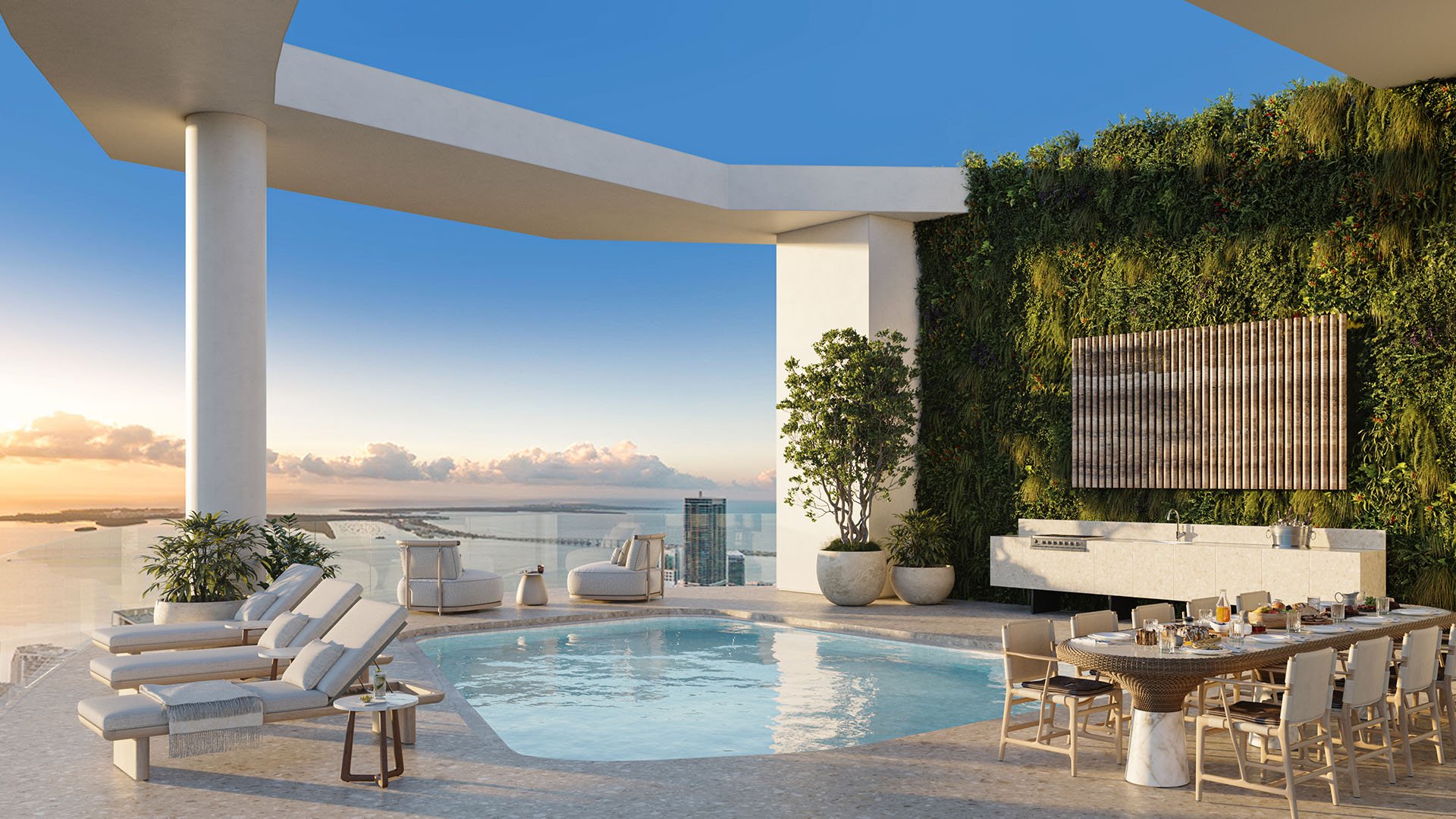
A residence designed for entertaining is not simply a large home with an impressive dining table. It is a carefully sequenced environment: an arrival with presence, an intuitive path to the principal salon, discreet service access, and sufficient separation to keep bedrooms genuinely private. In South Florida, an outdoor room can extend that sequence-but only when its proportions, access, shade, and relationship to the kitchen make it truly usable.
For buyers who host formal dinners, cocktail receptions, or multigenerational gatherings, capacity should be assessed through circulation, not square footage alone. A gracious plan allows guests to move naturally without crossing preparation areas. It also gives a caterer, private chef, or household team space to work without turning the evening into a visible production.
The ranking below considers five residence formats, ordered by their potential to unite private dining with meaningful entertaining capacity. Individual layouts, building rules, and services should always be confirmed before purchase.
1. Full-floor residence - strongest overall privacy and circulation
A well-composed full-floor plan presents the clearest opportunity to separate arrival, entertaining, service, and bedroom zones. Buyers should prioritize layouts with a defined dining room, a generous salon, more than one route between the kitchen and social spaces, and a powder room positioned away from private quarters.
Its principal advantage is control. Guests can experience a substantial sequence of rooms while the household retains a protected private wing. The strongest plans also provide practical coat storage, concealed back-of-house functions, and direct terrace access from the main entertaining rooms.
2. Duplex or penthouse residence - best for layered occasions
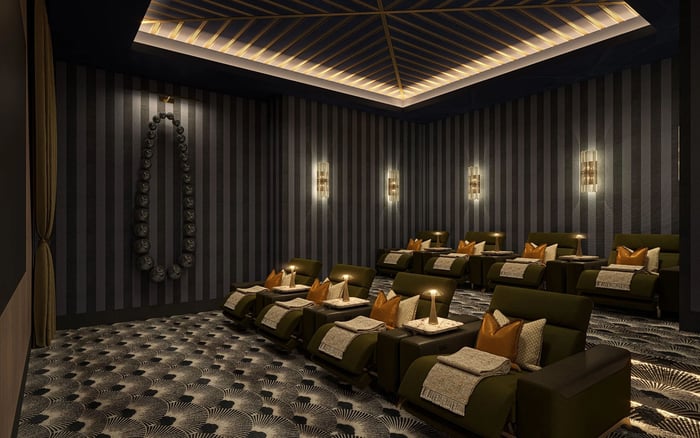
A multilevel home can assign distinct moods to different floors. One level might support dinner and conversation, while another accommodates music, a media setting, or a quieter after-dinner gathering. This format is especially compelling when vertical circulation is elegant, intuitive, and accessible.
The tradeoff is operational complexity. Buyers should test how food, beverages, guests, and staff move between levels. A dramatic staircase may create a sense of ceremony, but an appropriately placed private elevator or service route can determine whether the home functions smoothly in practice.
3. Terrace-led residence - best for indoor-outdoor hosting
A substantial terrace can function as an additional salon rather than residual exterior space. The priority is not simply depth or view, but a direct, balanced relationship among the kitchen, indoor dining area, living room, and outdoor seating or dining zones.
Evaluate shelter, wind exposure, flooring transitions, door placement, lighting, and the route to a guest powder room. Outdoor entertaining feels effortless when the terrace is integrated into the plan-and cumbersome when every plate must pass through the center of the party.
4. Service-forward branded residence - best for operational ease
For buyers who value assistance before, during, and after an event, a service-oriented residential setting can be persuasive. The residence itself should still deliver the fundamentals: proper dining dimensions, a kitchen capable of supporting the intended guest count, discreet deliveries, and sufficient staging space for tableware and beverages.
Services must be examined precisely. Ask which forms of in-residence support are available, what requires advance booking, how outside vendors are handled, and whether fees or restricted hours apply. Branding alone does not establish entertaining capacity.
5. Boutique waterfront residence - best for intimate gatherings
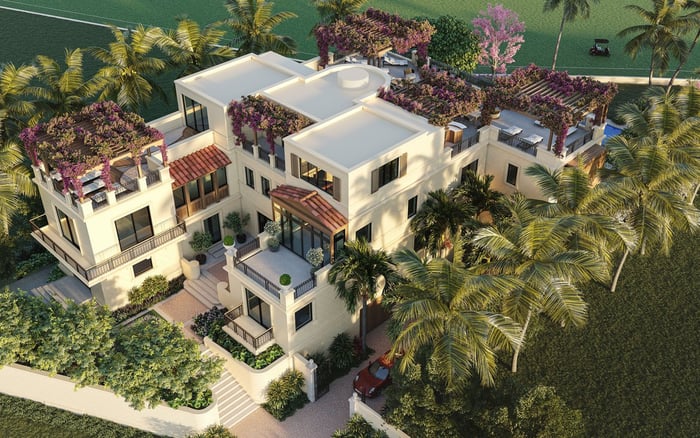
A lower-density setting can suit buyers whose ideal evening is a beautifully paced dinner rather than a large reception. Here, the quality of the plan matters more than spectacle. A connected salon and dining area, a purposeful kitchen, comfortable guest circulation, and a usable waterfront-facing outdoor zone can create a refined sense of occasion.
This format ranks fifth because its intimate scale may limit larger events. It remains an excellent choice for owners who value privacy, controlled guest lists, and a residential atmosphere over expansive shared amenity programming.
Entertaining preferences should guide location and building comparisons-not the reverse. In Brickell, buyers can use Cipriani Residences Brickell as a starting point for reviewing available residence plans and policies. Those considering Miami Beach might similarly examine The Perigon Miami Beach, then compare the specific layouts under consideration rather than relying on a development-level impression.
For a private-island context, The Residences at Six Fisher Island offers another point of comparison. Buyers drawn to Coconut Grove can review Vita at Grove Isle, while a Palm Beach search might include Mandarin Oriental Residences, West Palm Beach. These links should serve as pathways to closer due diligence, not substitutes for confirming the specifications of a particular residence.
This buyer's-guide approach keeps the decision centered on personal lifestyle. Whether the search begins in Miami Beach, Brickell, or another South Florida enclave, request the exact floor plan, current offering materials, and governing policies for the residence under consideration.
Walk the home as though an event were already underway. Begin at the elevator or entry and trace the guest route. Identify where coats and handbags will go, whether the arrival reveals the kitchen, and how naturally the principal rooms connect. Then follow the service path from the delivery point to the kitchen, pantry, dining room, terrace, and waste-removal area.
Measure furniture clearances rather than estimating seating from an illustration. Confirm that dining chairs remain comfortable to use when the table is full and that servers can circulate without interrupting conversation. Check acoustics between social areas and bedroom doors. Review elevator access, valet or parking arrangements, guest registration, catering restrictions, event limits, and rules governing music or outdoor use.
Shared dining rooms and bars can add flexibility, but they should be evaluated separately from the private residence. Confirm reservation procedures, exclusivity, occupancy, food-service options, and the route guests must take between the home and amenity spaces.
What defines a residence with genuine entertaining capacity? It combines appropriate room dimensions with clear guest circulation, discreet service access, privacy, and practical support spaces.
Is a separate dining room essential? Not always. An open plan can work when the dining area feels architecturally defined and circulation remains comfortable at full seating.
How should buyers evaluate a kitchen for private events? Review preparation surfaces, refrigeration, storage, ventilation, appliance placement, and the route between cooking and dining areas.
Does a large terrace guarantee successful outdoor entertaining? No. Proportion, shelter, access, wind, lighting, and proximity to service areas determine whether it functions well.
Why does service circulation matter? It allows food, beverages, staff, and cleanup to move discreetly without disrupting guests or exposing private rooms.
Are penthouses automatically the best choice for hosting? No. Their success depends on layout, vertical circulation, kitchen planning, outdoor usability, and building policies.
Should shared amenity dining count toward private capacity? Consider it supplementary. Availability, reservation rules, occupancy limits, and exclusivity may differ from in-home entertaining.
What building rules deserve special attention? Confirm guest access, vendor procedures, catering restrictions, music rules, event limits, parking, and outdoor-use provisions.
How can buyers test privacy during a showing? Trace sightlines and sound paths from the entry and social rooms to bedrooms, offices, and family-only areas.
What should buyers request before making an offer? Ask for the exact floor plan, residence specifications, current building policies, service details, fees, and relevant approvals.
For a tailored shortlist and next-step guidance, connect with MILLION.
If branded residences are on your mind — as a home or as an allocation — we would be glad to share what we are seeing, privately.
Begin a quiet conversation