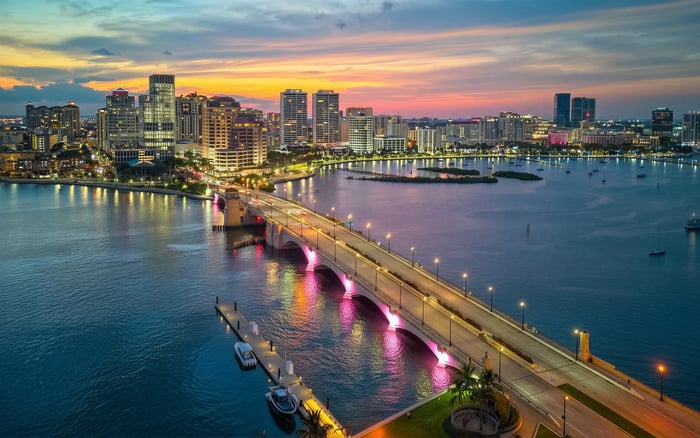
An inherited South Florida home can carry a different financial and practical profile for its next owner. Five tax, homestead, timing and flood-insurance considerations help heirs assess whether a family property still belongs in their plans.

An inherited South Florida home can be both a meaningful family connection and a consequential ownership decision. The address may be familiar, but the next generation's intended use, residence plans and tolerance for ongoing obligations warrant a fresh assessment. Sentimental value and practical suitability are separate questions.
For South Florida's luxury buyers, the issue is not necessarily whether the home is desirable. It is whether keeping it supports the life they intend to lead. A property suited to a parent's permanent residence may be less straightforward for an heir planning occasional visits or a move to another South Florida address.
The most useful starting point is not a renovation wish list. It is a property-specific review of taxes, homestead eligibility, flood coverage and timing.
1. The previous tax bill may not be your future budget - ownership and eligibility
Florida's Save Our Homes framework limits annual assessment growth for qualifying homesteads. A change in ownership or the loss of qualifying homestead status can alter a property's assessment and tax treatment. The previous owner's tax bill is therefore not a dependable forecast of the heir's future costs.
That does not mean every inheritance automatically removes existing protections. Ownership structure and eligibility require individual review. Before deciding the property is affordable to retain, ask the county property appraiser to clarify its treatment under the anticipated ownership and use. Evaluate a legacy home against the next owner's circumstances, not merely the last owner's expenses.
2. Flood coverage can add a separate expense - insurance beyond the standard policy
Standard homeowners insurance generally does not cover flood damage. For an heir weighing the cost of keeping a coastal or low-lying South Florida home, flood coverage is a separate budget and protection decision-not something to assume is included.
High-risk flood areas have at least a 1% chance of flooding in any given year. Homes in those areas generally require flood insurance when financed through federally regulated or insured lenders. The lifestyle implication is straightforward: retaining the property may involve insurance decisions and expenses beyond those an heir initially anticipated. Review actual coverage needs before treating the home as an uncomplicated seasonal retreat.
3. Occasional visits may not support homestead benefits - permanent residence matters
Florida's homestead exemption is generally available when an owner makes the property a permanent residence for themselves or a dependent. Keeping a house in the family does not, by itself, establish that qualification. An inherited home reserved for occasional stays may not receive the same treatment as a qualifying primary residence.
This distinction matters when the next generation's life remains centered elsewhere. The property may still be worth keeping, but the decision should rest on the economics of its intended use. Do not build a second-home budget on the assumption that the previous owner's homestead benefits will continue unchanged.
4. The relocation timetable may not align - portability has conditions
Eligible homeowners can transfer up to $500,000 of homestead assessment difference to another qualifying Florida homestead. That difference is the gap between the previous homestead's assessed and market values. It is not a cash payment, a tax credit or the simple transfer of an existing homestead exemption.
Portability requires establishing the replacement qualifying homestead within the applicable three-year period after abandoning the previous one. It is not an automatic inheritance benefit. An heir considering a different primary residence should clarify eligibility and timing before deciding when to retain, leave or replace the family home. A preferred moving date and a qualifying tax timetable are not necessarily the same thing.
5. A lower-risk designation does not end the review - flooding remains possible
Properties outside designated high-risk flood zones can still flood, even when flood insurance is not mandatory. The absence of a lender requirement should not be mistaken for the absence of exposure. This is distinct from the required-coverage question: it concerns how much uninsured risk the next owner is prepared to retain.
For someone seeking simpler ownership, that additional decision can affect the property's appeal. Review flood coverage on its own merits rather than treating a zone designation as the entire answer. An inherited address deserves the same scrutiny as a newly selected home, including where coverage is optional.
Before comparing addresses, decide whether the inherited property would be a permanent residence, an occasional retreat or a home retained while plans evolve. Those scenarios should not share an unquestioned tax assumption. Personal preference can lead the decision, but eligibility must support the financial model.
For an heir considering Brickell and 2200 Brickell, the useful comparison is not simply old versus new. It is the inherited home's reviewed ownership costs against those of a potential replacement, with intended use explicit on both sides.
The same discipline applies when a family weighs its existing property against Andare Residences Fort Lauderdale. A change of address does not itself establish homestead eligibility. The financial comparison should reflect how the owner actually intends to live.
A Miami Beach search that includes The Perigon Miami Beach should still distinguish a residence's appeal from its property-specific insurance considerations. Neither an inherited home nor an alternative should be selected on the assumption that standard homeowners coverage resolves flood exposure.
Likewise, someone comparing a family property in Palm Beach with Alba West Palm Beach should avoid carrying one address's assumptions into the next. Obtain relevant tax and coverage information for each property rather than presuming equivalent treatment.
If portability may apply, confirm eligibility and the applicable timing with the county property appraiser. Required applications must be submitted; purchasing another Florida residence does not make portability automatic. Applications generally have a March 1 filing deadline, subject to applicable filing and late-filing procedures.
The final decision can then rest on three clear inputs: expected tax treatment, an informed flood-coverage choice and a realistic residence timetable. Keeping the family home may be entirely appropriate. Choosing another residence can be equally thoughtful when the inherited property no longer fits the next generation's plans.
Explore a South Florida residence aligned with your next chapter through MILLION.
If branded residences are on your mind — as a home or as an allocation — we would be glad to share what we are seeing, privately.
Begin a quiet conversationNot necessarily. A change in ownership or qualifying homestead status can alter assessment and tax treatment, but an inheritance does not automatically eliminate every protection.
Save Our Homes limits annual assessment growth for qualifying Florida homesteads. Its application to an inherited property requires review of ownership and eligibility.
Occasional use alone generally does not satisfy the permanent-residence requirement. Homestead eligibility generally depends on the property being a permanent residence for the owner or a dependent.
The existing exemption cannot simply be transferred. Portability instead allows eligible homeowners to transfer a qualifying homestead assessment difference.
Eligible homeowners can transfer up to $500,000 of assessment difference to another qualifying Florida homestead. This is not a cash payment or tax credit.
No. Portability is not an automatic inheritance benefit, and eligibility must be established for the owner's particular circumstances.
The new qualifying homestead must be established within the applicable three-year period after abandoning the previous homestead. Applications generally have a March 1 deadline, subject to applicable filing and late-filing procedures.
Standard homeowners insurance generally does not cover flood damage. Flood coverage should be evaluated separately.
Homes in high-risk flood areas generally require flood insurance when mortgaged through federally regulated or insured lenders. These areas have at least a 1% annual chance of flooding.
Yes. Flooding remains possible outside designated high-risk areas, so the absence of a mandatory insurance requirement does not eliminate the coverage decision.