A collector-focused review of the three supported North Bay Village residential candidates, plus a practical framework for assessing privacy, controllable light, security, and art installation potential without inventing two additional addresses.
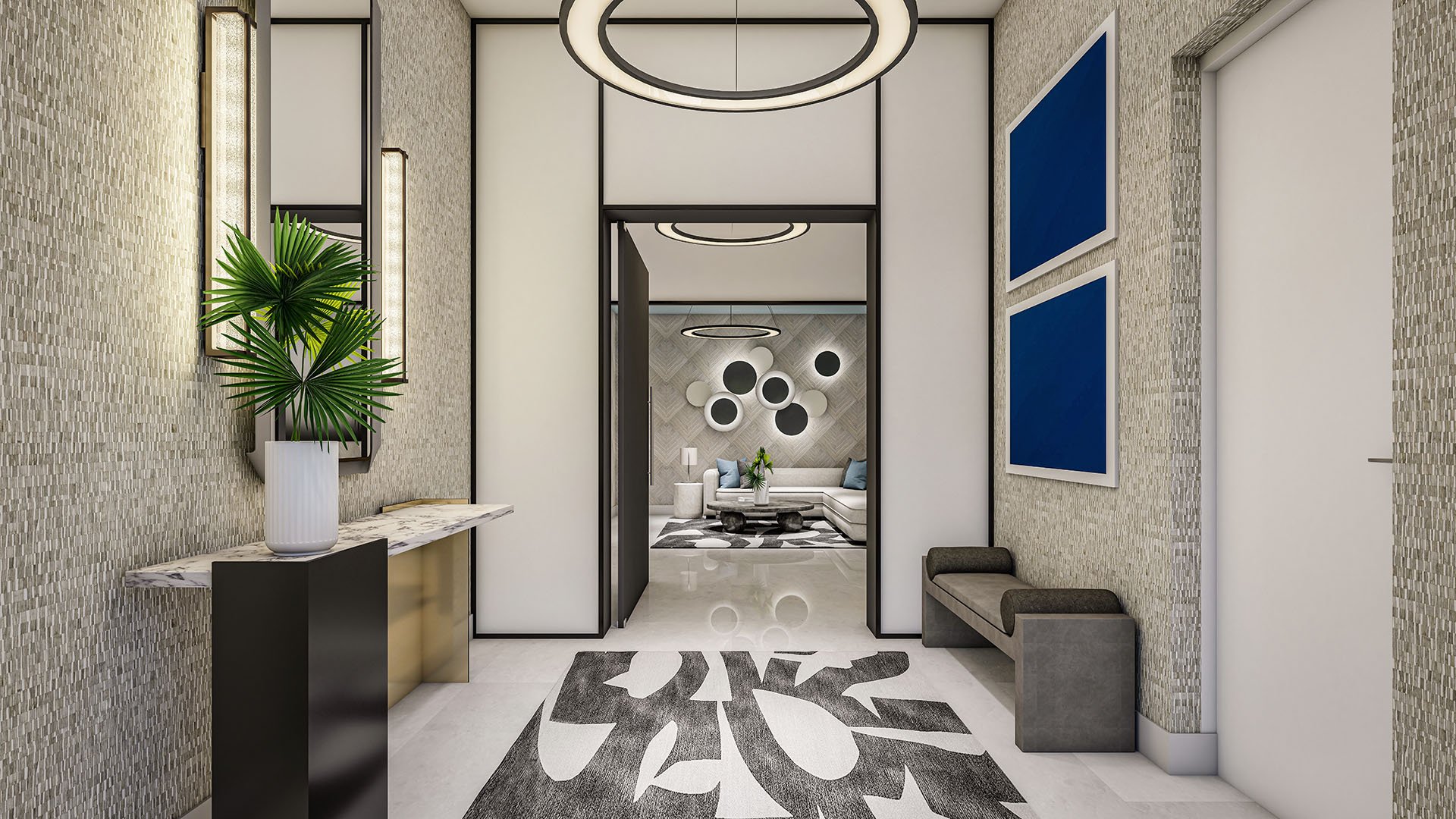
For an art collector, a luxury residence is more than a beautiful interior. It is a private viewing environment, a secure repository, an installation site, and often a setting where guests encounter important works beyond an institutional context. In North Bay Village, the essential questions therefore center on privacy, controllable daylight, secure circulation, and the physical capacity to accommodate art.
The strongest purchase is not necessarily the home with the most glass or the highest floor. It is the residence whose architecture can support conservation-minded decisions without sacrificing daily pleasure. Window orientation, wall dimensions, elevator access, service routes, electrical planning, climate conditions, and the transition from arrival to front door all warrant close examination.
The available project information supports three named North Bay Village candidates rather than five. To avoid inventing unsupported addresses, this review identifies those three projects and leaves the remaining two positions open until additional North Bay Village candidates can be verified.
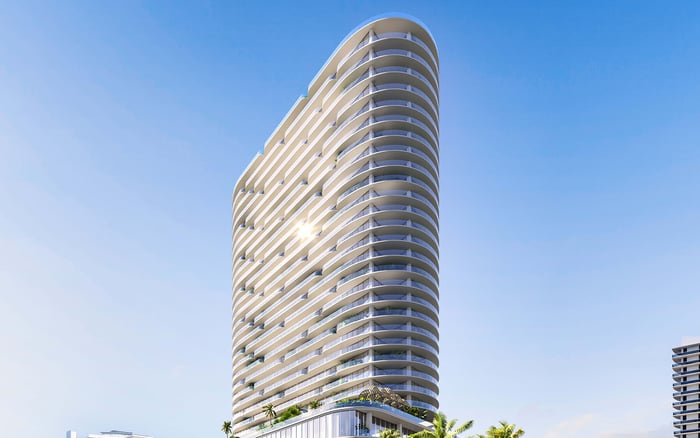
1. Continuum Club & Residences North Bay Village - collector’s first review
Collectors should request residence-specific plans and test the complete arrival sequence, including guest reception, residence entry, service access, elevator dimensions, and the route available to professional art handlers. Every feature and procedure should be confirmed directly during due diligence.
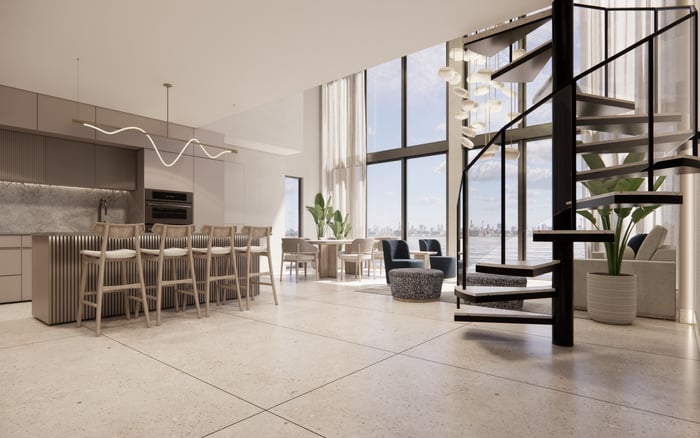
The interior review should distinguish view glass from usable display walls. A qualified lighting consultant can then determine where daylight control, dedicated circuits, ceiling reinforcement, or specialized illumination may be appropriate.
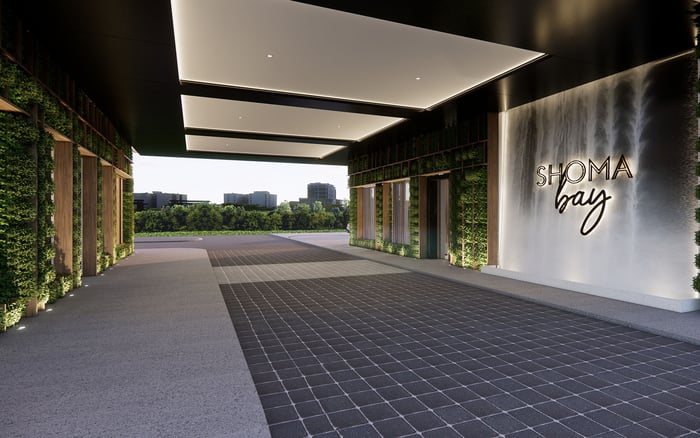
2. Shoma Bay North Bay Village - planning-led candidate
A disciplined plan review should focus on the relationship among glazing, circulation, and uninterrupted wall area. A suitable residence should allow art and furniture to coexist without forcing sensitive works into direct sunlight or narrow transitional spaces.
Privacy should be evaluated at several scales: the building approach, lobby experience, elevator journey, residence entry, and sightlines from adjoining properties. Buyers should verify every security and access detail before relying on it.
3. Tula Residences North Bay Village - tailored collector prospect
Its relevance to a collector depends on the precise residence selected and the buyer’s ability to coordinate interior architecture, lighting, shading, and installation requirements before committing to a final display strategy.
A detailed walkthrough should address art-crate movement, turning radii, loading procedures, floor protection, wall construction, and options for discreet storage. These practical considerations can matter as much as the principal entertaining rooms.
4. Unverified position - no address asserted
A fourth North Bay Village address should enter the ranking only after current project information and residence-specific materials are available for review. Naming an unsupported candidate would undermine the due-diligence standard that a significant collection requires.
5. Unverified position - no address asserted
The fifth position should likewise remain open until another North Bay Village residence can be assessed for privacy, light control, security, and installation logistics. A complete five-address ranking requires verified candidates rather than assumptions.
A productive tour should extend beyond a model residence. Examine the full journey an artwork would take from vehicle arrival to final installation. The objective is to identify bottlenecks before purchase, not after a major canvas or sculpture reaches the property.
Bring scaled dimensions for representative pieces from the collection. This makes wall width, ceiling height, door clearance, elevator capacity, and furniture placement tangible. Apply the same discipline to glazing and solar exposure, noting where architectural shading or interior treatments may be necessary.
Collector due diligence should unite waterfront living with design and architecture rather than treat them as competing priorities. New-construction or pre-construction status does not replace technical verification, while lifestyle value should be considered alongside conservation and discretion.
Privacy begins before the elevator. Buyers should observe whether visitor movement intersects with resident circulation, how deliveries are received, and whether operating procedures support discretion. Inside the residence, direct sightlines from shared areas, neighboring buildings, terraces, and waterways deserve equal scrutiny.
Light control requires more than automated shades. A specialist should study orientation, seasonal sun paths, glazing, reflected light, artificial illumination, and the sensitivity of individual works. Paintings, photographs, works on paper, textiles, and mixed-media pieces may require different display conditions.
Security should be layered. Building access, residence entry, alarm integration, camera placement, backup planning, communications, insurance requirements, and emergency procedures should form a coherent strategy. Any proposed system should protect the collection without making the home feel defensive.
Before signing, collectors should assemble an architect, lighting designer, security adviser, art installer, conservator, and insurance professional as appropriate. Their combined review can expose conflicts between dramatic architecture and practical stewardship, particularly where glass, terraces, open plans, or constrained service routes define the residence.
The final decision should be made at the unit level. Two homes within the same project may perform differently because of orientation, layout, elevation, neighboring sightlines, and available wall surfaces. A measured plan, light study, security review, and art-movement test offer a more useful basis for selection than presentation materials alone.
Why are only three named addresses included in a top-five article? The available project information supports three North Bay Village candidates. The remaining positions are left open rather than filled with unsupported names.
Why does residence orientation matter to an art collector? Orientation influences the intensity and duration of daylight. A specialist light study can identify potential exposure concerns for specific works.
Is extensive glazing incompatible with an art collection? Not automatically. Glazing should be evaluated alongside usable walls, appropriate shading, and a carefully designed lighting plan.
What should buyers measure during a private tour? Measure walls, ceilings, doors, elevators, corridors, loading access, and turning radii against representative artwork and crate dimensions.
How should privacy be evaluated? Trace the experience from vehicle arrival to residence entry, then assess interior and terrace sightlines from surrounding vantage points.
What security details require confirmation? Confirm access controls, visitor procedures, delivery handling, alarm compatibility, monitoring options, backup planning, and emergency protocols.
Should an art adviser attend property tours? An adviser can help identify display priorities, while architects, conservators, installers, lighting designers, and security specialists may also be valuable.
Why review service circulation? Art handlers need a safe and discreet route for crates and equipment. Restricted clearances can complicate installation and increase handling risk.
Can lighting design wait until after closing? Early planning is preferable because circuits, controls, ceiling support, and shade integration may affect the interior design and budget.
What is the best way to shortlist comparable options for touring? Start with location fit, delivery status, and daily lifestyle priorities, then compare stacks and elevations to validate views and privacy.
If you'd like a private walkthrough and a curated shortlist, connect with MILLION.
If branded residences are on your mind — as a home or as an allocation — we would be glad to share what we are seeing, privately.
Begin a quiet conversation