A buyer-focused comparison of five rental-flexible Downtown Miami and Wynwood projects, with practical guidance on minimum stays, guest access, association governance, and Design District alternatives.

For a luxury condominium buyer, privacy is more than a floor plan feature. It is an operating question: who may occupy neighboring residences, for how long, and under whose supervision? An elegant arrival experience cannot substitute for clear leasing provisions and consistent enforcement.
The essential distinction: all five projects below offer short-term rental flexibility. They are not established leaders in restrictive leasing, quiet enjoyment, or security. For buyers prioritizing limited transient occupancy, this is a screening list-not an endorsement of five quiet-first choices. Daily-rental permission alone establishes neither weak security nor strong resale performance.
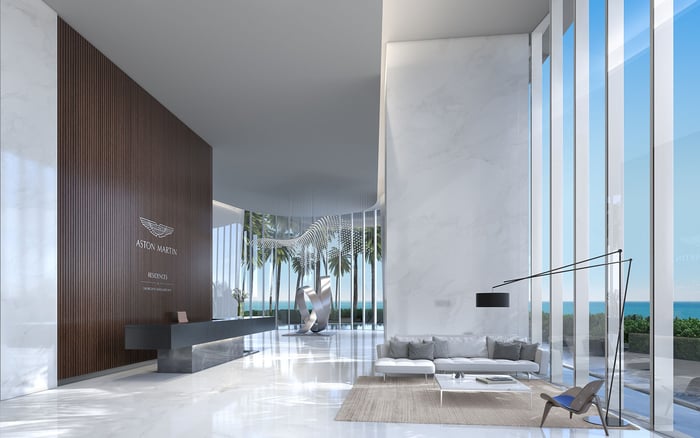
A broader Downtown Miami search might also include Aston Martin Residences Downtown Miami. Apply the same document review there rather than inferring rental policy from branding, architecture, or price.
1. District 225 - Downtown Miami, daily-rental eligibility
District 225, at 225 North Miami Avenue, allows daily rentals. Rental flexibility is central to its ownership proposition; it does not establish a residential environment defined by minimum lease terms.
For a buyer seeking fewer occupancy changes, the decisive questions concern minimum stays, guest registration, and access procedures. Do not treat daily-rental eligibility as evidence of poor management-or mistake it for the restrictive leasing framework this buyer seeks. Ask whether the permitted operating model matches the intended residential experience.
2. 501 First Residences - Downtown Miami, daily rentals
At 501 NE First Street, 501 First Residences also permits daily rentals. Its location does not establish the meaningful minimum lease term a quiet-first purchaser may prefer.
The practical distinction is between permission to rent and controls over occupancy. Request the current leasing provisions, approval requirements, and guest-access rules before comparing the project with a conventional longer-lease condominium. A clearly stated daily-rental policy clarifies expectations, but clarity alone does not make it suitable for an owner seeking limited transient use.
3. The Crosby - Downtown Miami, approximately 450 residences
The Crosby permits daily rentals and contains approximately 450 residences. Those facts make leasing administration and guest-access procedures especially relevant to a buyer's review; they do not establish actual occupancy patterns or security outcomes.
Ask how rental arrivals are handled, who manages credentials, and which rules apply to guests using common areas. Distinguish among the number of residences, the rental uses permitted, and how those uses are administered. Evidence about one is not a substitute for evidence about the others.
4. NoMad Residences Wynwood - Daily or nightly rentals with in-house management
NoMad Residences Wynwood permits daily or nightly rentals with in-house management. That management structure distinguishes it within this comparison, but it is not a minimum-stay restriction.
For an owner who values operational coordination, the management agreement deserves close attention. Review its scope, responsibilities, and relationship to association rules. In-house management alone establishes neither quiet enjoyment nor enforcement quality. Buyers principally seeking fewer short stays should first decide whether nightly-rental permission fits their objectives, regardless of who administers those stays.
5. The Rider Residences Wynwood - Short- and long-term rental flexibility
The Rider Residences Wynwood offers short- and long-term rental flexibility with no rental restrictions. That model is poorly aligned with a purchaser whose principal objective is limiting transient occupancy.
The 12-story, 152-residence development has an anticipated completion in the second half of 2027. Treat that timing as an expectation, not a guarantee. For a prospective purchaser, the central diligence remains the governing documents and intended operating arrangements. Do not assume the stated rental flexibility resolves every use or access question.
Downtown condominium policies can range from daily occupancy to twelve-month minimum leases, even among similarly located buildings. Neighborhood selection cannot replace building-level analysis.
As contrasting examples, 50 Biscayne and Centro have policies specifying 30-day minimum stays and a maximum of 12 rentals annually. These are separate controls: one addresses the duration of each stay; the other limits rental frequency. Neither figure, standing alone, establishes quiet conditions or effective enforcement.
When considering Casa Bella by B&B Italia Downtown Miami alongside other Downtown options, request the same side-by-side policy comparison. Do not assign a particular minimum stay to a project without reviewing its current documents. Condominium restrictions can be stricter than uses otherwise permitted by local zoning.
Wynwood lies within the City of Miami, whose short-term-rental requirements differ from those of Miami Beach and unincorporated Miami-Dade County. Establishing eligibility requires checking municipal requirements, parcel-specific zoning, and condominium or association rules. Visitor popularity does not establish permission to operate a vacation rental, and many Wynwood condominiums restrict or tightly regulate that use.
A purchaser considering Frida Kahlo Wynwood Residences should apply the same layered review. Neighborhood identity is not a rental authorization.
In the Design District, policies likewise vary by building, and many luxury associations restrict short stays or impose minimum lease terms. For a comparison involving Kempinski Residences Miami Design District, request the actual provisions rather than assuming either permissive or restrictive leasing. The five-project comparison above concerns Downtown Miami and Wynwood; it does not establish a Design District policy benchmark.
Before committing, request current declarations and amendments, minimum lease terms, annual rental caps, approval procedures, and guest-access rules. Ask how those provisions are enforced and whether recent association minutes identify recurring operational concerns. Written restrictions and day-to-day implementation require separate review.
Extend that review beyond leasing to management contracts, reserves, and insurance information. Long-term operating discipline cannot be reduced to a rental prohibition, just as rental flexibility cannot establish financial resilience. Review these materials with appropriate legal and financial advisers.
For resale positioning, focus on fit rather than promises: would a future purchaser understand the building's permitted uses and operating obligations? No rental policy here establishes superior future pricing. The strongest purchase decision aligns the owner's intended use, tolerance for transient occupancy, and governing documents before closing.
For a discreet, buyer-focused exploration of South Florida residences, connect with MILLION.
If branded residences are on your mind — as a home or as an allocation — we would be glad to share what we are seeing, privately.
Begin a quiet conversationNo. All five offer short-term rental flexibility, and none is established here as a leader in restrictive leasing, quiet enjoyment, or security.
District 225 allows daily rentals. Buyers seeking a minimum-lease residential environment should evaluate whether that flexibility fits their objectives.
501 First Residences permits daily rentals. Buyers should confirm current leasing provisions and guest-access procedures in the governing documents.
The Crosby permits daily rentals and contains approximately 450 residences. Those characteristics make rental administration and guest-access procedures important diligence items, without establishing actual security outcomes.
No. In-house management is an operating structure, not a minimum-stay restriction or proof of enforcement quality.
Its marketed short- and long-term rental flexibility with no rental restrictions is poorly aligned with that priority. Buyers should review governing documents and intended operating arrangements.
No. A minimum stay controls each rental's duration, while an annual cap limits rental frequency; 50 Biscayne and Centro have listed policies of 30-day minimums and 12 rentals annually.
Condominium documents can impose restrictions stricter than uses otherwise permitted by local zoning. Buyers should check both municipal requirements and building rules.
No. Policies vary by building, and many luxury associations restrict short stays or impose minimum lease terms.
Request declarations and amendments, leasing and guest-access rules, management contracts, reserves, insurance information, and recent association minutes. Review them with appropriate legal and financial advisers.