A privacy-first buying brief for Edgewater, focused on the residence counts, arrival arrangements, amenity access rules, and operating details buyers should examine before choosing a new-construction condominium.

For a buyer who values discretion, a condominium’s most important feature may be the route from the public entrance to the front door. A compelling residence should appeal to the eye while accommodating the daily rituals of arrival, exercise, entertaining, and retreat. The question is not simply whether a building feels exclusive, but whether its layout and operating arrangements support the privacy you want.
In Edgewater, approach a new-construction search with three distinct objectives: low-density ownership, limited competition for amenities, and controlled access to the residence. They are not interchangeable. Residence count alone cannot establish how busy a pool will feel, how often an elevator will stop, or how secluded a terrace will be.
This guide provides a framework for building a Top 5 shortlist, not a verified ranking of five developments. The five priorities below help structure that evaluation. Named projects elsewhere in this guide are starting points for inquiry, not assurances of quiet ownership.
1. Floor-level density: the immediate residential setting
Start with the floor of the residence you would actually buy. Request its complete layout, including neighboring entrances, elevator landings, service doors, and shared circulation. Establish how many residences use the same arrival area rather than relying on a building-wide average.
Compare that information with the total residence count and the number of homes served by each elevator group. Give particular attention to your immediate surroundings: the route outside your door is part of the ownership experience, even when it lies beyond your private interior.
2. Arrival access: the route from car to front door
Request a walkthrough of the proposed arrival sequence. Where do owners, visitors, deliveries, and service personnel enter? Where do their routes overlap? Ask exactly what private or controlled elevator access means for the residence under consideration.
Review both routine use and exceptions. Guest authorization, maintenance visits, move-ins, and elevator outages all belong in the conversation. The arrival arrangement should be clear in practical terms; you should not have to infer security procedures from a floor plan.
3. Amenity access: the full population sharing the facilities
Before judging the scale of an amenity collection, establish who may use it. Ask whether access extends beyond residents and their guests, whether facilities are shared with another component, and whether any spaces require reservations or additional membership.
Then examine the facilities you expect to use most. Request available capacity information, guest limits, reservation terms, operating hours, and restrictions on exclusive bookings. These details help you assess potential competition for space without treating residence count as a prediction of actual crowding.
4. Residence-level seclusion: sightlines and sound
Review the specific home, not just its floor-plan category. Request drawings that show the relationship between living areas, terraces, neighboring residences, and shared spaces. Consider both what you could see from your rooms and what others might see looking toward them.
For sound concerns, request the relevant design specifications and review them with a qualified professional. A high floor, a corner position, or the word boutique is no substitute for a residence-specific assessment. Examine privacy from inside the home as carefully as from its entrance.
5. Operating rules: the framework for everyday discretion
Request the available governing documents and proposed rules for rentals, guests, deliveries, amenity reservations, and private events. Identify which provisions are established and which remain subject to change. Ask your advisers to distinguish sales descriptions from enforceable obligations.
Consider the service model and the budget supporting it. If attentive access management is essential to your purchase, ask how it is intended to operate. The experience you expect should align with the documents you review and the responsibilities you accept as an owner.
Use a consistent written brief for every inquiry. If Villa Miami enters your search, request the same residence-level circulation information you would seek when considering EDITION Edgewater. Different presentations should not mean different standards of scrutiny.
Begin with the basics: confirm the address, current construction status, proposed residence count, and plans applicable to your preferred home. Then distinguish planned features from completed conditions. Anchor the comparison to the specific residence and current documents; a broad impression of the project cannot answer detailed questions.
This approach also gives your architect, attorney, and other advisers a common set of questions. Ask them to identify unresolved points before you become attached to a particular view or interior palette.
Treat boutique as a description to investigate, not a conclusion about privacy. Decide whether it means fewer total owners, fewer neighbors on your floor, a more separated entrance, or a smaller circle of amenity users. These preferences may overlap, but each needs its own answer.
When reviewing The Cove Residences Edgewater, for example, frame your inquiry around those distinctions rather than assuming the project meets them. Request the details you need to judge suitability on your own terms. A name on the shortlist marks the beginning of the evaluation, not its result.
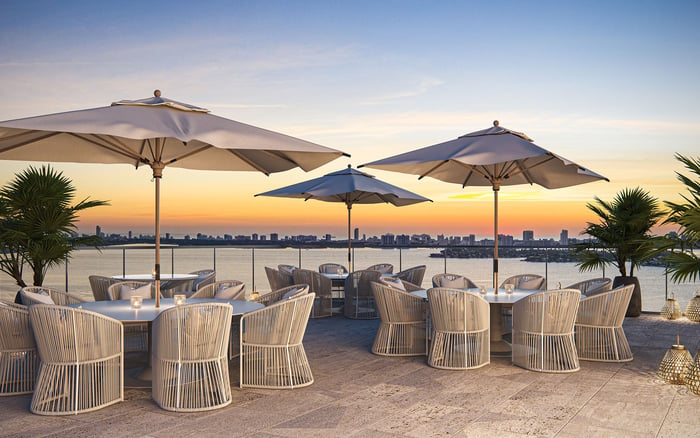
A pool rendering cannot answer your scheduling questions. Consider when you would swim or relax outdoors, whether you expect to bring guests, and whether quiet seating matters more to you than a large social setting. Ask how the proposed rules address those preferences.
Apply the same discipline to Aria Reserve Miami if it is under consideration. Request the applicable amenity-sharing arrangements and access terms without assuming either crowding or spare capacity. Where actual operating experience is unavailable, keep expectations conditional. A proposed design is not a promise.
Before choosing, write a short account of your ideal day: arrival, breakfast outdoors, exercise, visitors, and evening retreat. Compare each step with the plans and rules you have reviewed. For a second home, include questions about authorized access during absences and the handling of deliveries or maintenance appointments.
The strongest purchase is not necessarily the one with the longest amenity menu or the smallest residence count. It is the one whose documented arrangements most closely match your expectations, with unresolved details addressed before commitment.
For a tailored conversation about privacy-focused ownership in Edgewater, connect with MILLION.
If branded residences are on your mind — as a home or as an allocation — we would be glad to share what we are seeing, privately.
Begin a quiet conversationNo. It outlines five buying priorities and introduces project pages for further inquiry, without assigning developments a privacy or crowding score.
No. Evaluate who can access the facilities, available capacity information, guest rules, and reservation terms rather than relying on residence count alone.
Request the complete floor layout for your preferred residence, including neighboring entrances, elevator landings, service doors, and shared circulation.
Ask exactly how access works for owners, visitors, deliveries, and service personnel. Also review the arrangements for maintenance, move-ins, and outages.
Establish the full group entitled to use each facility and whether amenities are shared. Then examine guest limits, reservations, hours, and exclusive-booking rules.
Do not treat the label as proof. Define the privacy features you want and evaluate each through residence-specific plans and applicable documents.
Review sightlines involving rooms, terraces, neighboring homes, and shared spaces. Discuss relevant sound-related design specifications with a qualified professional.
Confirm its address, current construction status, proposed residence count, and the plans applicable to your preferred home. Distinguish planned features from completed conditions.
Request available governing documents and rules covering rentals, guests, deliveries, amenities, and private events. Ask your advisers which provisions are established and which may change.
Ask about authorized entry during absences and procedures for deliveries and maintenance appointments. Compare those arrangements with your expectations for discretion and oversight.