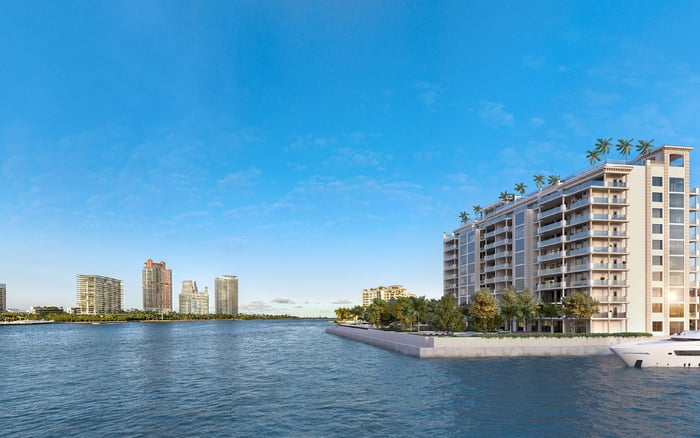
A practical framework for comparing South Beach condominium fees, staffing, reserves, contracts, assessments, and service delivery before making an offer.

A South Beach condominium fee is not a verdict on value. It is the opening line of a broader inquiry into what the building operates, who delivers its services, how future obligations are funded, and whether the ownership experience aligns with the buyer’s expectations.
Begin by converting each candidate property into a comparable monthly ownership schedule. Record the regular association charge, mandatory club or amenity charges, parking costs, storage fees, unit-specific utilities, current assessments, and any known charges outside the quoted fee. Then identify precisely what each payment covers. A lower headline number may be less compelling when essential services fall outside it.
For a Miami Beach primary residence, reliability may matter most. A second-home buyer may place greater weight on arrival preparation, package handling, security coordination, and oversight while the residence is vacant. Waterfront ownership can add another layer of operational expectations, particularly around exterior care and access management. The correct benchmark is personal: cost measured against the services the owner will actually use.
Create a one-page worksheet for each building. Use the same categories and time period, and separate recurring expenses from temporary assessments. If residences differ materially in size, calculate a fee-per-square-foot reference-but do not mistake that ratio for a complete measure of value. Expansive common areas, intensive amenities, reserve contributions, staffing choices, and included utilities can cause superficially similar buildings to operate very differently.
Compare established properties such as Apogee South Beach and Continuum on South Beach through their actual disclosure packages, not assumptions based on location or presentation. The objective is not to decide that one cost structure is universally superior, but to determine whether each is understandable, sustainable, and aligned with your intended use.
Request the current budget, recent financial statements, reserve information, assessment history, insurance summary, major service contracts, and available meeting records. Have qualified legal, accounting, and insurance advisers interpret the documents within their respective disciplines. Due diligence should turn a polished amenity narrative into a traceable operating picture.
Service staffing warrants a distinct review because payroll and contracted labor can shape both cost and daily experience. Request a staffing matrix that identifies functions by shift: front desk, valet, security, housekeeping, engineering, management, pool or beach operations, and resident services, where applicable. Distinguish association employees from third-party personnel, and note which services are shared with another component.
Headcount alone is insufficient. Ask who is present overnight, who can authorize urgent repairs, how absences are covered, and where responsibility shifts between management and vendors. A refined lobby means little when escalation procedures are unclear. Conversely, a compact team may perform exceptionally when roles, supervision, and response standards are well designed.
Tour at more than one time, if access permits. Observe arrival handling, desk attentiveness, elevator condition, loading activity, pool presentation, and staff interaction with residents. When considering Setai Residences Miami Beach, or any service-centered address, apply the same operational questions you would bring to a less hospitality-oriented building. Brand perception should never replace document review.
The most photogenic services are often the easiest to evaluate. The less visible questions concern reserves, insurance, maintenance planning, vendor concentration, and upcoming capital work. Request a clear explanation of how routine operations and long-term projects are funded. Determine whether a current assessment is temporary, what it covers, how much remains, and whether payment obligations transfer at closing.
Read meeting records for recurring themes rather than isolated complaints. Repeated elevator issues, discussions of water intrusion, staffing turnover, vendor disputes, or deferred projects merit follow-up. These references do not automatically disqualify a property; they identify questions that should be resolved before price and contract terms are finalized.
Resale buyers should also compare the current budget with prior periods to identify category changes that require explanation. In newer offerings such as Shore Club Private Collections Miami Beach, focus on the governing documents, proposed operating assumptions, service structure, and distinction between projected and established costs. Different stages of a building’s life demand different questions.
South Beach does not follow a single operating model. A buyer focused on South of Fifth may prioritize discreet arrival, privacy, and continuous coverage. Another may value an active lifestyle program, extensive amenities, or a hospitality-style service layer. Neither preference is inherently more prudent, but each carries distinct staffing and budget implications.
Write a concise service brief before touring. Identify five nonnegotiables, five amenities you would use regularly, and any services you do not wish to subsidize. Apply that brief consistently when reviewing The Ritz-Carlton Residences® South Beach and other candidates. This keeps the decision anchored to ownership utility rather than an impressive but irrelevant feature count.
This framework belongs among practical buyer’s guides because it treats the association as part of the asset. The residence, staff, contracts, common areas, and financial plan collectively define the experience being purchased.
Before signing, coordinate document deadlines, approval requirements, assessment treatment, and representations with counsel. Confirm which materials have been received, which questions remain open, and who is responsible for resolving each item. Keep verbal explanations distinct from written documentation.
After closing, retain the final budget, governing documents, insurance information, contact directory, and service protocols in one secure file. Calendar meetings and payment dates, review owner communications, and reassess the operating picture when budgets or major contracts change. Due diligence should continue as informed ownership, not end at the closing table.
Is a high HOA fee necessarily a warning sign? No. Evaluate what it includes, how the property is staffed, and whether its funding supports your priorities.
What is the best way to compare fees between buildings? Build a standardized monthly schedule, then separate recurring charges from assessments and optional costs.
Should I rely on a fee-per-square-foot calculation? Use it only as a reference. It does not capture service scope, reserves, utilities, or amenity intensity.
Which staffing details should I request? Ask for functions by shift, overnight coverage, vendor roles, supervision, and emergency escalation procedures.
Why distinguish employees from contracted staff? The distinction clarifies accountability, contract exposure, coverage arrangements, and control over service standards.
How should a second-home buyer assess service? Focus on access control, package handling, vacancy oversight, arrival support, and procedures for urgent unit issues.
What should I examine regarding assessments? Confirm the purpose, amount, payment schedule, remaining balance, completion status, and treatment at closing.
How do newer and established buildings differ in review? Newer properties may rely on proposed assumptions, while established buildings provide an operating and maintenance history.
Can an attractive amenity program justify higher fees? It can, provided you value the amenities, service delivery is consistent, and the broader financial structure is acceptable.
Who should review the condominium documents? Engage qualified legal, accounting, and insurance professionals for advice within their respective areas.
If you'd like a private walkthrough and a curated shortlist, connect with MILLION.
If branded residences are on your mind — as a home or as an allocation — we would be glad to share what we are seeing, privately.
Begin a quiet conversation