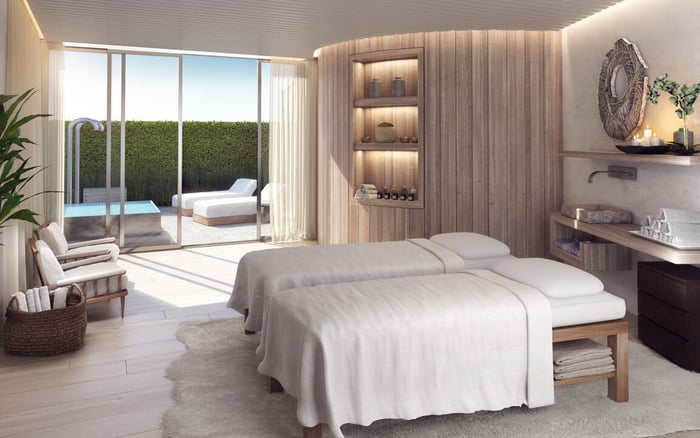
At Auberge Beach Residences & Spa Fort Lauderdale, buyers should evaluate acoustic privacy independently from visible finish quality. Multiple visits, room-by-room listening, checks of doors and operable openings, and a review of available building documents can provide a more complete residence-specific assessment.
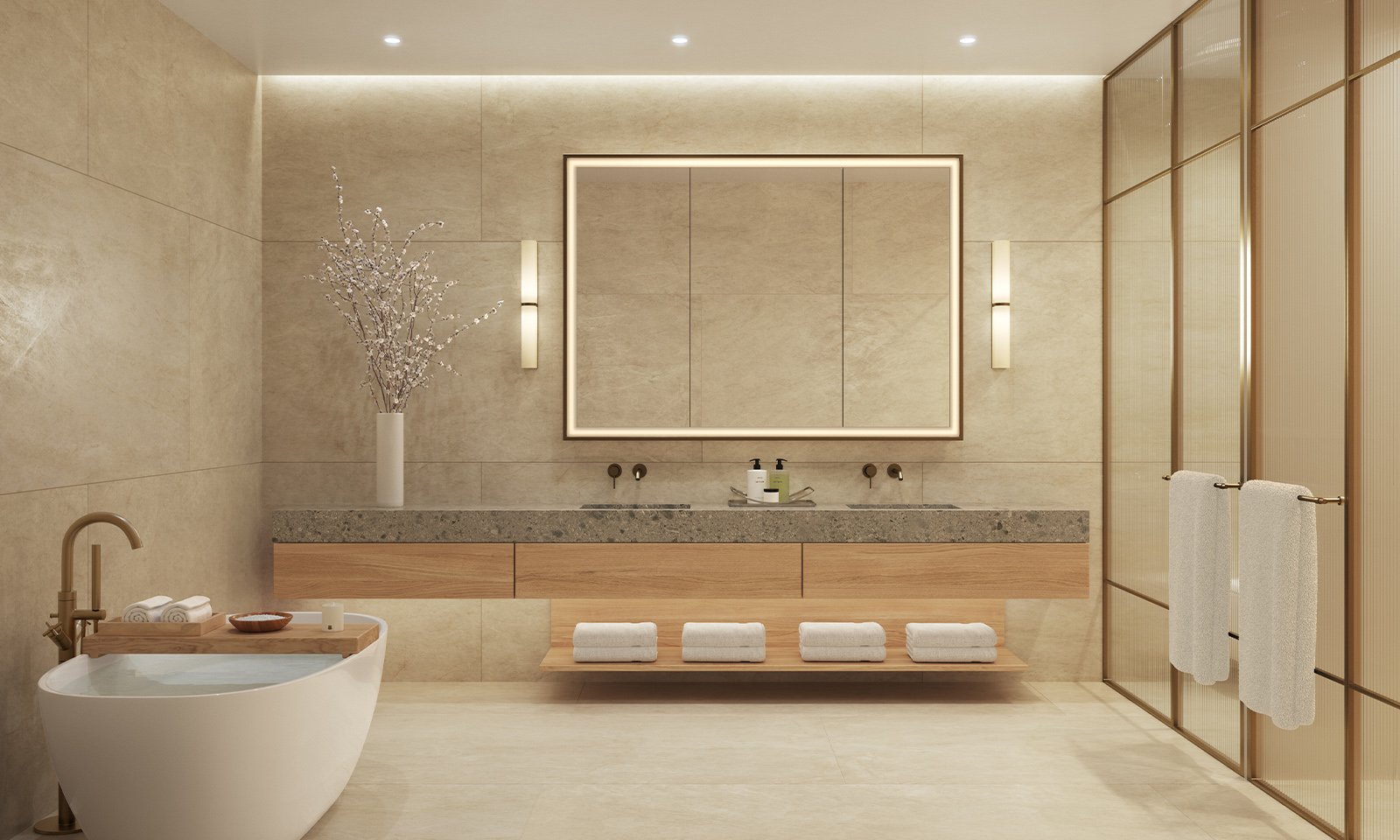
At Auberge Beach Residences & Spa Fort Lauderdale, a buyer may naturally focus first on design, materials, layout and views. Those visible qualities can be evaluated during a showing, but they do not establish how a particular residence handles voices, footsteps, door closures, mechanical sound or activity beyond an exterior opening.
Acoustic privacy deserves its own due-diligence track because the experience can vary by residence. Floor, orientation, layout, adjacent spaces and the condition of individual doors or operable openings may all affect what a buyer hears.
At this level, quiet should be tested as a performance quality, not inferred from a finish schedule.
This approach does not presume a building-wide problem. It gives the buyer a consistent way to decide whether a specific residence supports the intended pattern of use.
Stone, cabinetry, appliances and other finish selections can demonstrate design intent, but they do not document sound isolation. The acoustic review should instead consider shared walls, floor and ceiling boundaries, the entry door, exterior glazing, operable openings and mechanical systems.
Ask whether the association, management or seller can provide relevant architectural details, specifications or acoustic records. Useful materials may address demising walls, floor assemblies, underlayment, doors, glazing or recognized sound ratings. Any available document should guide the inspection rather than replace listening inside the actual residence.
If documents are unavailable or incomplete, avoid treating that absence as proof of either strong or weak performance. Record the gap, discuss it with the appropriate adviser and determine whether further inspection is warranted.
Create a simple exposure map before the listening test. Identify what is directly above, below and beside the residence. Then relate each bedroom and principal living area to corridors, elevators, service areas, shared facilities, terraces and exterior activity zones.
Pay attention to transitions. An entry foyer may reveal corridor sound that is less noticeable in a living room, while a bedroom beside a shared boundary may require a longer test than an interior storage area. A terrace or balcony can also change the sound environment when an exterior door is open.
The objective is not to label a location as inherently quiet or noisy. It is to understand the specific boundaries and operating conditions that matter to the residence under consideration.
Visit during contrasting periods
Arrange more than one visit when access permits. Include different times of day and, where practical, periods when surrounding activity is more likely to change. A single showing may capture an unusually calm or active moment.
Use consistent listening positions
Choose repeatable positions in the principal living area and each bedroom. Keep conversation, music and other sound inside the residence to a minimum, then listen long enough to distinguish an isolated event from a recurring pattern.
Test every operable opening
Open, close and secure each accessible exterior door or operable window. Inspect seals, frames and tracks for visible condition and consistent engagement. Listen from the same position before and after closure so the comparison is meaningful.
Listen at interior boundaries
Pause near shared walls, the entry door and bedroom boundaries. Note voices, door closures, impact sound and recurring mechanical or service noise. Record where the sound is most apparent rather than assuming its source.
Run the mechanical system, then switch it off
Mechanical sound may be acceptable, distracting or capable of masking another source. Listening under both conditions helps separate the system’s own operation from sound arriving through other boundaries.
Give bedrooms additional time
Bedrooms warrant a deliberate test because the relevant standard is often nighttime rest rather than daytime conversation. Stand or sit near the likely bed location, then repeat the test near doors, glazing and shared walls.
Ask focused operational questions
Ask about the current hours and typical use of nearby shared spaces, along with applicable noise rules and complaint procedures. Confirm current information directly rather than relying on assumptions formed during a short visit.
Record the conditions
For each visit, note the time, weather, mechanical setting, position of doors and openings, and observable surrounding activity. Consistent notes make comparisons between residences more useful.
The testing method should follow the buyer across the Fort Lauderdale market. Residences at Four Seasons Hotel & Private Residences Fort Lauderdale, St. Regis® Residences Bahia Mar Fort Lauderdale and The Ritz-Carlton Residences® Fort Lauderdale should be reviewed under similarly relevant conditions when they are part of the buyer’s search.
The purpose is not to presume that one property performs better than another. A consistent protocol prevents branding, presentation or finish quality from replacing residence-level verification.
When comparing options, use the same listening positions, mechanical settings and opening configurations where possible. Note differences in layout and adjacent uses so that unlike conditions are not treated as direct equivalents.
Before the inspection period concludes, consolidate the exposure map, visit notes, operational answers and available documents. Separate confirmed observations from assumptions and unresolved questions.
If a material concern remains, the buyer can discuss further inspection or specialist review with qualified advisers. The appropriate next step depends on the residence, the available evidence and the buyer’s sensitivity to particular types of sound.
Acoustic privacy is less visible than finish quality and cannot be settled by a polished showing alone. A disciplined buyer listens at the times that matter, tests the relevant boundaries and evaluates the exact residence before making a decision.
For discreet guidance on South Florida luxury residences and residence-specific due diligence, connect with MILLION.
If branded residences are on your mind — as a home or as an allocation — we would be glad to share what we are seeing, privately.
Begin a quiet conversationPremium finishes do not establish how effectively walls, floors, doors or glazing manage sound. Acoustic privacy requires its own residence-specific review.
No. A showing captures only one set of operating conditions, so contrasting visits can provide a more useful assessment.
Visit at different times of day and, where practical, during periods when surrounding activity may change. Use comparable conditions across each visit.
Bedrooms and principal living areas deserve focused attention. Buyers should also listen near shared walls, entry doors and operable exterior openings.
Open, close and secure each accessible operable opening, then listen from the same position before and after closure. Note the visible condition of seals, frames and tracks.
This helps distinguish the system’s own sound from noise entering through other boundaries. It can also reveal whether mechanical operation masks another source.
Request any available details concerning walls, floors, underlayment, doors, glazing and acoustic ratings. Documents should inform, not replace, an in-residence listening test.
Use the same basic protocol, including repeatable listening positions and comparable operating conditions. Record layout and adjacency differences that may affect the comparison.
Note the time, weather, mechanical setting, door positions and observable surrounding activity. Also record where and how often any sound is heard.
No. The checklist is a due-diligence framework for evaluating an individual residence and does not establish a building-wide condition.