A serious Aria Reserve Miami purchase requires more than a price-per-square-foot comparison. Examine interior measurements, unit-specific assessments, staffing coverage, amenity operating arrangements, insurance and reserve funding before deciding what the residence is worth to you.
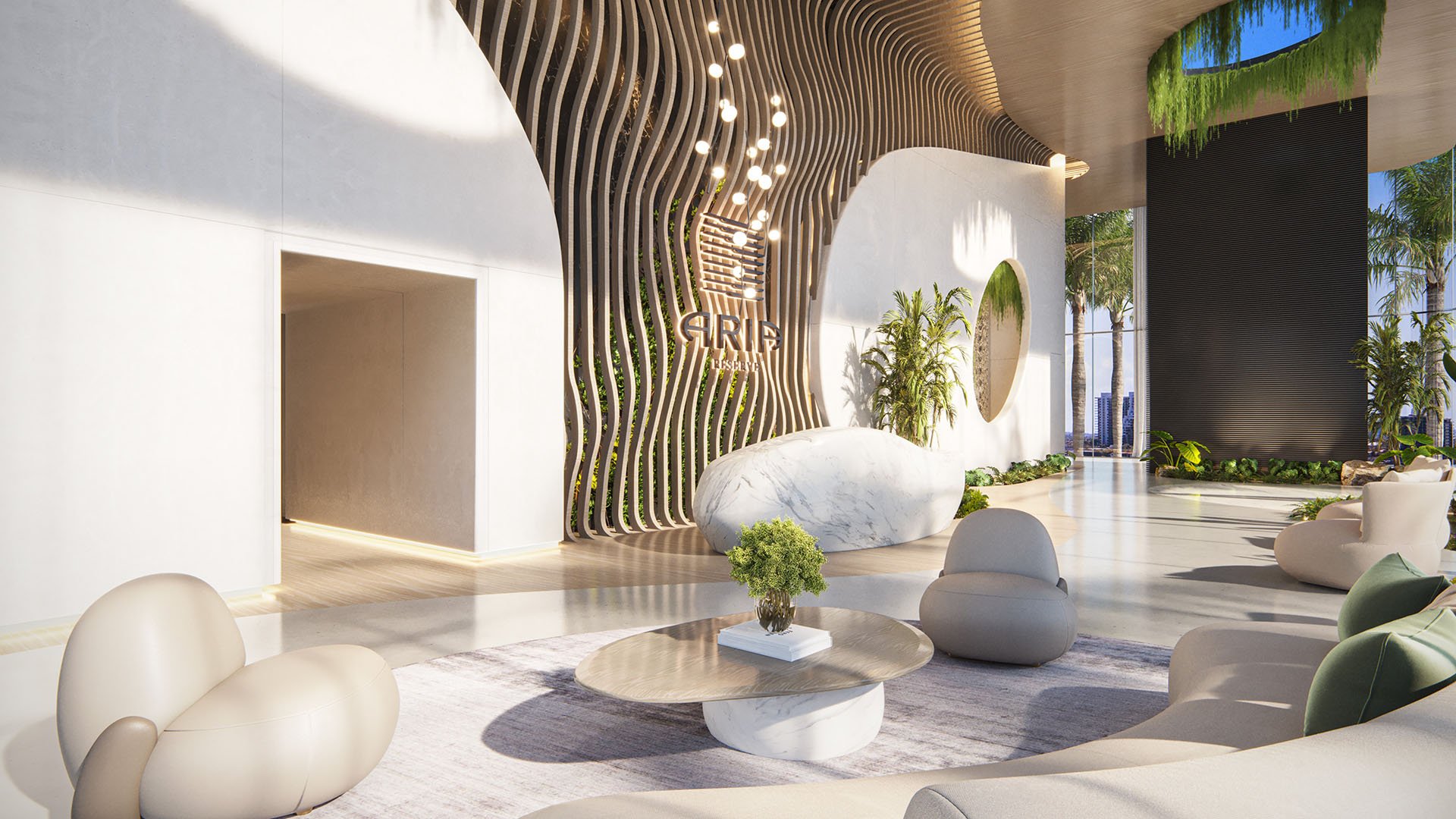
At Aria Reserve Miami, the attraction begins with Biscayne Bay: an Edgewater address at 700 NE 24th Street and an advertised setting of more than five acres with 547 linear feet of waterfront. For a serious buyer, the decisive question is how that setting will be serviced, maintained and funded throughout ownership.
Purchase price per square foot measures the acquisition, not the operating model. An average asking price of $2,616,607 and average asking price per square foot of $1,209 are asking metrics, not recorded closing prices. Neither establishes service consistency or reserve adequacy.
A useful checklist starts with measurement, moves through recurring charges and staffing, and ends with the financial capacity to sustain the ownership experience.
One four-bedroom layout with an office and staff room has 2,686 square feet of air-conditioned space and a 292-square-foot terrace, totaling 2,978 square feet. These figures are not interchangeable when comparing value.
Request clearly labeled purchase-price calculations for both interior-only and terrace-inclusive area. Then establish which area underpins any quoted association charge per square foot. Do not assume the sales presentation and assessment calculation use the same denominator.
The 2021 advertised residence range of 1,059 to 2,584 square feet is historical, not a complete description of available inventory. Evaluate the specific residence and its documented measurements.
If your search also includes EDITION Edgewater, apply the same measurement discipline there. This is a comparison framework, not an assumption that the projects share specifications or assessment structures.
An early estimate placed association costs around $0.75 per square foot. That figure should not become today’s underwriting assumption. Other indicative figures include approximately $0.93 per square foot per month for the South Tower and a maintenance benchmark of $0.95 per square foot. Neither represents an association-certified budget.
Unit-level examples are more concrete: $1,676 monthly for Unit 3803 and $2,970 for Unit 5202. These figures are not verified current assessments and do not establish a fee trend.
Before committing, request written confirmation of the selected unit’s recurring charges, effective dates and allocation basis. Establish what is included, what is billed separately and whether additional association-level obligations apply.
Obtain the adopted operating budget alongside actual spending. A fee becomes meaningful when it can be tied to defined services, financial obligations and reserve contributions. A low headline number alone does not establish good value.
Advertised services include valet parking, a 24-hour front desk, access to a personal concierge and a package room. These offerings do not establish headcounts, payroll costs or the hours of every service. A 24-hour front desk, in particular, does not confirm round-the-clock concierge coverage.
Ask management to explain:
Headcounts and shift coverage for each advertised service.
Which roles are direct employees and which are contractors.
Payroll, benefits and contract costs reflected in the budget.
Coverage during absences, busy arrivals and delivery peaks.
Services that require reservations or additional payment.
Where access permits, visit at different times to observe arrivals, package handling and response times. Treat those observations as a complement to the staffing schedule, not a substitute for it. The objective is not the largest team, but dependable coverage for the way you live.
The advertised amenity program includes a lounge pool, semi-Olympic pool, children’s splash pad, fitness facilities, courts, massage rooms, sauna and steam facilities. That breadth warrants scrutiny of operating arrangements; it does not prove a particular payroll burden.
Request a status schedule distinguishing operating amenities from those still advertised but not confirmed as operating. For each facility, establish hours, access rules, maintenance responsibility and any user charges. Ask how equipment servicing and eventual replacement are accounted for in the financial plan.
The advertised restaurant overlooking the bay and café deserve separate scrutiny. Their operating arrangements remain to be established: who runs them, whether association support is involved and what happens if an operator leaves. Seek contractual answers rather than assuming either self-sufficiency or subsidy.
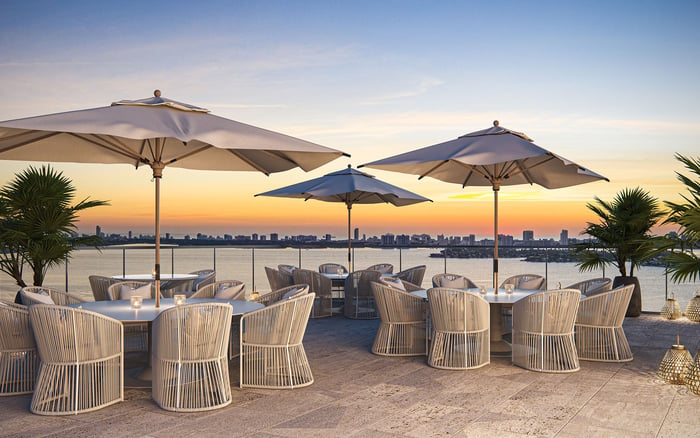
The advertised watersports marina includes kayak and paddleboard service and storage, alongside waterfront baywalk access. Confirm availability, supervision, storage arrangements and charges before assigning personal value to the offering.
Likewise, evaluate the advertised business center, conference and meeting rooms, flex offices and coworking spaces through their booking rules and practical availability. A room’s presence does not establish how easily a resident can use it.
For a buyer also considering Villa Miami, the same questions can organize a useful shortlist: which services matter weekly, who delivers them and what ownership costs support them? Do not assume operating models are interchangeable merely because both projects enter an Edgewater search.
Insurance, pools, a reserve fund and trash are identified among Unit 5202’s association-fee inclusions. The inclusion of a reserve fund establishes neither its adequacy nor protection against special assessments.
Request reserve balances, the contribution schedule, available reserve studies and details of approved or proposed assessments. Ask how projected work is matched to funding and how responsibilities are allocated among any applicable association entities. Have your advisers reconcile those answers with the governing documents.
Review insurance in parallel: policy limits, deductibles, exclusions and renewal information. Inclusion within a fee does not explain how an uninsured expense or deductible would be allocated. No specific premium figure or future increase is established here, and no reserve shortfall should be presumed.
Build the ownership model from the confirmed unit assessment, separately billed services and your own expected use. Model higher operating costs, insurance costs and reserve contributions as buyer-selected scenarios, not forecasts. Keep these components distinct where the budget allows rather than applying an unexplained increase across the board.
The final decision should rest on four aligned records: the residence’s measurements, its confirmed charges, the service operating plan and the association’s funding documents. Resolve discrepancies before treating an attractive asking ratio as an attractive acquisition.
For an ultra-premium buyer, value is not necessarily the lowest monthly assessment. It is a service experience worth paying for, supported by understandable obligations and a credible maintenance plan.
For a considered approach to South Florida luxury ownership, explore MILLION.
If branded residences are on your mind — as a home or as an allocation — we would be glad to share what we are seeing, privately.
Begin a quiet conversationAria Reserve is on Biscayne Bay in Miami’s Edgewater neighborhood, at 700 NE 24th Street.
It is an average asking-price metric, not a recorded closing-price benchmark. It does not establish carrying costs or reserve adequacy.
One layout distinguishes 2,686 square feet of air-conditioned space from a 292-square-foot terrace. Combining them changes the denominator and can distort comparisons with interior-only pricing.
It is a historical estimate, not a confirmed current assessment. Obtain written confirmation of charges for the specific unit under consideration.
The examples are $1,676 for Unit 3803 and $2,970 for Unit 5202. They should not be treated as verified current charges or evidence of a fee trend.
No; the advertised services include a 24-hour front desk and access to a personal concierge, but do not establish the concierge’s hours or staffing headcounts.
Advertised offerings do not establish documented operating status. Confirm availability, hours, access rules and user charges before assigning them value.
No; including a reserve fund within association fees does not establish reserve adequacy, legal compliance or protection against special assessments.
Request the adopted budget, actual spending, reserve balances, contribution schedule, available reserve studies and information on approved or proposed assessments. Review insurance limits, deductibles, exclusions and renewal information separately.
Model higher operating costs, insurance expenses and reserve contributions using clearly labeled buyer-selected assumptions. These scenarios are planning tools, not forecasts or evidence of an existing shortfall.