
Miami Art Week offers seasonal buyers a useful lens on the least photographed part of condominium life: arrival. This guide explains how to assess valet choreography, porte-cochère performance, lobby exposure, elevator routing and neighborhood access before selecting a South Florida residence.
A condominium may present beautifully in a private showing, yet daily life begins well before the front door. For a seasonal buyer visiting during Miami Art Week, the more revealing inspection often starts at the street: the final turn into the property, the valet handoff, the walk through the lobby and the transition to the elevator.
These moments warrant the same scrutiny as views, finishes and floor plans. The objective is not merely speed, but composure, discretion and a clear distinction between residents, visitors, deliveries and event traffic. A well-considered arrival should feel intuitive even when the neighborhood is active.
Begin one block away. Note whether a driver can identify the entrance without stopping abruptly, whether vehicles can queue away from moving traffic and whether the approach creates unnecessary visibility. Observe how staff receive residents, guests, rideshare vehicles and service providers when several arrive at once.
Experience the property at more than one hour. A quiet midmorning visit reveals little about evening pressure. Return near dinner, after dark or when nearby venues are active. Time the interval from curb to elevator, but also assess the quality of the wait. Shelter, seating, lighting and staff communication can matter as much as the number of minutes.
A project visit can serve as the starting point for a broader Miami Beach arrival study. The relevant question is not how polished the first greeting feels during an appointment, but how the complete sequence performs under realistic conditions.
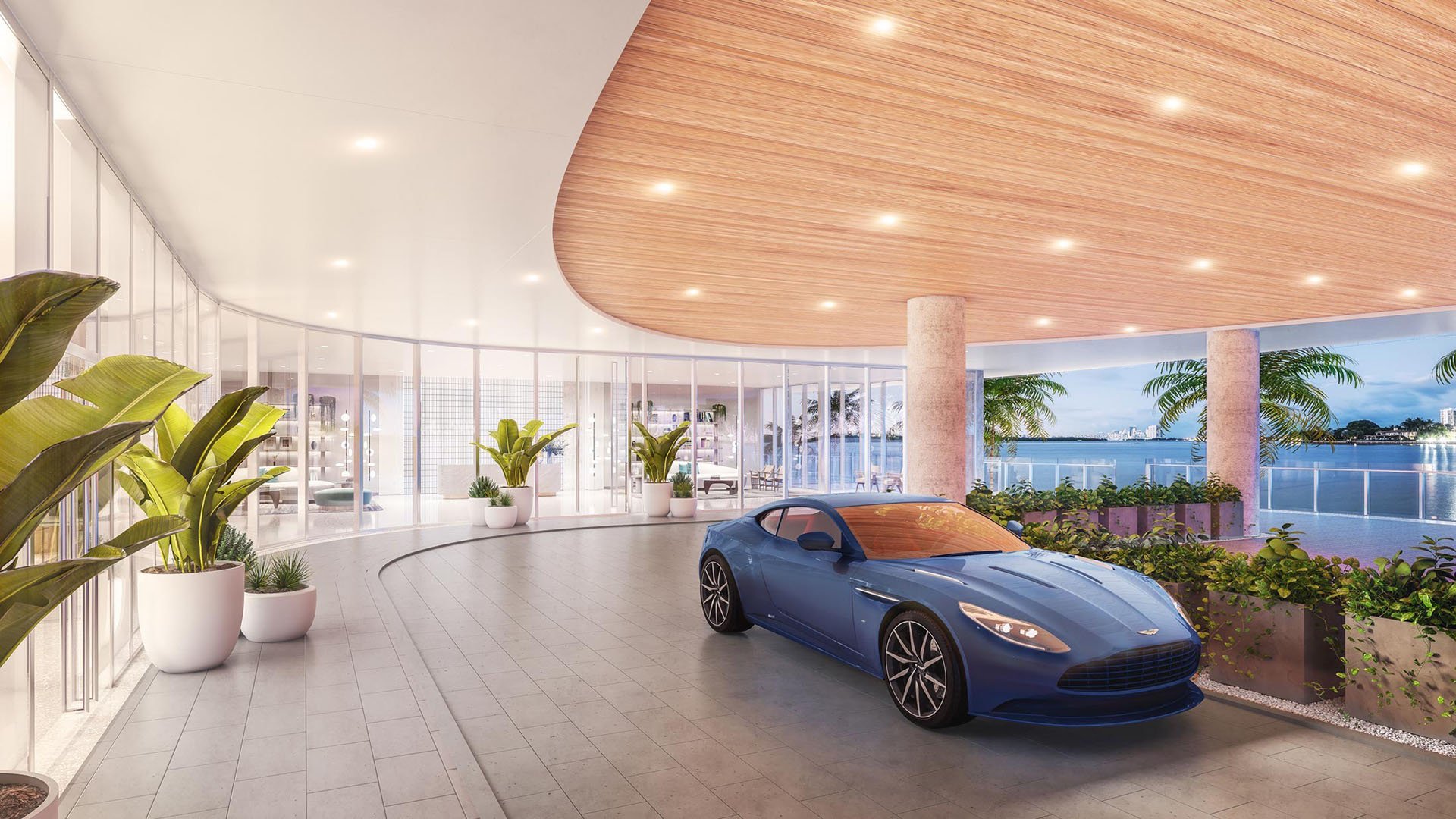
A porte-cochère is not simply an architectural flourish. It is an operating zone where circulation, staffing and privacy converge. Look for potential conflict points: cars crossing pedestrian paths, luggage occupying the principal entry, guests waiting beside resident vehicles or delivery activity visible from the lobby.
Request a precise explanation of parking and retrieval procedures. Who may call a car, where does it wait and how is the owner notified? Ask what happens when a household has multiple vehicles or several residents request cars simultaneously. If the residence is not yet operating, evaluate the proposed sequence and ask that any operational representations important to the purchase be documented.
When considering Kempinski Residences Miami Design District, buyers can also examine the surrounding Design District streets from a resident’s perspective. Walk the likely route, arrive by car, then repeat the exercise as a passenger carrying shopping bags or luggage.
Arrival privacy is shaped by sightlines. From the entry, can a passerby see residents waiting for an elevator? Are guest conversations audible near the circulation path? Does the reception position allow staff to acknowledge arrivals without turning the lobby into a checkpoint?
Follow every likely route. Trace the resident, guest, service and delivery paths separately. Determine where they overlap and for how long. Ask how guests are announced, whether elevator access is controlled by floor and how service personnel reach residences. The goal is not theatrical isolation, but a clear hierarchy that limits avoidable exposure.
In Brickell, a visit to The Residences at 1428 Brickell can be paired with a street-level review of the blocks a buyer expects to use most often. In Downtown Miami, Waldorf Astoria Residences Downtown Miami offers another project context for testing the journey from neighborhood approach to residential threshold-without assuming that one district’s circulation pattern applies to another.
A private entrance cannot compensate for a route unsuited to the owner’s habits. Map the journeys that define the season: airport transfers, dinners, cultural appointments, marina visits and trips to a second residence. Then drive them at the hours when they are most likely to occur.
Waterfront locations, urban centers and lower-density enclaves each present different arrival questions. A Coconut Grove buyer may prioritize a calm transition from landscaped streets, while a Brickell buyer may accept greater street energy in exchange for an urban address. Neither preference is inherently superior. The right choice reflects the owner’s tolerance for visibility, waiting and dependence on a single approach.
Use Four Seasons Residences Coconut Grove as one visit within a cross-neighborhood comparison, not as a substitute for it. Apply the same checklist to every candidate so design impressions do not obscure operational differences.
With permission, photograph or sketch the route, then record observations immediately. Separate what was seen from what was promised. The file should address valet procedures, guest authorization, elevator controls, package handling, service access, backup access and after-hours staffing. Review relevant condominium materials and agreements with qualified advisers before relying on any operational assumption.
For a new-construction purchase, ask how the depicted arrival sequence will translate into staffing and policy. For an existing residence, request multiple demonstrations. Work through hypothetical scenarios: a dinner party, an early airport departure or a guest arriving before the owner. Precise questions tend to elicit more useful answers than a general inquiry about security or service.
Miami Art Week can sharpen a buyer’s attention as schedules, vehicles and social commitments converge. Use that intensity constructively. The strongest choice is the residence whose arrival feels legible and discreet not only during a curated tour, but also when the household is moving quickly and the neighborhood is fully animated.
Views may define the first impression. Arrival quality often determines how gracefully the property supports seasonal life.
Why inspect a condo arrival during Miami Art Week? A busy personal schedule creates a useful setting for observing how the route, valet and lobby feel when timing and discretion matter.
What should I watch at the valet stand? Observe queue placement, pedestrian conflicts, staff communication and where retrieved vehicles wait for residents.
How many times should I visit a candidate building? Visit at contrasting hours, including after dark, so the decision does not rest on a single curated appointment.
Does a private elevator guarantee privacy? No. Privacy also depends on guest authorization, lobby sightlines, floor controls and the separation of service circulation.
What should I ask about guest arrivals? Ask how guests are identified, announced, admitted and directed when the resident is not yet in the lobby.
How should I evaluate a pre-construction arrival? Study the proposed circulation carefully and seek documentation for operational representations that materially affect your decision.
Should I test the route with a hired driver? Yes, if that reflects your normal routine. A passenger’s experience can reveal turning, waiting and pickup issues that a pedestrian visit misses.
What matters most after dark? Review lighting, staff visibility, wayfinding, curb exposure and the transition between the vehicle and controlled residential space.
Can neighborhood traffic change the best condo choice? Yes. The preferred address should align with your regular routes and your tolerance for delay, activity and public visibility.
What belongs in an arrival due-diligence file? Include visit notes, route observations, relevant building documents and written answers to questions about parking, access and staffing.
When you're ready to tour or underwrite the options, connect with MILLION.
If branded residences are on your mind — as a home or as an allocation — we would be glad to share what we are seeing, privately.
Begin a quiet conversation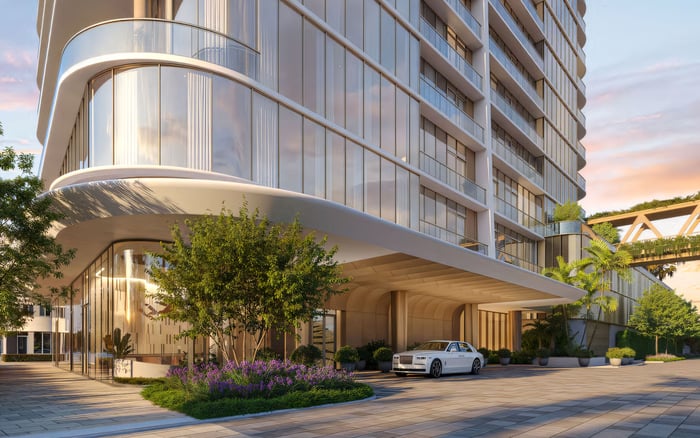
.jpg&width=700&height=438&fit=cover)