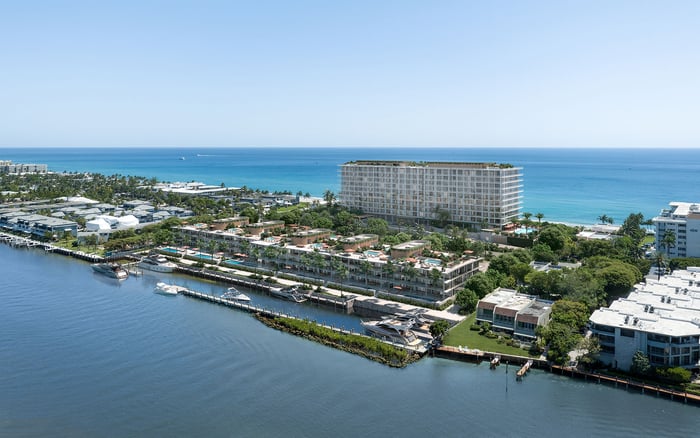
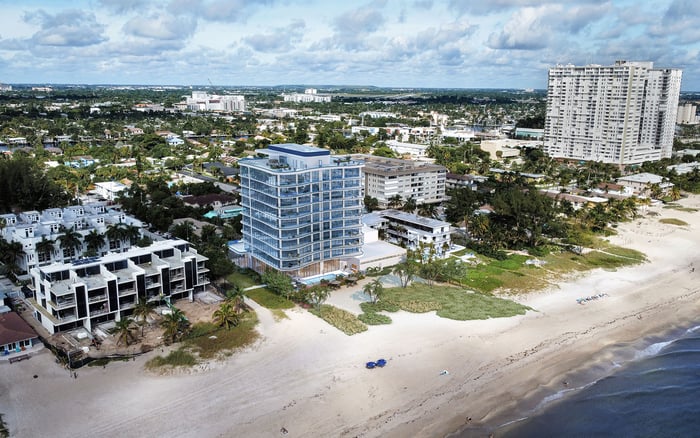
For seasonal owners at Waldorf Astoria Residences Pompano Beach, advertised valet parking and EV charging are the starting point, not a complete vehicle-care agreement. A disciplined ownership file should address storage rights, battery care, key custody, arrival arrangements and liability in writing.

A seasonal residence should make departure feel as considered as arrival. For an owner leaving a vehicle behind, that means knowing where it will remain, who may move it and what condition to expect on return. At Waldorf Astoria Residences Pompano Beach, the beachfront address at 1350 South Ocean Boulevard comes with advertised valet parking and dedicated electric-vehicle charging stations. Those amenities are a starting point, not a complete seasonal vehicle-care agreement.
The essential distinction is between parking a car and accepting responsibility for it throughout an extended absence. Long-term storage procedures, a guaranteed battery-tending program and detailed key-custody rules remain unconfirmed. That does not mean these arrangements are unavailable. It means a buyer should secure written confirmation before making them part of the ownership plan.
The advertised service program includes a 24-hour concierge, a dedicated on-site Director of Residences, 24-hour security and reception, plus doorman and bellman services. These are relevant points of contact, but their presence does not establish who holds vehicle keys, authorizes movement or releases a car after hours.
The same distinction applies to the advertised 24-hour emergency maintenance response with a 15-minute complimentary service. This is residence maintenance, not vehicle or battery maintenance. An owner should not treat it as authorization for staff to connect equipment, start an engine or troubleshoot a depleted battery.
For buyers comparing Broward addresses, including The Ritz-Carlton Residences® Pompano Beach, the useful comparison is not simply the breadth of the amenity program. It is whether each property's written terms accommodate the owner's intended absence and vehicle requirements. Equivalent vehicle-care policies should not be assumed across projects.
An individually assigned private garage space for every residence has not been clearly established. Before discussing battery care or arrival staging, ask what parking arrangement attaches to the particular purchase and where it is recorded.
Request written answers on space allocation, permission to leave a vehicle during an extended absence, any maximum absence period, access hours and valet fees. Clarify whether the car can remain in one location or may be relocated, and who may authorize that movement. These are questions for the ownership file, not confirmed operating rules.
The distinction matters even if the owner expects to use the car only occasionally. Advertised parking assistance is one thing; what the owner may rely on should be established in the purchase and operating documents. Ask for the relevant parking plan or agreement, not a general assurance.
Dedicated EV charging stations are advertised, but charger count, charging standard, separate metering and the inclusion of charging in valet service remain unspecified. Charging infrastructure does not, by itself, establish a battery-maintainer service for a vehicle left parked during an owner's absence.
Treat charging and battery tending as separate requests. For charging, confirm compatibility, reservations, access, billing and who may connect or disconnect the vehicle. For a maintainer, ask whether its use is permitted, who supplies the equipment and whether staff or an approved vendor may handle it.
Any proposed care arrangement should identify the responsible party, agreed frequency, authorization to move the vehicle and the procedure if the service cannot be completed. Request a record of completed visits or interventions. Avoid an undefined instruction to “keep the car ready”; specify the tasks and have the owner's vehicle specialist advise on the care requested.
Twenty-four-hour security and reception do not, by themselves, establish a key-custody or after-hours vehicle-release policy. A protocol covering spare keys, electronic fobs, authorization forms, emergency access and release to household staff remains unconfirmed.
Request the actual authorization form and written storage and release procedures. Identify who may collect the vehicle, how that person's identity will be checked and how permissions can be changed or withdrawn. If a household manager, driver or service vendor needs access, ask whether each requires separate authorization.
Emergency access deserves its own instruction. Establish who should be contacted, under what circumstances a vehicle may be moved and how the owner will be notified. Request a movement record that can be reconciled with the key-release record. The objective is not to complicate service, but to make discretion and accountability compatible.
Vehicle start-up, tire-pressure checks, fueling, detailing and pre-arrival staging should not be treated as promised services. An owner who values any of these should ask whether they can be arranged, who performs them and what notice or separate payment is required.
A proposed arrival instruction should identify the collection window, authorized recipient and requested preparation. If an outside vendor is involved, confirm access permissions and responsibility for coordinating the handover. Keep these instructions separate from general concierge preferences so that a request is not mistaken for an accepted service commitment.
The same discipline can guide a buyer considering Armani Casa Residences Pompano Beach alongside Waldorf Astoria. Ask each project to address the same ownership scenario without presuming that either offers a particular preparation service.
Before relying on a seasonal arrangement, request inspection procedures, insurance exclusions, claims instructions and written clarification of responsibility for battery depletion, vehicle damage or loss. Ask how the car's condition is recorded at handover and what documentation would be required if a concern emerges after an absence.
Reconcile the management response with the purchase agreement, condominium documents, parking plan and valet terms. Have counsel address any conflict between a proposed accommodation and those documents. A helpful conversation has value, but the ownership file should distinguish an advertised amenity from a permitted owner arrangement and an expressly accepted service obligation.
For the seasonal buyer, the goal is straightforward: a parking arrangement that fits the intended absence, a defined battery-care plan if available, controlled key access and an agreed return procedure. The quality of that file lies in its specificity, not its length. With responsibilities settled in advance, the arrival can remain pleasantly uneventful.
For a considered approach to South Florida ownership, explore MILLION.
If branded residences are on your mind — as a home or as an allocation — we would be glad to share what we are seeing, privately.
Begin a quiet conversationThe beachfront project is at 1350 South Ocean Boulevard in Pompano Beach.
Yes, valet parking is advertised. Buyers should separately confirm access hours, fees and the terms governing extended absences.
An individually assigned private garage space for every residence remains unconfirmed. Confirm the allocation attached to the specific purchase in writing.
Detailed long-term storage rules remain unconfirmed. Request written permission and clarification of any maximum absence period.
Yes, dedicated EV charging stations are advertised. Charger count, charging standard, separate metering and inclusion in valet service remain unspecified.
A guaranteed battery-tending program remains unconfirmed. Ask whether it can be arranged and who would perform and record the service.
The advertised 24-hour emergency maintenance response with a 15-minute complimentary service concerns residence maintenance. It does not establish vehicle or battery maintenance coverage.
Vehicle-release permissions for household staff remain unconfirmed. Request the authorization form and identity-verification procedure before relying on this arrangement.
Detailing and pre-arrival vehicle staging should not be treated as promised services. Confirm availability, notice requirements, fees and responsibility separately.
Reconcile written management answers with the purchase agreement, condominium documents, parking plan and valet terms. Include any accepted care instructions, key authorizations and liability provisions in the ownership file.