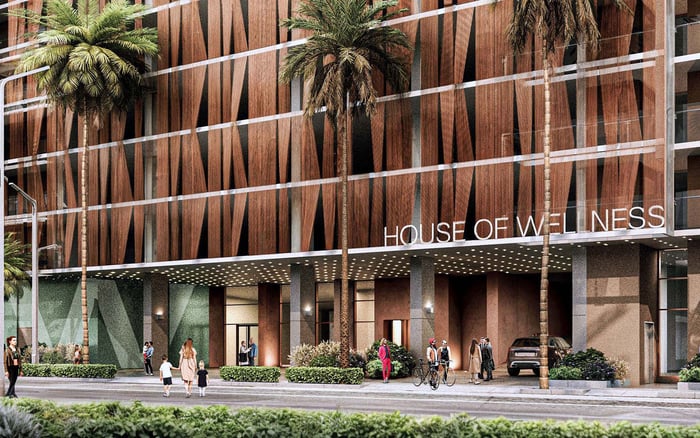
A buyer’s guide to separating advertised service from documented access and screening policies at St. Regis® Residences Sunny Isles, with practical requests for caregivers, household staff, and outside providers.

For a household supported by a nurse, nanny, private chef, or rotating care team, residential service means more than a polished arrival. It also means an authorized person can reach the residence at the right time, with clear permissions and a reliable handover between shifts.
At St. Regis® Residences Sunny Isles, advertised services include lobby reception, concierge service, and 24/7 valet. The broader offering includes round-the-clock property access control, doorman and butler service, onsite maintenance and engineering, common-area housekeeping, and package delivery. These are meaningful services, but they do not establish the rules for privately employed caregivers or the screening applied to every worker.
The ownership file should distinguish hospitality, permission to enter, and responsibility for screening. These are related functions, not interchangeable assurances.
Advertised amenities also include 24/7 security and valet parking, along with round-the-clock butler, doorman, and porter services. A universal background-check standard for employees, contractors, and private household personnel, however, is not specified in the published service offering.
That distinction matters. Controlled access governs entry to the property. Credentialing establishes identification and permissions. Background screening examines a person's history under a defined process. None should be treated as proof of the others.
The absence of published detail does not mean a policy is absent or screening is not performed. It means an owner should obtain the applicable written policy rather than infer it from staffing levels or service descriptions. Ask which rules are current, which entity administers them, and whether they differ between the North and South Towers.
The published materials do not specify whether nurses, home-health aides, nannies, or other private household staff are classified as guests, recurring vendors, residents, or service personnel. Advance-registration, identification, owner-authorization, vehicle-registration, and credential requirements are also unspecified.
Begin with classification. Then request a written explanation of how that classification affects a caregiver's working day. A household relying on overnight support needs answers that extend beyond a daytime visit.
Ask management to confirm:
Whether standing credentials are available and how substitutes are authorized.
Whether the owner must be present, including during overnight shifts.
Which entrances and elevators caregivers may use.
How parking, vehicle registration, and access logs are handled.
Who can revoke credentials and how a termination is communicated.
For a Sunny Isles Beach buyer also considering The Ritz-Carlton Residences® Sunny Isles, these questions offer a useful basis for comparison. Ask them independently at each property; they are not evidence that the buildings share procedures.
Request a written walkthrough of a shift change: one caregiver leaves, another arrives, and the owner is unavailable. Ask who authorizes entry and resolves a credential issue. Treat this as a scenario to clarify, not an established procedure.
Advertised onsite maintenance and engineering do not establish whether workers are property employees or contractors. The published common-area housekeeping offering likewise specifies no employer, training requirement, or background-check protocol.
Staff-credentialing questions should be precise. Request clarification on badges, uniforms, permitted access zones, supervision, training, and confidentiality obligations. Ask whether permissions differ for common-area work and work inside a private residence, and how temporary or replacement personnel are identified.
Verify the property manager's exact legal operating entity in the management agreement. A brand name alone does not identify every employer, contractor, or party responsible for screening.
The ownership file should record who answers each question: the association, management company, security contractor, caregiver's employer, or owner. Do not leave responsibility unresolved between parties. If an outside employer performs screening, ask what confirmation management requires and what remains the owner's responsibility.
Universal criminal-history checks, sex-offender-registry checks, employment verification, drug screening, and recurring re-screening for employees and contractors are not confirmed in the published amenity descriptions. Owners should not describe any of these measures as established property policy without written confirmation.
Rather than asking only whether workers are checked, request the scope of the applicable process. Which personnel categories are covered? Who commissions the screening? Is it performed only at onboarding or repeated? How are contractor substitutions addressed?
For privately hired caregivers and household employees, also confirm any identification, professional-license, insurance, employer-information, reference, and workers’ compensation requirements. None should be assumed from the service offering. Building access approval and an owner's hiring decision should be evaluated separately.
A policy associated with one branded address should not be carried over to another. Screening requirements at another Miami property would not establish Sunny Isles caregiver, employee, or vendor-screening rules.
Buyers considering St. Regis® Residences Brickell alongside Sunny Isles should request separate documentation for each address. Shared branding is not evidence of identical operating entities, access classifications, or screening obligations.
Likewise, a comparison with Bentley Residences Sunny Isles should rest on that property's own written responses. For a household with recurring care needs, the useful comparison is whether each building can document how it would accommodate the household's schedule.
Privately engaged chefs, cleaners, tutors, trainers, massage therapists, and pet-care providers warrant a separate review. The published amenity descriptions do not establish whether management approval is required or specify work hours, escort requirements, prohibited tools or materials, or recurring-provider procedures.
Request the current declaration, bylaws, rules and regulations, management agreement, vendor-registration forms, and applicable security and service-elevator procedures. Ask management to identify which documents govern each provider category and confirm any additional operating instructions in writing.
Keep the file practical: a document register, named points of responsibility, caregiver authorizations, provider requirements, and a clear credential-revocation process. Date the responses and ask how future changes will be communicated. The objective is not paperwork for its own sake, but continuity of care, privacy, and fewer avoidable interruptions at the point of entry.
For a discreet discussion of how residential service fits your ownership priorities, connect with MILLION.
If branded residences are on your mind — as a home or as an allocation — we would be glad to share what we are seeing, privately.
Begin a quiet conversationAdvertised services include lobby reception, concierge service, 24/7 valet, property access control, security, and doorman service. These descriptions do not establish a universal screening standard.
The reviewed service descriptions do not specify a caregiver-access policy. That does not mean a policy does not exist; owners should request it in writing.
The reviewed materials do not establish their classification. Ask management how nurses, aides, nannies, and other household staff are categorized and what permissions follow.
The reviewed descriptions do not establish overnight or owner-absence rules. Request written confirmation covering standing credentials, shift changes, and substitute caregivers.
The reviewed amenity descriptions do not identify permitted entrances or elevators. Obtain the applicable access and service-elevator procedures from management.
Universal screening is not confirmed in the reviewed materials. Ask which personnel categories are screened, what checks apply, and whether re-screening occurs.
Responsibility should be confirmed among the association, management company, security contractor, caregiver's employer, and owner. Do not assume building access approval establishes completed screening.
The reviewed materials do not specify these requirements. Confirm applicable identification, licensing, insurance, employment-verification, and workers’ compensation documentation before arranging service.
No; another property's policy does not establish Sunny Isles caregiver, employee, or vendor-screening rules. Request documentation specific to Sunny Isles.
Request the current declaration, bylaws, rules and regulations, management agreement, vendor-registration forms, and applicable security and service-elevator procedures. Keep written confirmations of caregiver permissions and screening responsibilities with them.