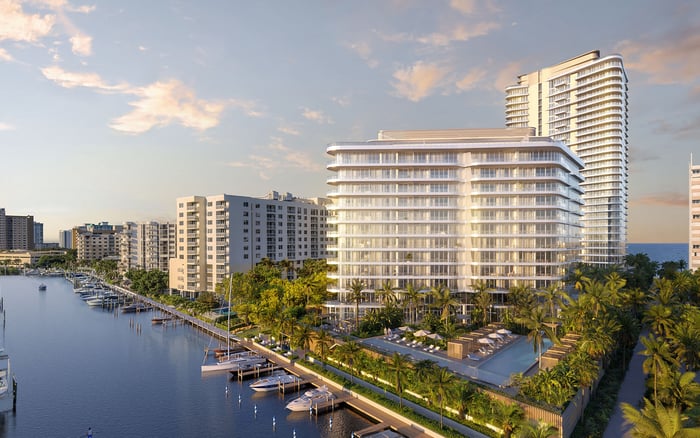
A buyer-focused guide to reviewing Casamar’s insurance documents, distinguishing replacement cost from market value, assessing ordinance-and-law protection, and aligning unit-owner coverage with valuable interior finishes.
For a buyer considering Casamar, insurance deserves the same deliberate attention as the residence itself. A beautifully specified interior and an association master policy answer different questions. The first describes what an owner enjoys; the second defines which property is insured, on what terms, and subject to which limits and deductibles.
A useful ownership file connects three layers: the association’s replacement-cost valuation, its protection for code-required rebuilding, and the owner’s coverage for excluded interiors and private improvements. Review these layers together rather than treating them as interchangeable assurances.
This is a due-diligence framework for Casamar, not a conclusion that the property is underinsured or has experienced claims or assessments. The objective is to establish the actual contractual position before the applicable review deadline, allowing time to resolve questions with the association, insurance adviser, and legal counsel.
Florida condominium associations must maintain adequate property insurance, with replacement cost serving as the statutory basis for determining coverage amounts. That cost must be determined at least once every three years through an independent insurance appraisal or an update of a previous appraisal.
For a purchaser, the distinction is fundamental: replacement cost concerns the expense of replacing insured property, not the resale price of an individual residence. A negotiated purchase price is no substitute for the association’s insurance valuation.
Request the current appraisal and any update, then ask the association’s insurance adviser to explain how the valuation relates to the policy’s insured amounts. Review the appraisal date and property scope alongside the declarations and endorsements. The question is whether the documents describe a coherent insurance arrangement-not whether a headline number appears impressive.
For buyers comparing Pompano Beach residences, including Ocean 580 Pompano Beach, the same discipline provides a useful basis for comparison. Request equivalent documents for each property rather than using asking prices as a proxy for insurance adequacy.
Restoring a building to its pre-loss condition and rebuilding in compliance with applicable requirements are not necessarily the same financial exercise. Ordinance-and-law coverage addresses additional rebuilding costs required by laws and ordinances. Those costs can exceed the expense of simply replacing what was there.
The review should address both the amount of coverage available and the circumstances in which it responds. Ask the insurance adviser to identify the relevant endorsements, explain their limits, and distinguish protection for repairs to damaged portions from circumstances requiring broader code compliance.
Florida’s applicable residential-policy framework describes ordinance-and-law limits of 25% or 50% of the dwelling limit. Those percentages do not establish Casamar’s master-policy limits and should not be applied to an association analysis without examining the actual contract.
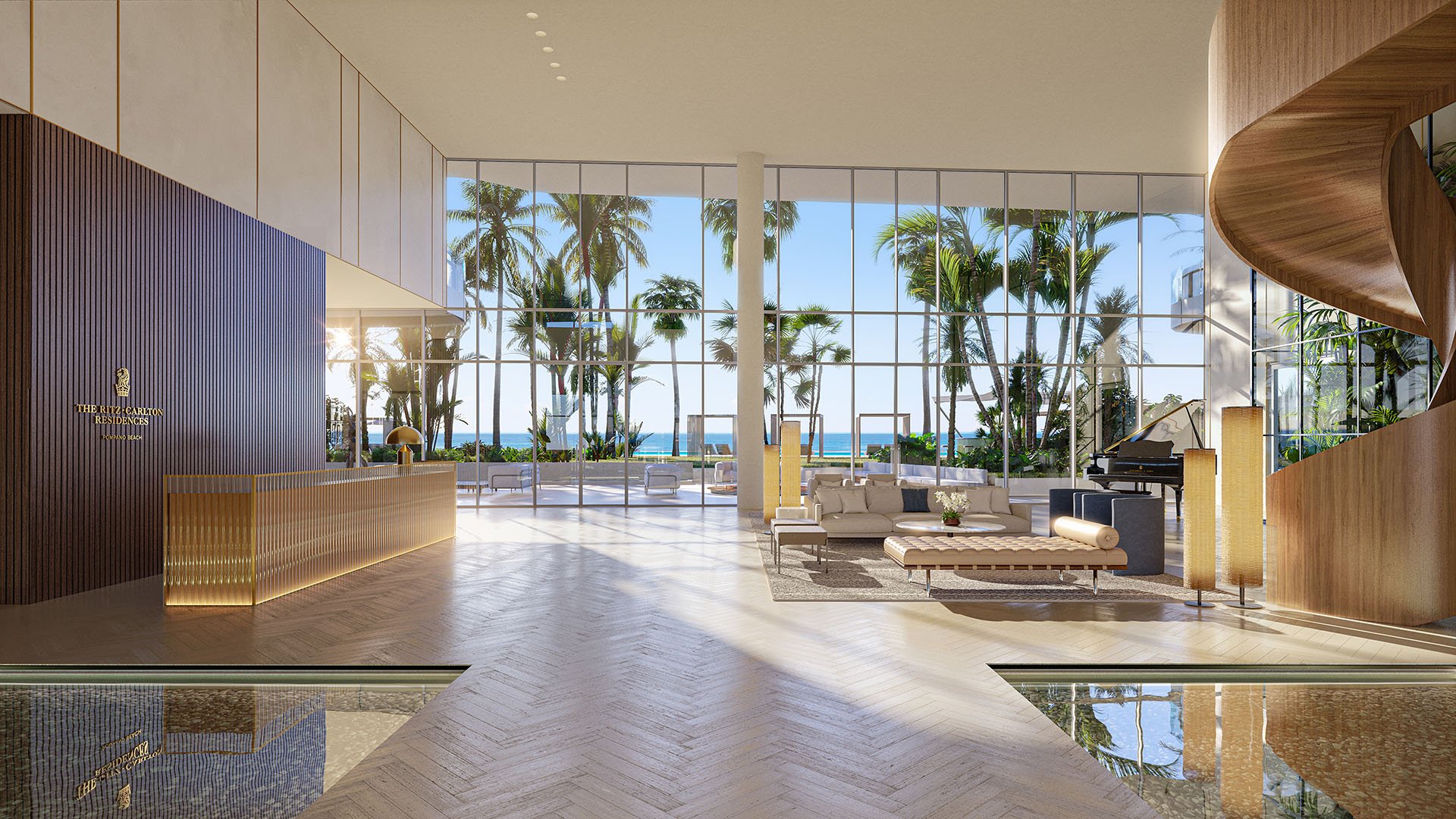
For a buyer also evaluating The Ritz-Carlton Residences® Pompano Beach, this calls for another comparison of documents, not an assumption based on brand. Ask the same coverage questions for each property; do not assume the answers are identical.
Association property insurance generally covers condominium property as originally installed, or replacements of like kind and quality, subject to statutory exclusions. That qualification matters: original installation does not automatically bring every finish or fixture within the association’s statutory coverage.
Personal property within individual units or limited common elements is excluded, as are floor, wall, and ceiling coverings. Electrical fixtures, appliances, water heaters, and water filters serving only an individual unit also fall within the exclusions.
Built-in cabinets, countertops, and window treatments serving only an individual unit are excluded as well, including curtains, drapes, blinds, and associated hardware. A permanent installation can therefore remain outside the master policy’s statutory coverage. Permanence is not the coverage test.
For an owner with carefully selected finishes, this distinction warrants an item-by-item review. It does not mean every interior component is uninsured. Establish where association coverage ends and where the unit-owner policy should respond, reading the governing documents alongside applicable law rather than treating them as an override.
The same review is appropriate when considering Armani Casa Residences Pompano Beach. Whatever the design appeal, the insurance task remains specific: identify each finish category, its current replacement cost, and the policy intended to cover it.
The association is not responsible for reconstructing improvements that benefit only one unit and are not part of the standard improvements originally installed by the developer. Buyers should distinguish the original specification from subsequent work, while remembering that statutory exclusions can also apply to original finishes.
Build a documented inventory using photographs, finish schedules, renovation records, and available invoices. Have the insurance adviser compare it with the proposed or existing HO-6 unit-owner policy. Use current reproduction costs rather than assuming original specifications or historic spending remain adequate.
Ask for a clear explanation of how the policy treats excluded interior components, personal property, and private improvements. The goal is not merely to obtain a policy, but to align its terms and limits with the residence being acquired. An unresolved question about cabinetry or flooring is easier to address during review than after a loss.
A master policy does not eliminate an owner’s financial exposure. Association deductibles can create expenses ultimately borne by owners, making the deductible schedule a separate, essential part of the ownership file.
Florida law establishes loss-assessment coverage requirements for residential condominium unit-owner policies. That does not mean every assessment qualifies for payment. Ask the insurer whether the proposed coverage responds to master-policy deductibles, code-required work, excluded losses, or insufficient association insurance. Request an explanation of applicable restrictions.
Keep these questions distinct from the adequacy of interior coverage. A policy intended to protect finishes should not be assumed to resolve association-level expenses. Across Broward, this separation provides a disciplined way to evaluate ownership exposure without presuming that any particular building will levy an assessment.
Before the applicable deadline, assemble the current insurance appraisal, complete master policy and endorsements, deductible schedule, renewal information, and available claims records. Add the governing documents, unit finish inventory, renovation records, and HO-6 terms.
Have the advisers reconcile three questions in writing: what property is valued and insured, what additional code-related costs are covered, and what remains the owner’s responsibility. Any proposed adjustment should identify the relevant policy or document rather than rest on a general assurance of comprehensive protection.
For Casamar ownership, confidence should come from alignment between the building’s insurance contract, the residence’s actual finishes, and the buyer’s retained exposure. That is the practical value of a complete ownership file.
For a considered approach to South Florida condominium ownership, explore MILLION.
If branded residences are on your mind — as a home or as an allocation — we would be glad to share what we are seeing, privately.
Begin a quiet conversationNo. It outlines Florida insurance rules and recommended due diligence, not a finding about Casamar’s actual coverage, claims, or assessments.
Replacement cost must be determined at least once every three years through an independent insurance appraisal or an update of a previous appraisal.
No. Replacement cost concerns replacing insured property, while the purchase price reflects the transaction value of the residence.
It addresses additional rebuilding costs required by applicable laws and ordinances. Review both its dollar limits and its scope for damaged portions and broader code compliance.
No. Those figures belong to an applicable residential-policy framework and do not establish Casamar’s association limits; the actual policy and endorsements must be examined.
No. Statutory exclusions include floor, wall, and ceiling coverings, built-in cabinets, countertops, and certain unit-serving fixtures and equipment.
The association is not responsible for reconstructing improvements benefiting only one unit that are not part of the developer’s original standard improvements. Owners should review their HO-6 coverage for that exposure.
Compare the HO-6 policy with a documented finish inventory and renovation records, using current reproduction costs. Ask the insurance adviser to explain how the policy treats each relevant category.
No such assumption should be made. Ask the insurer specifically about master-policy deductibles, code-required work, excluded losses, and insufficient association insurance.
Request the current appraisal, complete master policy and endorsements, deductible schedule, renewal information, and available claims records before the applicable review deadline.