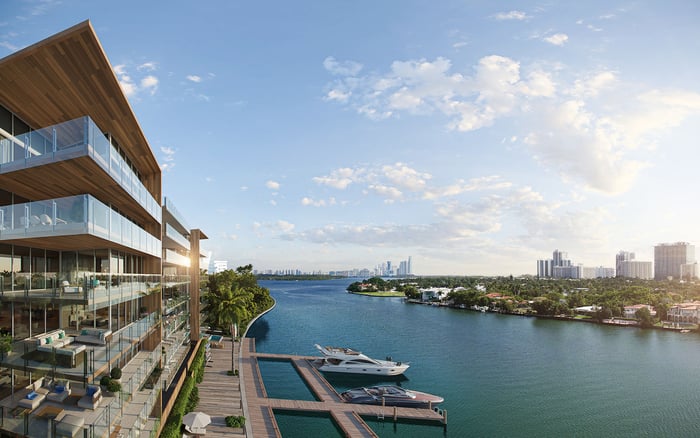
A due-diligence framework for comparing Alma and Mila in Bay Harbor Islands, with emphasis on service, privacy, governing documents, recurring obligations, and long-term ownership.

Buyers considering Alma Bay Harbor Islands or Mila Bay Harbor Islands should base any comparison on current project documents rather than assumptions drawn from branding, renderings, or general market positioning. Service, privacy, and long-term ownership depend on the specific residence, governing structure, operating plan, and rights conveyed at closing.
The most useful approach is to request the same document set for each project and compare it line by line. Any material difference should be clarified in writing before a buyer commits.
Service can mean different things across boutique residential projects. Buyers should determine which functions are contractually included, who provides them, when they are available, and how their costs appear in the proposed budget.
Questions should address lobby coverage, access control, deliveries, guest coordination, parking operations, package handling, maintenance communication, emergency procedures, and support during an owner’s absence. Marketing language should not replace confirmation in the applicable documents.
A buyer should also distinguish between a building feature and an ongoing service. An access system, for example, does not by itself establish staffing levels or assistance for residents and guests.
Privacy is shaped by more than the number of residences. The review should cover elevator sharing, lobby entry, guest access, delivery routes, service access, camera placement, common-area circulation, and the rules governing visitors and vendors.
Floor plans and project documents should be read together. Buyers should verify whether any arrival, elevator, parking, storage, terrace, or amenity feature is private, shared, assigned, licensed, or subject to operating restrictions.
Residence orientation also matters. A buyer should assess entry sequences, exposure to common areas, and the relationship between private interiors and shared spaces without relying solely on presentation materials.
Long-term ownership requires a careful review of the declaration, proposed budget, reserve assumptions, insurance structure, maintenance estimates, warranties, leasing restrictions, use rules, and responsibilities for building systems. Buyers should identify which costs are recurring, which may vary, and which obligations belong to the association or individual owner.
Parking and storage require particular attention. The documents should establish whether these rights are deeded, assigned, licensed, shared, or subject to change. The same verification should apply to amenity access and any residence-specific feature.
Seasonal owners should ask how authorized representatives, household staff, property managers, guests, and vendors may access the residence. Procedures for extended absences, emergencies, deliveries, and maintenance should also be confirmed.
A practical comparison worksheet can include residence layout, finish schedule, parking rights, storage rights, access arrangements, amenity rights, service commitments, proposed expenses, insurance assumptions, warranties, leasing rules, and delivery terms. Each entry should identify the supporting document rather than relying on a verbal representation.
For broader Bay Harbor Islands context, buyers may also review Alana Bay Harbor Islands and The Well Bay Harbor Islands. These project pages can support a wider search, but they do not substitute for the documents governing Alma or Mila.
The choice between Alma and Mila should follow a residence-specific and document-based review. Buyers should prioritize the ownership structure, service model, privacy conditions, recurring obligations, and restrictions that best fit their intended use.
Where disclosures differ or remain incomplete, the appropriate next step is clarification rather than inference. Legal, financial, insurance, and inspection questions should be directed to qualified professionals reviewing the current transaction documents.
How should buyers compare Alma and Mila? Request equivalent document sets for both projects and compare each material term using written disclosures.
What should buyers verify about service? Confirm which services are included, who provides them, their operating hours, and how their costs are allocated.
How can buyers assess privacy? Review access controls, elevator and lobby circulation, guest procedures, delivery routes, service access, and applicable rules.
Should marketing materials be treated as binding? Buyers should rely on current transaction and governing documents and seek written clarification of any inconsistency.
What ownership documents deserve close review? Review the declaration, proposed budget, reserve assumptions, insurance structure, warranties, maintenance estimates, and use restrictions.
How should parking and storage be evaluated? Confirm whether each right is deeded, assigned, licensed, shared, or otherwise restricted under the applicable documents.
What should seasonal owners investigate? Ask about access during absences, authorized representatives, property managers, guests, vendors, emergencies, and maintenance procedures.
Why do proposed expenses matter? They help buyers evaluate the anticipated recurring obligations associated with ownership, subject to the governing documents and future changes.
Can another local project replace project-specific diligence? No. Other projects may provide context, but each property requires its own document and residence-level review.
When should professional advisers become involved? Buyers should involve appropriate legal, financial, insurance, and inspection professionals before making a binding commitment.
For a tailored shortlist and next-step guidance, connect with MILLION.
If branded residences are on your mind — as a home or as an allocation — we would be glad to share what we are seeing, privately.
Begin a quiet conversation