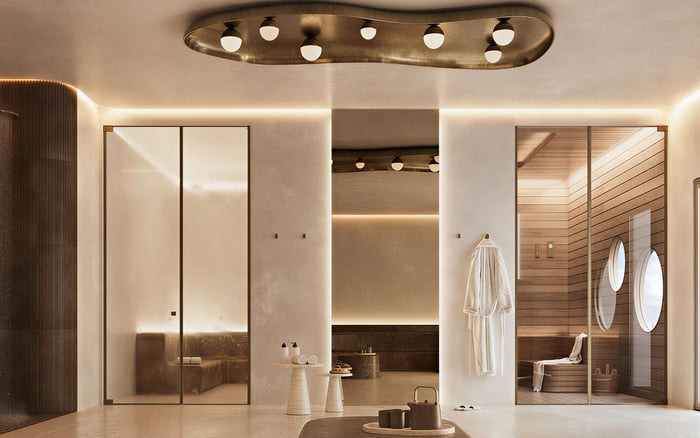
A disciplined comparison of service, privacy, governance, and ownership questions for buyers considering two distinct Brickell residential propositions.

For a luxury buyer, the meaningful comparison between 2200 Brickell and House of Wellness Brickell is not simply architectural. It is operational. Service delivery, resident privacy, association governance, and the durability of common charges will shape daily life long after the purchase.
2200 Brickell presents the clearer framework: a luxury condominium on Brickell Avenue conceived as a boutique alternative to the district’s larger residential towers. Low-density living anchors its proposition, combining private residences, design emphasis, and a curated collection of shared amenities.
House of Wellness Brickell calls for a more document-led review. Buyers should not treat its name as confirmation that specific wellness programs, service standards, ownership terms, prices, or timelines are guaranteed. Those details must be established through governing documents, contracts, and current disclosures.
At 2200 Brickell, the service proposition is residential and amenity-led rather than expressly structured around a hotel-style operating model. That distinction matters. A conventional condominium depends on its association, management structure, staffing plan, budget, and vendor relationships to sustain the experience promised at purchase.
Buyers should determine which services are funded through common charges, which are billed individually, and which depend on outside providers. They should also examine operating hours, staffing coverage, delivery procedures, guest handling, and the authority to alter services after turnover.
The same discipline is essential at House of Wellness Brickell. Wellness should be translated from concept into enforceable detail. Determine whether services are included, separately billed, delivered by third parties, or governed by agreements the association may amend or terminate. The central question is not how expansive the offering sounds, but who is obligated to provide it, at what cost, and for how long.
Boutique scale can support discretion, but residence count alone does not create privacy. At 2200 Brickell, buyers should test how low density affects elevator use, visitor access, deliveries, staff circulation, and amenity traffic. These operational touchpoints reveal whether the intimate concept holds during busy periods.
Ask how residents and service personnel enter the property, whether guests are announced, how packages are stored, and how vendors reach individual homes. Review camera policies, access credentials, loading procedures, and rules for private events. A polished lobby cannot compensate for an elevator plan or delivery process that exposes residents to unnecessary traffic.
This is where the boutique proposition becomes measurable. The appeal of 2200 Brickell lies in pairing a central location with a comparatively intimate residential environment. Privacy-focused purchasers should confirm that building procedures reinforce that promise rather than merely restate it through design language.
A thoughtful purchase should include a focused comparison set. Buyers weighing these two properties may also consider Baccarat Residences Brickell and St. Regis® Residences Brickell, then compare governing documents and operating assumptions rather than rely on brand or amenity descriptions alone.
This broader view sharpens personal priorities. Some purchasers value intimacy and residential calm; others prioritize a more extensive service platform. Lifestyle preferences should remain distinct from contractual obligations, since two developments can appear similarly luxurious while assigning owners very different costs and responsibilities.
The decisive comparison is always between what is presented and what the condominium can sustainably deliver.
Investment discipline begins with the proposed budget, reserve policy, insurance assumptions, management agreement, and contracts supporting amenities or wellness services. Buyers should model how recurring expenses may change once actual operating needs replace early projections.
At a low-density property, fewer owners may share certain fixed costs. That does not make boutique ownership unattractive, but it places greater weight on budget quality. Review whether staffing and amenity standards can be sustained without disproportionate assessment growth. Ask what happens if insurance, labor, maintenance, or vendor costs rise, and whether reserves are structured for the property’s expected obligations.
Rental rules also merit close attention. Even an owner with no intention of leasing should understand minimum terms, approval procedures, guest rules, and enforcement powers. These provisions can affect privacy, resident turnover, financing, and resale appeal.
Before signing, obtain the declaration, proposed budget, rental rules, management agreements, insurance assumptions, reserve policy, privacy protocols, and all material service contracts. For House of Wellness Brickell, request specific documentation for every wellness or concierge element material to the purchase decision.
Counsel and financial advisers should evaluate amendment rights, termination provisions, owner obligations, and association authority. Buyers should also determine which representations survive closing and which remain promotional. The goal is not to diminish the emotional appeal of a residence, but to ensure that the lived experience and long-term financial structure align.
What distinguishes 2200 Brickell within Brickell? It is positioned as a low-density, boutique condominium rather than a large-scale residential tower.
Is 2200 Brickell organized like a hotel residence? Its disclosed proposition is residential and amenity-led, not explicitly based on a hotel-style operating model.
Does low density guarantee privacy? No. Buyers must examine elevators, access controls, deliveries, staffing routes, guest procedures, and amenity traffic.
What should buyers verify at House of Wellness Brickell? Verify the ownership structure, services, fees, provider contracts, pricing, rental rules, and delivery terms in current documents.
Are wellness services necessarily included in common charges? That should not be assumed. Confirm whether each service is included, billed separately, or supplied through a third party.
Why does the proposed condominium budget matter? It indicates whether recurring owner payments may support the expected staffing, amenities, insurance, maintenance, and reserves.
What contracts deserve particular scrutiny? Review management, concierge, wellness, amenity, and vendor agreements, including amendment and termination rights.
Can rental rules affect an owner who never leases? Yes. Rental and guest policies may affect privacy, building traffic, financing considerations, and future resale positioning.
What is the central long-term risk in a boutique condominium? Owners should assess whether a smaller association can sustain desired service levels without disproportionate cost increases.
Which residence is better for a privacy-focused buyer? The stronger choice is the one whose documents and operations best support controlled access, limited traffic, and sustainable service.
For a discreet conversation and a curated building-by-building shortlist, connect with MILLION.
If branded residences are on your mind — as a home or as an allocation — we would be glad to share what we are seeing, privately.
Begin a quiet conversation