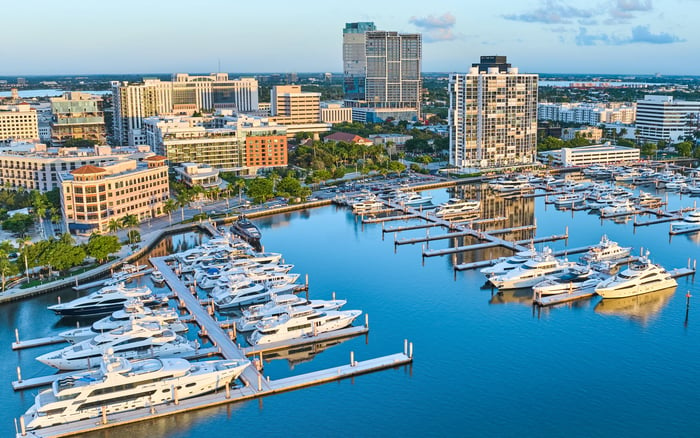
A discreet summer lock-up framework for protecting a West Palm Beach residence through humidity, storms, maintenance needs, and controlled access.

Leaving a South Florida home for the summer involves more than closing the doors and transferring a key. At The Ritz-Carlton Residences® West Palm Beach, a prudent approach calls for a coordinated asset-protection program encompassing in-residence preparation, preventive maintenance, storm procedures, controlled access, and continuing oversight.
For a second-home owner, the objective is continuity. Finishes, furnishings, mechanical systems, security, and insurance documentation should remain carefully managed throughout the vacancy. Resilience features can reduce exposure, but they do not replace inspections, maintenance, or a clear response plan.
The same discipline applies across the city’s luxury landscape, from Forté on Flagler West Palm Beach to other branded residences. Operating details will differ, so each owner should confirm responsibilities directly with residential management and the insurer before departure.
During an extended vacancy, humidity control should be a central priority. Air conditioning should be configured to support moisture control without imposing unnecessary mechanical stress over a prolonged absence.
No universal thermostat setting suits every residence. Exposure, equipment, interior materials, insurer requirements, and building policies may differ. Owners should obtain a residence-specific recommendation, verify that the HVAC equipment is functioning properly, and confirm how humidity or system alerts will be received and escalated.
Before lock-up, arrange preventive HVAC service and review condensate drainage and monitoring systems. A scheduled inspection should look beyond temperature alone, checking for elevated humidity, unusual odors, visible condensation, or an equipment fault.
Water-intrusion planning should encompass windows, exterior doors, balcony thresholds, plumbing fixtures, and any minor leak that could worsen unnoticed. Drains should be checked, vulnerable interior areas observed, and the appropriate treatment of plumbing lines or fixtures confirmed with qualified professionals and management.
Pre-departure care should include inspection and appropriate maintenance of balcony railings, sliding-door hardware, appliances, and other metal components. Balcony items should be handled in accordance with building storm procedures, with responsibilities established before severe weather approaches.
Owners considering residences such as Mr. C Residences West Palm Beach should apply the same principle: understand where the association’s obligations end and the owner’s begin. That boundary is particularly important for exterior openings, balconies, vendor access, and any storm-protection system.
A refined storm plan is operational, not aspirational. It should identify who monitors forecasts, when the residence may be inspected, which photographs are required, and what conditions trigger escalation. The pre-storm protocol should be paired with a post-storm process covering access, visual review, reporting, and authorization for urgent work.
Owners should not assume that branded service automatically includes unit-level storm inspections or maintenance. The scope must be verified in governing documents, management policies, or a separate service agreement. The same caution applies across nearby ownership choices, including The Ritz-Carlton Residences® Palm Beach Gardens.
The owner, local representative, and management team should follow a single, current contact hierarchy. A secondary contact and defined escalation route should also be documented in case communications fail.
Written authorization should specify who may enter, approve emergency work, meet outside vendors, and communicate with the insurer. It should also establish financial approval limits and clarify when additional owner consent is required. Keys, credentials, and alarm instructions should be controlled, documented, and restricted to authorized parties.
A concise residence file can include owner contacts, the local representative, insurance information, service contracts, equipment instructions, preferred vendors, and emergency approval limits. Copies should be available to the appropriate parties without exposing sensitive information more broadly than necessary.
Staff coordination is most effective when expectations are explicit. Owners should confirm whether inspections are available, their permitted scope and frequency, how findings will be documented, and who is responsible for follow-up. This turns service into a defined workflow rather than an assumption.
Before departure, complete HVAC, plumbing, drainage, and monitoring maintenance; inspect exterior openings and balconies; review corrosion-prone components; remove or secure items as management directs; and test the communication chain. Then document inspection and reporting expectations in writing.
The final file should record the residence’s condition at departure, supported by dated photographs where appropriate. Reusing and refining the checklist each year can help preserve condition, security, and lifestyle value across successive storm seasons.
Is handing keys to building staff enough? No. A sound lock-up integrates residence preparation, preventive maintenance, storm procedures, authorized access, and documented oversight.
What is a principal interior concern during vacancy? Humidity should be monitored because prolonged moisture can affect interior materials and furnishings.
What thermostat setting should an owner use? Confirm a residence-specific setting with management, a qualified HVAC professional, and the insurer rather than relying on a universal number.
Should the HVAC be serviced before departure? Preventive service can verify that the system and its condensate drainage are operating as intended before the summer vacancy.
Which areas deserve water-intrusion attention? Review windows, exterior doors, balconies, plumbing fixtures, drains, and any small leak that could worsen during vacancy.
Why inspect metal components before lock-up? Railings, sliding-door hardware, appliances, and other metal elements should be included in the pre-departure maintenance review.
Will branded staff automatically inspect the residence? Do not assume so. Confirm any unit-level inspection or maintenance service in management policies, governing documents, or service agreements.
What should written authorization cover? It should define entry rights, vendor coordination, emergency-work authority, approval limits, and the route for contacting the owner.
What should storm reports include? Establish inspection timing, photographs, observed conditions, reporting expectations, follow-up responsibilities, and escalation procedures in advance.
How can an owner make the process repeatable? Maintain a written checklist, update contacts and authorizations, document the residence before departure, and refine the plan after each season.
To compare the best-fit options with clarity, connect with MILLION.
If branded residences are on your mind — as a home or as an allocation — we would be glad to share what we are seeing, privately.
Begin a quiet conversation