A discreet planning guide for art collectors considering South Florida real estate, with focus on domicile discipline, collection logistics, privacy, insurance, and lifestyle fit.
For art collectors, South Florida is rarely a simple lifestyle move. It is a recalibration of home, advisors, privacy, storage, travel, philanthropy and legacy. The phrase “state-income-tax savings” may sound straightforward, but the real work begins well before a waterfront contract is signed. A residence can support a broader tax position, but it does not create one by itself.
The most sophisticated buyers treat the acquisition as part of a coordinated personal balance sheet. They ask whether the home will serve as a primary base, a seasonal pied-à-terre, a family gathering point or a quiet collecting salon. They also consider where the collection is displayed, where it is stored, who maintains it and how often the owner is physically present in South Florida.
That distinction matters. A collector may love Miami Beach during Art Basel season, prefer Brickell for international access and keep a longstanding residence elsewhere. The decision should be made with tax counsel, estate counsel, insurance advisors and art professionals aligned from the start.
A credible state-income-tax strategy depends on consistency. Buyers should think less about one symbolic act and more about a full pattern of life. Where are the owner’s principal days spent? Where are the most important personal records maintained? Where are physicians, clubs, family offices, voting ties, banking relationships and daily routines centered?
A luxury condominium can be a powerful anchor when it is genuinely used that way. In Brickell, a residence such as The Residences at 1428 Brickell may appeal to collectors who want a vertical urban base close to private banking, legal offices, dining and cultural events. The lifestyle case is clear, but the planning case depends on behavior after closing.
Collectors should be prepared to document their presence and choices with the same care they apply to provenance. Travel calendars, residential records and advisor coordination should tell one coherent story. The point is not theatrical minimalism in one state and excess in another. It is alignment.
Art often complicates a move more than furniture, cars or wine. A collection may be distributed among homes, storage facilities, galleries, museums and conservation specialists. Each location can carry practical implications, including insurance treatment, climate requirements, transport protocols and access controls.
Before buying in South Florida, collectors should identify which works are appropriate for display in a coastal residence and which belong in specialized storage. Humidity control, security, staff access and installation logistics should be discussed before the interiors are designed. Large-format works, sculpture and delicate materials may affect elevator use, loading arrangements and service protocols.
For a Miami Beach buyer, The Perigon Miami Beach represents the type of setting where architecture, light and ocean proximity must be considered together. The question is not simply whether art looks beautiful in the space. It is whether the residence can support the collection without compromise.
The best homes for collectors are not always the most visible. Privacy, controlled arrival, discreet staffing and secure deliveries can matter as much as views. A collector who entertains trustees, curators, artists or family office advisors may need generous reception areas, along with clear separation between public and private zones.
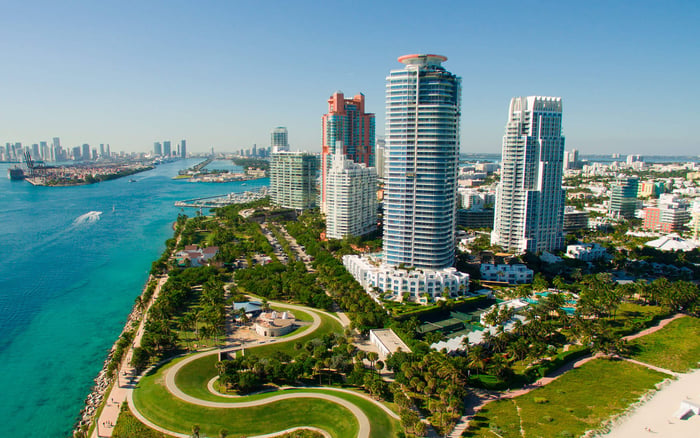
South Florida offers several versions of this lifestyle. Brickell gives immediacy and financial district energy. Miami Beach offers cultural rhythm, hospitality and waterfront glamour. West Palm Beach and Palm Beach often appeal to buyers seeking a more residential cadence, with a sense of heritage and quiet permanence.
In West Palm Beach, Shorecrest Flagler Drive West Palm Beach may suit a buyer who wants proximity to Palm Beach while keeping a refined mainland base. For some collectors, that balance can be more compelling than a purely seasonal address.
Collectors should not focus only on income tax. Art purchases, interstate movement, loans, gifts, trust planning and estate objectives can all interact with the location of works and the owner’s broader residency position. The details can become highly specific, especially when artworks move between residences or are placed in long-term storage.
The prudent approach is to map the collection before the move. Identify what is owned personally, what is held through entities or trusts, what may be promised to institutions and what is intended for future sale or inheritance. This is also a good time to update appraisals, insurance schedules and installation records.
For investment-minded buyers, this discipline can protect both financial and emotional value. A residence should enhance the life of the collection, not create ambiguity around it.
There is no single ideal address for every collector. The right choice depends on how the owner lives. A buyer who travels frequently to Europe, Latin America or New York may prioritize airport access and a full-service condominium. A collector who hosts intimate dinners may care more about ceiling heights, wall expanses, lighting and kitchen support. A family with museum relationships may place greater emphasis on privacy and generational planning.
Fisher Island can appeal to buyers who want exceptional separation from public life. The Residences at Six Fisher Island fits the conversation for collectors who value discretion, controlled access and a resort-like residential environment. The tradeoff is that island living requires a deliberate rhythm, which may be exactly the point.
South Florida’s strength is choice. The collector can build an urban life in Brickell, an oceanfront life in Miami Beach, a quieter circuit around Palm Beach or a hybrid that reflects family and collection priorities. The key is making those choices intentional rather than reactive.
Before contract, a collector should assemble a private advisory conversation around five questions. First, what is the intended residency position, and how will daily life support it? Second, which works will move to South Florida, and which will remain elsewhere? Third, does the building support secure receiving, installation and climate-sensitive living? Fourth, how will insurance, appraisal and conservation protocols change? Fifth, does the estate plan still match the owner’s new geography?
These are not questions to postpone until after closing. The most elegant acquisitions are often the quietest because the complexity was addressed early. When the home, collection and documentation move in harmony, the tax conversation becomes less fragile and the lifestyle becomes more natural.
Can buying a South Florida residence create state-income-tax savings? It can be part of a broader strategy, but a purchase alone is not enough. Residency behavior and documentation should be coordinated with tax counsel.
Should art collectors move their entire collection to South Florida? Not necessarily. Some works may be better suited to specialized storage, museum loans or other residences depending on condition and use.
Is Miami Beach the best area for collectors? Miami Beach offers strong cultural appeal and waterfront living, but Brickell, West Palm Beach, Palm Beach and Fisher Island may fit different priorities.
Why does documentation matter so much? Documentation helps show that lifestyle, residence and advisory planning are aligned. Collectors should keep records as carefully as they keep provenance files.
Should tax planning happen before or after closing? Before closing is preferable. Early planning allows the purchase, move, collection logistics and estate structure to be coordinated.
Can a condominium work well for a serious art collection? Yes, if the building and residence support climate control, secure access, installation needs and appropriate privacy.
What should collectors ask about building operations? Ask about receiving, service access, elevator dimensions, security protocols, staff procedures and rules affecting installations or deliveries.
Does a second home support a residency change? A second home may support lifestyle goals, but residency planning usually requires a deeper pattern of personal and financial alignment.
How should insurance be handled during a move? Coverage should be reviewed before transport, installation or storage changes. High-value works often require specialized coordination.
Is South Florida mainly a tax decision for collectors? No. The strongest decisions combine tax awareness with lifestyle, privacy, legacy planning and the long-term care of the collection.
If you'd like a private walkthrough and a curated shortlist, connect with MILLION.
If branded residences are on your mind — as a home or as an allocation — we would be glad to share what we are seeing, privately.
Begin a quiet conversation.jpg&width=700&height=438&fit=cover)