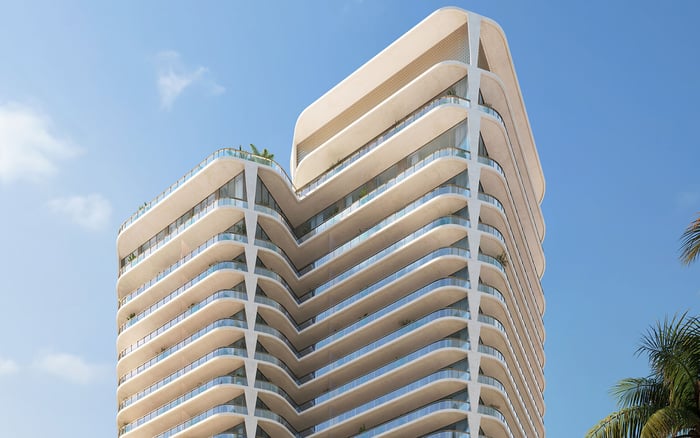
Before buying at The Berkeley Palm Beach, distinguish in-residence guest space from reservable accommodations, establish contractual cancellation rights, and confirm how amenity access will work during your preferred season.

For a buyer considering The Berkeley Palm Beach, the most consequential questions extend beyond views and finishes. They concern how guests can stay, what happens if a purchase cannot proceed, and whether shared spaces will be available when the household most wants to use them.
The planned 25-story condominium at 550 South Australian Avenue in West Palm Beach overlooks Clear Lake. Its advertised offering combines adaptable residences with concierge service, wellness facilities, and social spaces. The essential distinction is this: an advertised feature is not, by itself, a defined access right.
Three matters warrant particular care. Guest-suite language describes space within a residence, not an established accommodation reservation program. Cancellation penalties cannot be quantified from the available terms. Peak-season priority and booking restrictions also remain unconfirmed. These are diligence questions, not evidence that unfavorable policies exist.
Every residence is marketed with a flex room, with suggested uses ranging from a home office, media room, or wellness space to guest accommodations. Those uses specifically include a guest suite or caregiver’s quarters. That flexibility may be valuable for a household hosting family or accommodating live-in assistance.
It does not establish that the building contains separately bookable guest suites. Nor does it establish owner priority, a nightly rate, or a guaranteed allocation of accommodation nights.
Before assigning value to either arrangement, seek two distinct confirmations. First, establish the flex room’s final dimensions, ventilation, plumbing, privacy, and permitted occupancy. Do not treat “guest suite” as an approved bedroom designation. Second, ask whether separate guest accommodations exist at all. If they do, obtain their inventory, eligibility rules, charges, reservation windows, cancellation terms, and priority structure in writing.
For buyers also considering Alba West Palm Beach, the useful comparison is not simply whether guest space appears in marketing. It is whether the residence specifications and governing documents support the intended hosting arrangement. Do not assume equivalent guest programs across properties.
“Cancellation” can describe three very different events: withdrawing from a condominium purchase, cancelling a guest accommodation reservation, or releasing an amenity booking. Each requires its own terms. None should serve as a proxy for another.
A condominium-specific penalty, deposit-refund schedule, and rescission deadline are not established here. Buyers should neither assume a penalty-free exit nor import a hotel reservation policy into the transaction. An affiliation or owner-benefit arrangement with a Berkeley-named hotel is also not established.
Have counsel review the purchase agreement alongside the relevant condominium documents and applicable law. The review should identify:
Any cancellation or rescission rights, their triggers, and deadlines.
Required notice language, delivery methods, and recipients.
Deposit treatment under each applicable exit or default scenario.
Remedies, if any, for delay or changes to the promised residence.
Which advertised services and access rights become contractual obligations.
Request a written explanation of the buyer’s exposure at each contractual milestone, based on the actual agreement rather than a generic percentage. Where flexibility matters, resolve the terms before relying on an anticipated exit. A verbal assurance of an easy release is no substitute for counsel’s review of enforceable terms.
The advertised amenities include a resort-style pool deck, rooftop pool and jacuzzi, fitness and wellness facilities, spa treatment rooms, and a golf simulator. Social lounges, co-working spaces, a private dining room, and a club lounge provide additional settings for work and entertaining.
The question is whether those spaces support the buyer’s intended routine. Pool access, a private dinner, and a treatment appointment may involve different operating rules. Booking windows, holiday blackouts, and owner-versus-guest priority remain unconfirmed.
Present concrete scenarios: visiting family during your preferred holiday, a private dinner on a chosen evening, or recurring wellness appointments. Request the proposed booking rules, guest limits, wait-list procedures, private-event closure provisions, and usage charges. Ask which rules are settled and which remain subject to adoption or amendment.
Apply the same calendar-based test when evaluating Mr. C Residences West Palm Beach. Compare documented access rather than assuming that different developments share reservation practices. An extensive amenity roster matters less if its eventual operating rules do not fit the household’s schedule.
The advertised offering includes 24/7 concierge and valet services, alongside two assigned parking spaces per residence. These are meaningful features, but they do not establish every service condition a buyer might anticipate.
Ask what concierge assistance includes, which requests carry separate charges, and whether any arrangements depend on outside providers. Confirm how the assigned parking spaces will be documented and how visitor vehicles will be accommodated. Two resident spaces do not, by themselves, establish guest parking availability or unlimited valet capacity.
For frequent hosts, arrival logistics deserve the same attention as accommodation. Ask how simultaneous guest arrivals would be handled and whether visitor access requires advance registration. These are questions about proposed operations, not confirmed restrictions at the property.
Groundbreaking was announced on July 6, 2026. Delivery has been advertised for 2028, but that year should be treated as a marketing estimate, not a verified contractual completion deadline.
As of September 2026, no residences had closed. There was therefore no completed-building operating history against which to test service or amenity-access expectations. Buyers should distinguish proposed procedures from demonstrated performance.
Dimensions are estimates that will vary with actual construction, and floor plans, specifications, and development plans may change. Counsel should identify how the agreement addresses those possibilities and what remedies, if any, apply. A buyer relying on the flex room for a specific use should examine the contractual specifications closely.
Second-home ownership works best when the residence supports the household’s actual calendar and hosting needs. For one buyer, that may mean a suitable in-residence space for a caregiver. For another, it may mean predictable access for entertaining or clearly understood financial exposure if plans change.
Before committing, assemble the purchase agreement, relevant condominium documents, unit specifications, proposed amenity rules, and written service descriptions. Mark each essential requirement as documented, unresolved, or discretionary. Ask counsel which assurances are binding and whether operating policies can later change.
The Berkeley’s advertised flexibility and services merit consideration. A disciplined purchase decision values confirmed rights separately from anticipated conveniences, without treating both as equally certain.
For a discreet perspective on your South Florida residential shortlist, explore MILLION.
If branded residences are on your mind — as a home or as an allocation — we would be glad to share what we are seeing, privately.
Begin a quiet conversationThe planned 25-story condominium is at 550 South Australian Avenue in West Palm Beach, overlooking Clear Lake.
Every residence is marketed with a flex room. Suggested uses include a home office, media room, wellness space, guest accommodations, and caregiver’s quarters.
A separate guest-suite reservation program is not established. The guest-suite language describes adaptable space within a residence.
Owner priority for separately bookable accommodations is not established. Request written confirmation of any inventory, eligibility rules, reservation windows, and charges.
No approved bedroom designation is established by the guest-suite marketing. Confirm permitted occupancy, final dimensions, ventilation, plumbing, and privacy for the intended use.
A project-specific cancellation penalty, deposit-refund schedule, and rescission deadline are not established. Counsel should determine the applicable rights and financial exposure from the agreement, condominium documents, and law.
A Berkeley-named hotel affiliation or owner-benefit arrangement is not established. Hotel booking policies should not be treated as condominium purchase terms.
Booking windows, holiday blackouts, and owner-versus-guest priority are not established. Request proposed rules covering guest limits, wait lists, private-event closures, and usage charges.
Marketing advertises 24/7 concierge and valet services and two assigned parking spaces per residence. These statements do not establish guest parking availability or every service condition.
Delivery has been advertised for 2028, but it is a marketing estimate rather than a verified contractual deadline. Counsel should review completion provisions and any delay remedies.