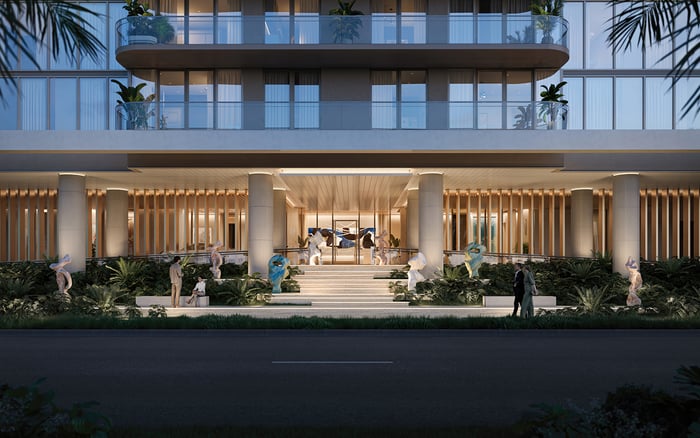
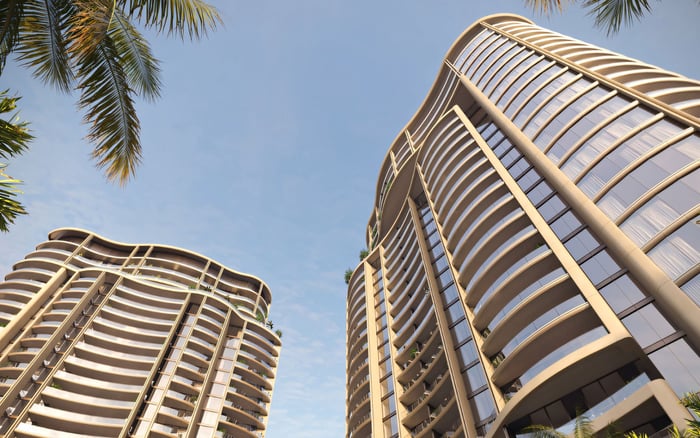
Private arrival and personal-information privacy are different purchase considerations. This buyer-focused review separates Banyan Tree Residences West Palm Beach’s marketed features from unresolved directory practices, operational data questions, and public-records exposure.

For a buyer who values discretion, privacy begins well before the elevator reaches the residence. It encompasses what visitors can read at the entrance, what staff can retrieve internally, and what remains accessible through public records. At Banyan Tree Residences West Palm Beach, these questions warrant separate answers-not a single assurance that the building is private.
Planned at 400 Hibiscus Street in West Palm Beach, the development comprises a proposed collection of 88 residences, with one- to four-bedroom layouts and a limited penthouse offering. Most residences are marketed with direct private elevator entry. The proposed service offering also includes a dedicated 24-hour host, supported by residential service professionals throughout the property.
These features promise an appealing arrival and service experience. They do not, by themselves, establish whether a resident’s name will appear on an intercom, in a directory, or within a delivery interface. Physical discretion and information discretion are distinct purchase considerations.
A useful review distinguishes four audiences: visitors, authorized staff, marketing personnel, and anyone consulting public records. Each may encounter different information under different rules. A resident’s decision to withhold a name from a lobby screen would not necessarily determine what staff need to administer services or what a recorded instrument contains.
For branded residences, the question is not simply whether service feels personal. It is how personal information supports that service, who can access it, and which disclosures are optional. Buyers should seek answers for each operational setting rather than assume one preference applies everywhere.
Buyers also considering Mr. C Residences West Palm Beach can apply the same review framework to both purchase files. This is a diligence comparison, not a claim that the developments share systems, policies, or privacy protections. Compare the specificity of the written answers.
Whether Banyan Tree will have a resident directory-and whether residents can withhold their names-remains unconfirmed. The intercom’s visitor-facing display is also unresolved. Names, unit numbers, initials, aliases, and other interfaces are matters to clarify, not established options.
Before signing, request a written specification showing the proposed visitor experience. Ask whether visitors can browse residents, must already know a unit identifier, or reach a host instead. Confirm whether any naming choice is optional, who approves it, and how a resident can change it after occupancy.
A mock-up can make the discussion more concrete, but the accompanying policy matters just as much. Ask whether the same choice applies independently to lobby directories, visitor applications, package systems, parking, valet, and amenity reservations, where such systems are contemplated. These questions do not establish that any particular system will be installed.
The absence of a published naming policy is neither evidence that names will be exposed nor reassurance that they will be hidden.
The proposed 24-hour host makes staff access a separate diligence topic. A resident may want visitors to see very little while allowing designated personnel to arrange deliveries or welcome approved guests. The goal is not necessarily zero data collection, but a clearly defined relationship between service needs and access.
Request details on which staff roles and vendors would see resident identities, contact details, guest information, and access records. Ask whether information would be shared with hospitality affiliates and under what conditions. Seek written retention and deletion periods for guest logs, delivery records, and access data; do not assume information disappears when a visit ends.
Lifestyle preferences should translate into practical instructions. A household may want different handling for expected guests, unsolicited callers, and deliveries. Ask how those preferences would be documented and communicated, and whether residents can review or amend them. These are diligence questions, not confirmed Banyan Tree procedures.
The website privacy policy covers personal-information collection and processing associated with website and marketing activities. Requests for access, correction, suppression, modification, or deletion of certain information are subject to the policy’s stated limitations.
That scope does not confirm a condominium resident-directory policy or establish post-closing intercom practices. A request concerning marketing information should not be mistaken for an instruction governing a future lobby display or staff roster.
Privacy-related requests and questions can be directed to [email protected] or 305-531-2426. Buyers can use those contact details to clarify the website policy’s scope while separately requesting the governing documents for residential operations.
For purchasers also considering Alba West Palm Beach, the same distinction applies: evaluate marketing-data handling separately from the rules intended to govern life in the building. Do not transfer an assurance from one category-or one property-to another.
Address-based searches in West Palm Beach cover plans, permits, inspections, and code-enforcement case records. Buyers can use 400 Hibiscus Street to monitor available building information, download search results, and create notifications when new records are created. The availability of this search service does not establish that any particular permit or inspection has been issued.
Actual case documents may require a public-records request. A search result and the underlying document are not interchangeable. Substantive construction or compliance questions should be evaluated using the relevant documentation, not inferred from a listing alone.
Recorded instruments are available through a separate channel: Palm Beach County’s Official Records Search. That channel is distinct from any building-controlled resident directory. No particular Banyan Tree filing or individual owner record is established here.
For privacy-sensitive purchasers, the implication is straightforward: a building’s naming preference cannot resolve every question about publicly accessible information. Ask counsel to assess relevant recorded documents separately from operational privacy provisions. Do not assume a lobby opt-out creates anonymity across public records.
For a pre-construction purchase, distinguish a proposed feature from an adopted policy and an enforceable commitment. Consult developer project documents and documents furnished under applicable state law for authoritative project information.
Review the declaration, rules, purchase disclosures, and available security specifications with counsel. Request dated written responses on visitor-facing naming, internal access, data sharing, retention, and the process for changing preferences. Clarify which document governs each answer and how policies may be revised before occupancy.
If a particular privacy condition is essential to the purchase, ask counsel how it can be addressed in the transaction documents. Preserve the relevant versions and revisit unresolved operational details before closing. The strongest decision rests on documented boundaries-not on treating a private elevator as a promise of informational anonymity.
For a discreet, buyer-focused perspective on South Florida residential opportunities, explore MILLION.
If branded residences are on your mind — as a home or as an allocation — we would be glad to share what we are seeing, privately.
Begin a quiet conversationThe development is planned at 400 Hibiscus Street in downtown West Palm Beach.
The proposed development is described as having 88 private residences, with one- to four-bedroom layouts and a limited penthouse collection.
No. Most residences are marketed with direct private elevator entry, but that feature does not establish directory, intercom, or staff-roster naming policies.
The publicly disclosed materials do not establish whether a resident directory will exist or whether residents can withhold their names.
Those options are not confirmed. Buyers should request written specifications describing the visitor-facing display and any available naming choices.
A dedicated 24-hour host is described, supported by residential service professionals throughout the property. Buyers should separately clarify staff access to resident information.
It does not establish post-closing directory or intercom practices. It addresses personal-information processing associated with website and marketing activities.
Ask which staff and vendors can access information, whether hospitality affiliates receive it, and how long guest logs, delivery records, and access data are retained.
Use 400 Hibiscus Street in the city's address-based building-records search and consider notifications for new records. Actual case documents may require a public-records request.
A building directory preference does not govern separate public-records channels. Review recorded instruments and building records independently with counsel.