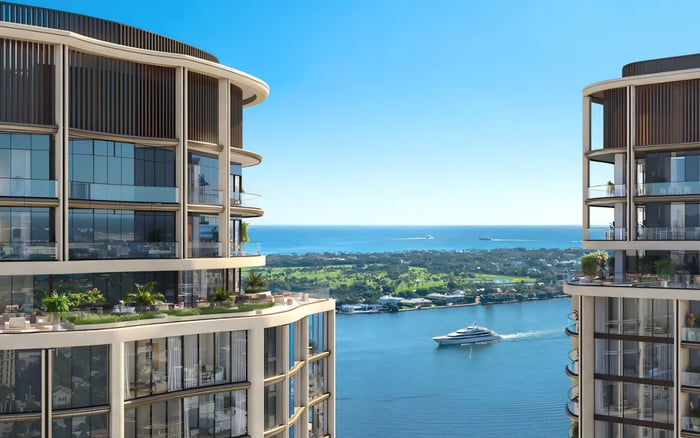
A considered Palm Beach residence-management strategy connects written pet rules, everyday relief access, professional elevator procedures, and a household evacuation plan before any of them becomes urgent.

A Palm Beach residence should support an elegant daily routine, but its management arrangements deserve the same scrutiny as its floor plan. For households with pets, seasonal owners, and anyone who depends on an elevator, seemingly modest procedural details can determine whether that routine remains workable when conditions change.
The essential distinction is between what a building offers and what its written procedures establish. Pet permission, access to outdoor space, elevator availability, and evacuation arrangements are separate questions. A polished arrival experience answers none of them on its own.
For buyers considering Alba West Palm Beach, these are due-diligence questions, not assumptions about the property's policies. Apply the same standard across a shortlist: request current documents, identify who is responsible, and resolve household-specific needs before committing.
Start with the governing pet rules and ask management how they apply to your household. A general description such as pet-friendly is no substitute for written confirmation that your particular arrangement is permitted.
Ask whether the documents address animal number, size, breed, registration, visiting pets, or use of shared spaces. These are verification questions, not presumed restrictions. Seek clarification wherever the language is unclear, especially if family members, guests, or caregivers may bring additional animals.
Then examine the daily mechanics. Which entrance should a pet owner use? Are there designated elevator procedures? What rules apply in corridors and other common areas? Ask management to distinguish formal rules from informal preferences so that staff advice does not become the household's only reference.
For a seasonal residence, keep the confirmed instructions accessible to anyone caring for the animal. The objective is consistency: the owner, household staff, and pet sitter should share the same understanding of the building's rules.
Route planning requires two distinct conversations. The first concerns everyday pet care: how the household gets from the residence to an approved outdoor location. The second concerns evacuation: how people and animals leave the property and reach a suitable destination. One does not establish the other.
For everyday use, ask management to identify any designated pet-relief area and permitted access route. Walk the proposed route during a viewing, considering doors, stairs, and distance. Do not assume that nearby landscaping, a terrace, or a common outdoor space is approved for pet relief.
When assessing Forté on Flagler West Palm Beach, for example, include this route review in the management conversation without presuming any particular facility or permission. Ask what arrangements are planned when normal access is unavailable. An everyday workaround must never become a reason to remain in an ordered evacuation zone.
Confirm the property's evacuation zone using current county guidance for the exact address rather than inferring it from a neighborhood name or coastal setting. A familiar address and an impressive view are not substitutes for a zone check.
Use current evacuation-zone and route information as a planning reference, then follow event-specific instructions for the actual departure. A saved map does not guarantee that a preferred route will remain appropriate during an event.
When an evacuation is ordered for the property's zone, the household plan should be to leave. This applies equally to South Palm Beach condominiums: no one should remain in a building in an ordered zone. Do not equate building stature, staffing, or private amenities with permission to stay.
Write down the destination, transport arrangements, household contacts, and responsibility for each pet. If someone requires assistance, arrange the support needed to depart before hazardous conditions and elevator shutdown. Remaining behind is not an accessibility plan.
Pet evacuation planning requires more than identifying an available room. Confirm that the destination accepts your animals and ask about its requirements before relying on it.
For Palm Beach households considering a public shelter, verify which shelters accept pets, whether space is available, and what admission requirements apply. Prepare a crate, food, water, leash, and proof of vaccinations, then check whether additional supplies or documents are needed for the event. Do not rely on an old notice.
If considering a hotel as a destination, confirm that it is outside the applicable evacuation area and verify pet acceptance and requirements directly. Keep an alternative destination in the household plan so that one unavailable option does not derail departure arrangements.
The same discipline belongs in a Boca Raton property review, including conversations about Alina Residences Boca Raton. Confirm building-specific rules separately from travel arrangements, and plan to take pets with you when evacuating. Permission at home does not establish permission at the destination.
An elevator plan is more than a maintenance document. It affects when residents, caregivers, pets, and luggage can leave. Ask management how shutdown decisions are communicated, who receives notices, and how the household's departure will be coordinated before service is suspended.
Ask how storm preparation addresses drainage, potential water intrusion, and the timing of elevator shutdown before hazardous conditions. Have management explain how its contractor's procedures inform the household's departure deadline rather than assuming elevator service will remain available.
Technical shutdown precautions belong to the building's licensed elevator contractor, not residents. Confirm that management has a contractor-approved procedure and clearly assigned responsibilities. Owners should not attempt to disconnect equipment, enter machinery spaces, or improvise a shutdown.
Restart deserves equal attention. Ask management how its contractor will assess the machine room, electrical equipment, hoistways, and pits after a storm. Do not use water-affected elevators until management confirms professional inspection and clearance for service. Restored building power alone is not confirmation that an elevator is ready for use.
Bring the decisions together in a concise residence file: confirmed pet rules, everyday access instructions, evacuation-zone information, destination details, transport arrangements, and management contacts. Identify the person authorized to act when the owner is away.
Before storm conditions deteriorate, reconfirm event-specific instructions and the household's departure arrangements. The most valuable management assurance is not a promise that routines will never change. It is a clear explanation of who acts, when they act, and how residents will be informed.
For a considered approach to South Florida residence selection, explore MILLION.
If branded residences are on your mind — as a home or as an allocation — we would be glad to share what we are seeing, privately.
Begin a quiet conversationRequest the current written pet rules and confirmation of how they apply to your household. Ask separately about shared spaces, visiting animals, and elevator access.
No. Confirm the applicable written rules rather than assuming permission for a particular animal or access to a particular common area.
Ask management to identify any approved relief area and permitted route, then walk it during a viewing. Do not assume nearby outdoor spaces are approved.
Confirm the zone using current county guidance for the exact address. Do not infer it from the neighborhood name or coastal location.
No. Maps support advance planning, but actual departure decisions and route choices must reflect current official instructions.
Households in an ordered evacuation zone should leave. Plan assistance and transport in advance rather than relying on remaining in the building.
Do not assume every shelter accepts pets. Verify pet acceptance, available space, and current admission requirements before relying on a Palm Beach County shelter.
Prepare a crate, food, water, leash, and proof of vaccinations. Check current event-specific requirements before departure.
Management should confirm procedures with the building's licensed elevator contractor. Residents should not attempt technical shutdown work themselves.
Wait for management to confirm professional inspection and clearance for service. Restored building power alone does not establish that an elevator is ready for use.