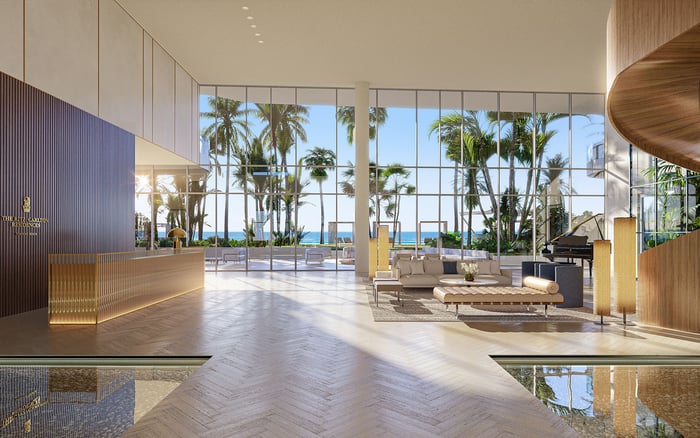
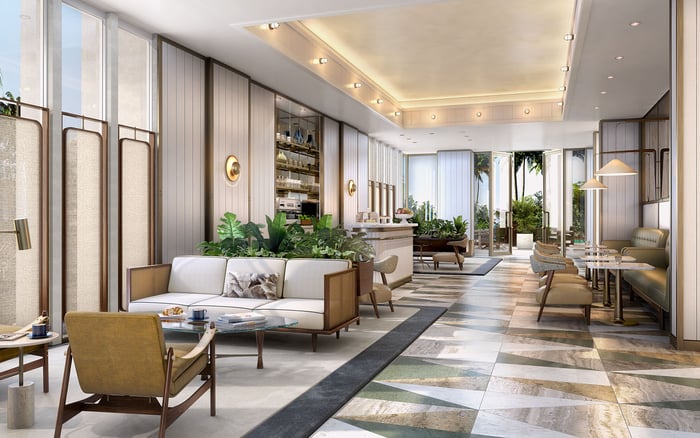
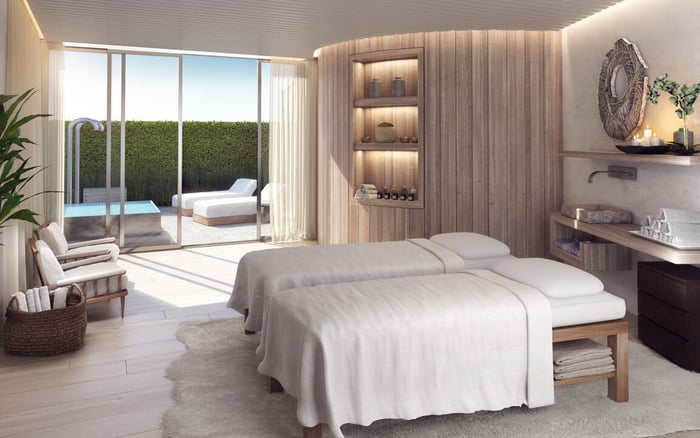
For art-minded buyers at Auberge and Four Seasons in Fort Lauderdale, an elegant setting is only the beginning. Collection records, unit-specific lighting evidence, and written installation authorization deserve separate review before a residence becomes a home for significant artwork.
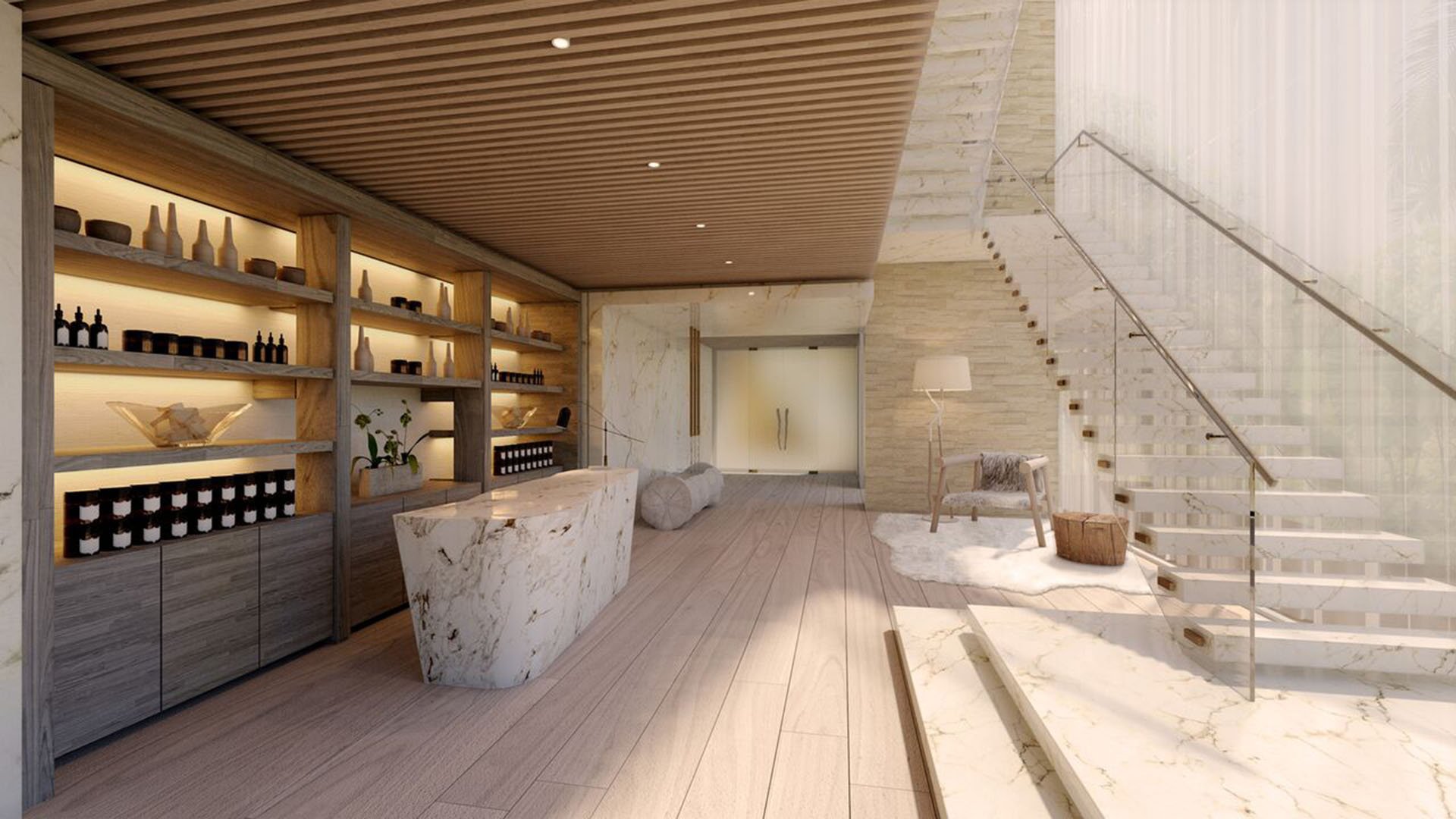
A residence can offer exceptional architecture, attentive service, and an impressive art collection without establishing how an owner’s paintings or sculpture will be received, installed, or protected. For collectors considering Fort Lauderdale Beach, each question deserves separate documentation.
At Auberge Beach Residences & Spa Fort Lauderdale and Four Seasons Hotel & Private Residences Fort Lauderdale, the essential distinction is between the aesthetic experience and the management framework behind it. A common-area art program is not a private-residence installation policy. Bright interiors are not evidence of conservation-grade lighting. Concierge service does not, by itself, identify who can authorize structural attachments or contractor access.
The buyer’s objective should be a written, residence-specific understanding of three matters: collection stewardship, lighting performance, and installation permission. Gaps in public disclosure should prompt questions-not conclusions that a property lacks the relevant systems.
Auberge occupies 2200 North Ocean Boulevard, Fort Lauderdale, FL 33305, with approximately 450 linear feet of beachfront. Its common areas feature museum-quality art, including works by Fernando Botero, within a curated contemporary-art collection selected to complement resident amenity spaces. Meyer Davis Studio designed its public spaces.
That is a meaningful aesthetic proposition, but it is not documentation of museum-conservation standards. The publicly disclosed art program does not specify a detailed inventory, conservation schedule, environmental-monitoring protocol, or resident-art approval matrix. The phrase “museum-quality art” should not be read as confirmation of ultraviolet controls or illuminance limits.
For an owner, the next conversation should establish who manages the collection and what records are available. Ask whether common-area works are owned or loaned, who maintains condition records, and how conservation decisions are authorized. Keep those questions separate from permissions affecting privately owned works inside a residence.
Auberge also offers concierge service, a spa, fitness facilities, pools, and beach-club services, alongside 24/7 valet parking and security. These amenities support the residential experience; they do not establish an art-delivery route, handling protocol, or installation-approval procedure.
Four Seasons is located at 525 North Fort Lauderdale Beach Boulevard, Fort Lauderdale, FL 33304. Its private residences are described as having brightly lit living spaces, open private terraces, and panoramic ocean views. For a collector, these qualities warrant careful assessment of the intended display locations.
The publicly disclosed residential information does not identify a permanent art collection, named curator, or museum-grade collection-management program. Nor does the description of bright interiors establish conservation-grade lighting or environmental controls for artwork. Public information for the combined hotel-and-residences property also does not include a resident art-installation approval policy.
None of these disclosure limits proves absence. Residential management may have procedures or technical documentation that are not publicly available. Request them directly, and clarify responsibilities within the combined property rather than assuming that hotel service channels can authorize residential alterations.
The question is not which address offers the more persuasive conservation promise. It is what each management team can document for the specific residence and proposed collection.
A practical collection-management request should begin with the common-area inventory, ownership and loan records, and the name or role of the responsible manager. Add condition reports, a conservation schedule, and emergency-response procedures. These are recommended due-diligence requests, not verified requirements at either property.
The purpose is to establish responsibility, not merely obtain a list of artists. Who can authorize moving a work? Who arranges specialist assessment? What procedures address an incident affecting displayed art? Ask management to identify the relevant decision-makers and define the boundaries of its responsibilities.
For the private collection, seek an equally clear division of roles among the owner, residential management, art handlers, and any conservation adviser. Common-area stewardship should not be assumed to extend to resident-owned artwork. Before relying on a service, obtain written confirmation of its scope and any exclusions.
Auberge’s residences are described as having 9-foot-6-inch ceilings, floor-to-ceiling windows, and expansive terraces. Some residences have been described as incorporating Control4 systems that integrate shades, temperature controls, music, and advanced LED lighting. This does not confirm the equipment in every unit or its suitability for a particular artwork.
At both properties, start with the actual residence. Request fixture specifications, dimming capabilities, daylight controls, ultraviolet exposure data, illuminance targets, color-rendering data, and commissioning records. Ask what has been measured at the proposed display location; a building-wide description is not unit-specific evidence.
Have an appropriate specialist evaluate those details against the intended collection. The objective is not to apply an unsupported universal threshold, but to establish suitable conditions for the works being installed. Clarify whether settings can be maintained and who would review them after changes to fixtures or shades.
Illuminated and digital art warrant a separate technical discussion. Ask about electrical work, attachments, and applicable fire-safety clearances before assuming an installation can proceed as ordinary decoration.
Request condominium declarations and rules, architectural-review procedures, alteration agreements, insurance requirements, and any written art-installation approval form. These requests should establish who decides, what submission is expected, and whether the proposed work requires technical review. They do not imply that either property imposes every listed requirement.
A proposed installation package can describe artwork dimensions and weight, wall or ceiling attachments, electrical needs, rigging, and contractor credentials. Ask management to confirm applicable weight limits, clearance considerations, protective-covering requirements, and restoration obligations. Keep the authorization specific to the proposed installation.
Delivery deserves its own review. Confirm receiving routes, loading access, freight-elevator dimensions and capacity, crate limits, and installation hours before scheduling handlers. Obtain a written approval timeline and clarify liability allocation. Verbal concierge reassurance should not substitute for authorization from the identified decision-maker.
If your Fort Lauderdale shortlist also includes Andare Residences Fort Lauderdale, carry the same questions into that evaluation without assuming equivalent policies or services. A consistent request framework makes the answers easier to assess without creating an unsupported ranking.
Before committing to a purchase or installation, assemble the collection records available to owners, the residence’s lighting documentation, and the written approval pathway. Separate confirmed details from open questions, and ask the appropriate advisers to assess the proposed display and installation plan.
Neither property can be ranked here on conservation quality, approval speed, or resident-art governance. The more useful standard is documentary clarity: named responsibility, relevant technical evidence, and authorization that matches the intended work.
For a discreet discussion of your South Florida residential search, connect with MILLION.
If branded residences are on your mind — as a home or as an allocation — we would be glad to share what we are seeing, privately.
Begin a quiet conversationAuberge features a curated contemporary-art collection in common areas, including works by Fernando Botero. That does not establish the scope of its conservation procedures or private-residence installation policies.
No. Auberge’s museum-quality art description does not establish documented ultraviolet controls, illuminance limits, or other conservation-lighting standards.
Its publicly disclosed residential information does not identify a permanent art collection, named curator, or museum-grade collection-management program. This does not prove that such arrangements are absent.
Request the common-area inventory, ownership and loan records, responsible manager, condition reports, conservation schedule, and emergency-response procedures. These are recommended requests, not verified requirements at either property.
Request fixture specifications, dimming and daylight controls, ultraviolet exposure data, illuminance targets, color-rendering data, and commissioning records. Review the actual residence and intended display locations.
No. Such systems have been described in some residences, so buyers should confirm the equipment and capabilities of the specific unit.
No. Identify the authorized decision-maker and obtain written approval appropriate to the proposed installation rather than relying on verbal concierge reassurance.
Request condominium declarations and rules, architectural-review procedures, alteration agreements, insurance requirements, and any written art-installation approval form. Neither property’s full approval process is established by the public information described here.
Confirm receiving routes, loading access, freight-elevator dimensions and capacity, crate limits, installation hours, contractor credentials, and protective-covering requirements before scheduling handlers.
The available facts do not establish comparative conservation quality, approval speed, or resident-art governance. Evaluate written management responses and residence-specific technical evidence instead.