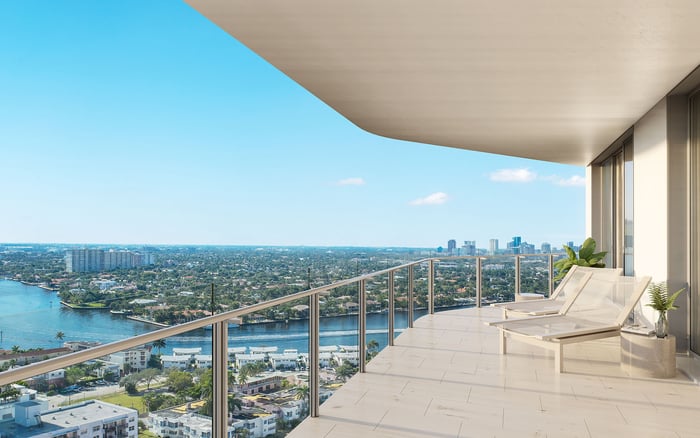
For a seasonal condominium buyer, financial confidence depends on more than current dues. Review how the reserve study, adopted budget, borrowing, assessments, and owner notices fit together before committing to a South Florida second home.

A South Florida second home should offer an uncomplicated arrival: familiar rooms, a favorite view, and little to arrange. That ease depends partly on less visible decisions about building repairs, reserves, borrowing, and owner communications. For a seasonal condominium buyer, the central question is not simply whether monthly dues are comfortable. It is whether the association's financial plan is coherent-and whether the buyer understands what could change.
Whether considering Apogee South Beach in Miami Beach or another residence, apply the same discipline: connect the latest reserve study to the adopted budget, approved financing, and assessment notices. These are review principles, not statements about any named project's finances.
Florida generally requires a Structural Integrity Reserve Study, or SIRS, for condominium buildings at least three stories high. It evaluates component life, estimated replacement costs, and reserve-funding needs. Covered elements generally include roofs, load-bearing walls, foundations, fireproofing, plumbing, electrical systems, waterproofing, and exterior painting.
Required studies generally must be completed at least every 10 years. That interval does not mean costs or funding needs remain unchanged between studies. Nor does a completed SIRS guarantee that owners will avoid special assessments.
Read the milestone-inspection findings alongside the SIRS. The inspection addresses building conditions; the reserve study helps explain how anticipated repair and replacement needs will be funded. A buyer needs both perspectives, particularly when repairs are under discussion but financing remains unsettled.
The practical distinction is straightforward: a study identifies needs, while the budget and funding decisions show how the association intends to meet them.
A loan or special assessment does not, by itself, automatically require a new SIRS every time financing changes. The more useful acquisition question is whether the existing study still explains the association's current plan or whether later decisions require clarification.
Florida's 2025 legislation allows qualifying unit-owner-controlled associations to fund required reserves through special assessments, lines of credit, or loans with approval from a majority of the association's voting interests. Financing can change the timing of owner payments, but buyers should still examine the underlying obligation.
A specific reserve-study requirement also applies to certain temporary funding relief. Under specified conditions, associations that have completed a milestone inspection may pause or reduce reserve contributions for up to two consecutive annual budgets to prioritize inspection-related repairs. Before contributions resume after that statutory pause or reduction, the association must obtain a SIRS to determine funding needs and recommend a reserve-funding plan.
Ask whether the budget reflects such relief and how the association is addressing the required study and resumed contributions. Do not mistake a temporarily lighter budget for a permanently lower ownership cost.
For a Brickell search that includes Una Residences Brickell, make the financial comparison as deliberate as the floor-plan comparison. Request the adopted budget and latest SIRS funding schedule together. Identify the recommended reserve contributions, the amounts actually budgeted, and the explanation for any difference.
If borrowing is involved, request the principal, interest terms, maturity, repayment schedule, and expected per-unit cost. This is buyer due diligence, not a claim that every item is an independently mandated statutory disclosure. The objective is to understand whether current payments tell the full story or defer part of it.
Special assessments are charges outside regular dues, often payable in a lump sum or installments. They may fund obligations such as roof replacement, elevator work, seawall repairs, or concrete restoration. Record each assessment's purpose, per-unit amount, payment schedule, and approval status. A proposal in meeting minutes is not the same as an approved charge.
Read recent board and membership minutes as well. They can reveal repair concerns, financing proposals, insurance difficulties, and assessment discussions that a budget alone may not explain.
Second-home ownership requires dependable communication. Seasonal absence does not excuse assessment liability, and Florida condominium law does not allow an owner to avoid that liability by waiving use of common elements or abandoning the unit.
Written notice of a meeting considering a nonemergency special assessment generally must be mailed, delivered, or electronically transmitted to owners and posted conspicuously on the property at least 14 days beforehand. Special-assessment notices must identify the specific purpose, and collected funds must be used only for the stated purpose or purposes.
Before leaving for the season, confirm your recorded mailing address, ask how electronic delivery is arranged where applicable, and establish who will monitor notices. Keep a calendar of meetings and payment dates, and retain cash capacity for unexpected charges. These are practical safeguards, not substitutes for the association's notice obligations.
When evaluating Jade Signature Sunny Isles Beach or another Sunny Isles Beach residence, give remote ownership logistics the same attention as the financial review. A notice received promptly is useful only if someone reads it and responds.
Request governing documents, the current budget, financial statements, reserve schedules, the full SIRS, inspection and engineering reports, recent minutes, insurance information, and assessment notices. Summaries can orient the review, but they should not replace the underlying documents.
For South Florida properties, also request master-policy deductibles, flood-coverage information, and applicable Miami-Dade or Broward recertification status. A Fort Lauderdale search involving Four Seasons Hotel & Private Residences Fort Lauderdale warrants the same document discipline, without assuming anything about the property's particular obligations.
Use the estoppel certificate as an important closing check for unpaid assessments, other amounts owed, and scheduled assessment information. It does not replace financial records or meeting minutes. Have the purchase contract expressly address assessments approved before closing but payable afterward; responsibility depends on the contract and transaction negotiations.
The strongest review ends with a clear account of anticipated work, available reserves, financing, assessments, and payment timing. Any unexplained gap between the study and budget deserves attention before commitment.
A seasonal buyer need not demand certainty about every future expense. The more realistic standard is clarity about known obligations, a credible funding approach, and reliable communication while away. That is what allows a second home to feel considered rather than administratively demanding.
For a discreet approach to South Florida second-home ownership, explore MILLION.
If branded residences are on your mind — as a home or as an allocation — we would be glad to share what we are seeing, privately.
Begin a quiet conversationA SIRS estimates the useful life, replacement costs, and reserve needs of specified building components. Florida generally requires it for condominium buildings at least three stories high.
Generally, at least every 10 years. Funding needs can still change between studies.
A loan or special assessment does not automatically establish a new-study requirement. Buyers should nevertheless check whether the latest study and current funding plan remain aligned.
Before reserve contributions resume following the specified statutory pause or reduction, the association must obtain a SIRS to determine funding needs and recommend a funding plan.
Florida's 2025 legislation allows qualifying unit-owner-controlled associations to use loans, lines of credit, or special assessments with approval from a majority of the association's voting interests.
Compare the adopted reserve contributions with the latest SIRS funding schedule. Investigate differences involving temporary reductions, borrowing, or future assessments.
Written notice generally must be provided to owners and posted conspicuously on the property at least 14 days before the meeting. The assessment notice must identify its specific purpose.
No. An owner cannot avoid assessment liability by not occupying the unit, waiving use of common elements, or abandoning the unit.
No. It is an important check for unpaid assessments, other amounts owed, and scheduled assessment information, but financial records and meeting minutes still need review.
Responsibility depends on the purchase contract and transaction negotiations. The contract should expressly address those payments.