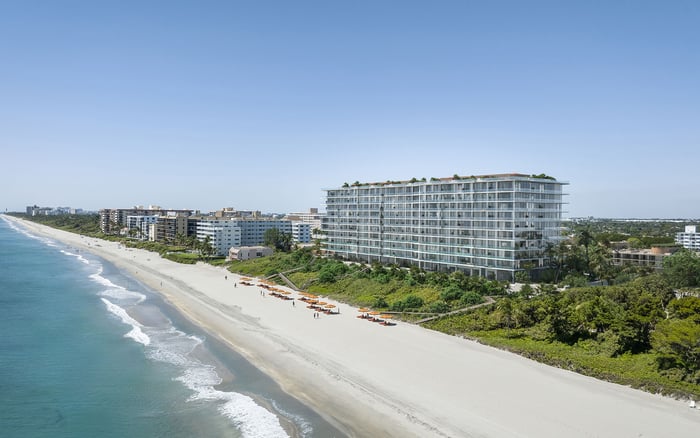
A disciplined framework for evaluating reserve exposure, document quality, insurance, capital planning and offer structure at Rosewood Residences Hillsboro Beach.

At Rosewood Residences Hillsboro Beach, a sophisticated 2026 offer should account for more than the residence, view orientation and finish package. Buyers should also understand the financial obligations beyond the purchase price-particularly association reserves, planned capital work, insurance deductibles and expenses that could become future assessments.
The term “reserve exposure” requires precision. It may describe the possibility that association funds will not fully cover future obligations. It may also refer to the cash a buyer should retain after closing for ownership costs, improvements and unforeseen calls. The two are related but not interchangeable: one concerns the building’s financial position; the other, the buyer’s liquidity.
This is a Buyer's Guides question with direct relevance to Pricing & Trends. It also fits within the broader conversation around Branded Residences, where service expectations and physical standards make the quality of financial planning especially consequential.
No single figure establishes whether reserves are adequate. The balance should be read alongside the current budget, the assumptions supporting planned contributions, the age and condition of major components, pending contracts, insurance terms, meeting minutes and any engineering or structural materials available during diligence.
The central question is not simply, “How much is in reserve?” It is, “What must the reserve support, on what schedule and under which assumptions?” A seemingly substantial balance may have several intended uses. Conversely, a lower balance is not automatically decisive when obligations, funding mechanisms and timing are clearly documented. Context determines meaning.
Buyers should ask counsel and financial advisers to reconcile the documents. If a capital project appears in meeting minutes but not in the budget, the discrepancy warrants attention. If the budget anticipates a change in contributions, the offer analysis should model it. If a contract is under discussion, confirm whether its cost, scope and funding are final.
A disciplined underwriting worksheet should separate ownership costs into three categories. First are recurring charges, including regular association obligations and other predictable carrying costs. Second are approved or contractually defined capital items. Third are contingent exposures whose amount or timing remains uncertain.
The third category often requires the greatest margin of safety. It may include a future deductible allocation, a project not yet under contract, an expense dependent on inspection results or a contribution increase still under consideration. The objective is not to assume the worst, but to avoid treating an unresolved obligation as zero.
For comparison, buyers considering the broader Broward coastline might review how diligence materials are presented at Armani Casa Residences Pompano Beach. These comparisons should clarify document quality, cost allocation and ownership structure-not reduce the analysis to a simplistic price-per-square-foot contest.
Reserve analysis should shape the offer before negotiations begin. Start with a value range based on the residence itself, then adjust for known obligations and create separate contingencies for unresolved matters. This approach preserves the distinction between a measurable liability and a risk allowance.
A buyer might prepare three scenarios. The base case reflects disclosed recurring costs and funded plans. The moderate case allows for higher contributions or a reasonably foreseeable capital call. The stress case tests a larger, less convenient outcome. The resulting range shows whether the purchase remains comfortable without relying on perfect assumptions.
This exercise also sharpens negotiation priorities. A buyer who values certainty may emphasize a credit, an escrow arrangement or a clearly drafted allocation of an approved assessment. Another may prefer a lower price while preserving personal liquidity. The appropriate structure depends on the documents, contract language and guidance from the buyer’s professionals.
Reserve exposure cannot be compared intelligently without accounting for differences in property type, service model, physical program and stage of ownership. A branded oceanfront residence and an established condominium may allocate expenses differently. Even when two homes carry similar asking prices, their future cash requirements can diverge.
A relevant coastal comparison set could include The Ritz-Carlton Residences® Pompano Beach. The essential questions remain consistent: Which obligations belong to the association? Which belong to individual owners? What is funded now, and what could be collected later?
Within this guide, Hillsboro Beach and Broward establish the geographic context, while Oceanfront and Investment represent two buyer lenses requiring different underwriting. An end user may prioritize service continuity and predictability. An investment buyer may place greater weight on sensitivity to carrying costs, exit liquidity and the effect of assessments on resale negotiations.
An elegant offer is more than a price; it is a risk-allocation document. The diligence period should allow sufficient time for legal, financial, insurance and physical review, with document-delivery requirements stated clearly. Buyers should not assume that marketing materials answer association-level questions.
Request the governing documents, current budget, available financial statements, reserve materials, insurance information, recent meeting minutes, notices, pending assessment details and any material contracts that can be provided. Confirm what remains subject to change. Counsel should determine which representations, deadlines and remedies belong in the contract.
The buyer’s final decision should answer four questions: What is known? What remains uncertain? Who bears each obligation under the contract? How much post-closing liquidity makes the exposure acceptable? Once those answers align, pricing becomes more disciplined and less reactive.
What does reserve exposure mean for a condo buyer? It is the potential financial impact of underfunded, newly identified or not-yet-allocated building obligations, together with the buyer’s need for post-closing liquidity.
Is a large reserve balance automatically reassuring? No. The balance must be evaluated against intended uses, projected work, contribution assumptions and timing.
Should reserves change my offer price? They can. Known obligations may support a direct adjustment, while unresolved exposure may justify a contingency, credit or wider pricing margin.
Which documents matter most? Review the available budget, financial statements, reserve materials, insurance information, meeting minutes, governing documents, notices and material contracts.
How should an approved assessment be handled? The contract should clearly state who pays it and when, subject to review and drafting by the buyer’s counsel.
What if a future project has no final cost? Model a reasonable range rather than assigning it a zero value, then preserve sufficient liquidity for the uncertainty.
Can insurance affect reserve exposure? Yes. Premiums, coverage terms and deductibles can influence recurring costs and the potential size of an owner allocation.
Are branded residences evaluated differently? The same financial discipline applies, but buyers should understand the service expectations, cost allocation and standards the property intends to maintain.
How much cash should remain after closing? That depends on the buyer’s finances, carrying costs and risk tolerance and should be determined with qualified financial and legal advisers.
What is the most important pre-offer step? Reconcile the residence price with building-level obligations and unresolved risks before determining price, contingencies and liquidity.
For a discreet conversation and a curated building-by-building shortlist, connect with MILLION.
If branded residences are on your mind — as a home or as an allocation — we would be glad to share what we are seeing, privately.
Begin a quiet conversation