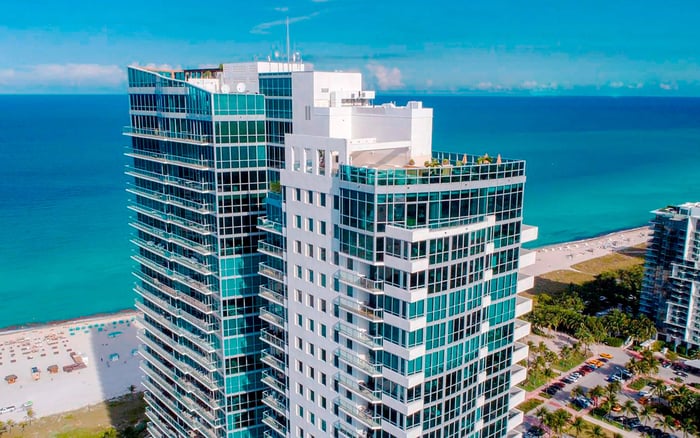
For 2026 buyers evaluating Apogee South Beach, reserve exposure is best understood as a range of possible ownership obligations rather than a single headline figure. Disciplined review of condominium records, pending work, assessments, insurance, and contract language can clarify that range before an offer is priced.

For a 2026 buyer considering Apogee South Beach, reserve exposure cannot be reduced to a single number. The broader question is this: what portion of anticipated building costs could ultimately reach the owner of the residence being acquired, and when might that obligation arise?
A current reserve balance is only the starting point. Buyers should examine planned contributions, the assumptions underpinning future funding, identified capital work, existing assessments, and any expenses that may not be fully reserved. The objective is not to predict every future cost, but to establish a reasonable range of exposure and determine whether the purchase price, contract allocation, and liquidity plan properly reflect it.
This distinction matters in the ultra-prime resale market, where an elegant residence can command attention while building-level obligations remain less visible. Reserve diligence turns those obligations from an abstract concern into a component of valuation.
A serious review begins with the condominium’s governing and financial materials. Buyers and their advisers should request current budgets, recent financial statements, reserve information, assessment notices, meeting minutes, insurance details, pending project summaries, and any available engineering or structural documentation. The sales contract and disclosures should then be read alongside those materials.
Dates matter. A document may be authentic yet no longer reflect the current position. Buyers should identify the period covered, ask what has changed since issuance, and confirm whether subsequent board decisions have altered the funding picture. Meeting minutes deserve particular attention because they may reveal projects under discussion before a formal assessment is adopted.
The review should distinguish among work that is contemplated, approved, contracted, underway, or completed. Each stage carries a different degree of certainty. A proposal under discussion should not be treated as a billed assessment, but neither should it be ignored when the supporting documents indicate a credible near-term obligation.
Reserve exposure becomes useful only when translated to the specific purchase. The analysis should address the unit’s applicable share, amounts already paid, remaining installments, due dates, and any contractual provision assigning responsibility between buyer and seller.
Three figures can frame an offer: known exposure, probable exposure, and contingent exposure. Known exposure includes amounts already established and attributable to the residence. Probable exposure can encompass sufficiently developed work with an identifiable funding need. Contingent exposure covers less certain items that still warrant a liquidity allowance or contractual protection.
This framework prevents a buyer from discounting the price twice for the same risk. It also avoids the opposite error: accepting a seller credit that appears meaningful but covers only one installment rather than the full remaining obligation. The economics should be measured on a net basis, accounting for both the timing and certainty of payment.
Comparable residences can clarify how the market values location, privacy, condition, views, and building positioning. They cannot establish Apogee’s reserve position. A buyer reviewing Continuum on South Beach or Five Park Miami Beach may gain perspective on alternative opportunities in Miami Beach, but each condominium demands its own financial and physical diligence.
The same principle applies to The Ritz-Carlton Residences® South Beach. An asking price elsewhere may sharpen the negotiation context, but it cannot substitute for reviewing Apogee South Beach documents or the selected residence’s contractual obligations.
For South of Fifth buyers, comparables are most useful when normalized. Consider residence condition, renovation requirements, carrying costs, transaction timing, and identifiable building obligations. The cleanest-looking price per square foot can mislead when one property carries near-term capital demands and another does not.
An offer can address reserve exposure through price, credits, escrow, assessment allocation, representations, document-delivery requirements, and due-diligence rights. The appropriate structure depends on what is known when the offer is made.
When an assessment is already defined, the parties can negotiate responsibility for payment and ensure the contract addresses installments due before and after closing. When a project remains uncertain, a buyer may favor a broader diligence window, targeted document conditions, or a pricing cushion. Any mechanism should be drafted and reviewed by the buyer’s legal and financial advisers.
Timing also affects value. A dollar due immediately is not economically identical to a possible dollar due years later. Buyers should therefore pair each estimated amount with a timeline and confidence level. This produces a more refined offer than simply subtracting every mentioned project cost from the asking price.
First, separate the residence from the condominium. Evaluate interior quality and lifestyle appeal on one track, then assess building finances and capital planning on another. Reconcile the two only after each has been understood independently.
Second, establish a base case and a downside case. The base case should include documented obligations and reasonably expected funding. The downside case should account for uncertainty without assuming that every discussed expense will materialize at its maximum possible level.
Third, preserve liquidity after closing. Even a negotiated seller payment does not eliminate future ownership obligations unrelated to the identified item. A prudent acquisition plan should accommodate ordinary carrying costs and a separate contingency for building-level demands.
Finally, record the assumptions supporting the offer. This makes it easier to revise pricing when new minutes, insurance terms, contracts, or assessment notices appear. It also keeps negotiations focused on evidence rather than generalized concern. The essential discipline is simple: price the residence, allocate known obligations, and retain a measured allowance for uncertainty.
What does reserve exposure mean for an Apogee South Beach buyer? It is the potential share of building-related costs that could reach the new owner through assessments, increased contributions, or other funding needs.
Is the current reserve balance enough to price an offer? No. It should be considered alongside budgets, anticipated work, assessments, meeting minutes, insurance, and the timing of future contributions.
Should every discussed project reduce the offer price? Not automatically. Buyers should weigh whether the work is contemplated, approved, contracted, underway, or already billed.
How should an existing assessment be handled? Confirm the total attributable amount, payments made, remaining installments, and the contract’s allocation of responsibility between buyer and seller.
Can a seller credit solve reserve exposure? A credit can address a defined amount, but it may not cover uncertain or later obligations. Its adequacy should be evaluated on a net basis.
Why are condominium meeting minutes important? Minutes may provide context on projects, funding discussions, and decisions that are not apparent from a current budget alone.
Do Miami Beach comparables reveal Apogee’s reserve condition? No. Comparables inform market value and alternatives, while reserve condition requires condominium-specific documentation.
Should buyers keep cash available after closing? A separate liquidity allowance can help address ordinary ownership costs and building obligations that were not fixed at closing.
Who should review the reserve documents and contract? Buyers should engage qualified legal, financial, insurance, engineering, and inspection advisers as appropriate to the transaction.
What is the central offer-pricing principle for 2026? Distinguish among known, probable, and contingent obligations, then reflect their amount, timing, and certainty without double-counting risk.
For a discreet conversation and a curated building-by-building shortlist, connect with MILLION.
If branded residences are on your mind — as a home or as an allocation — we would be glad to share what we are seeing, privately.
Begin a quiet conversation