Park Grove offers clearer published evidence of dedicated workspaces, while Four Seasons Coconut Grove advertises a service-led residential setting. For buyers who work from home, neither amenity descriptions nor internet-speed claims establish outage resilience without technical documentation.
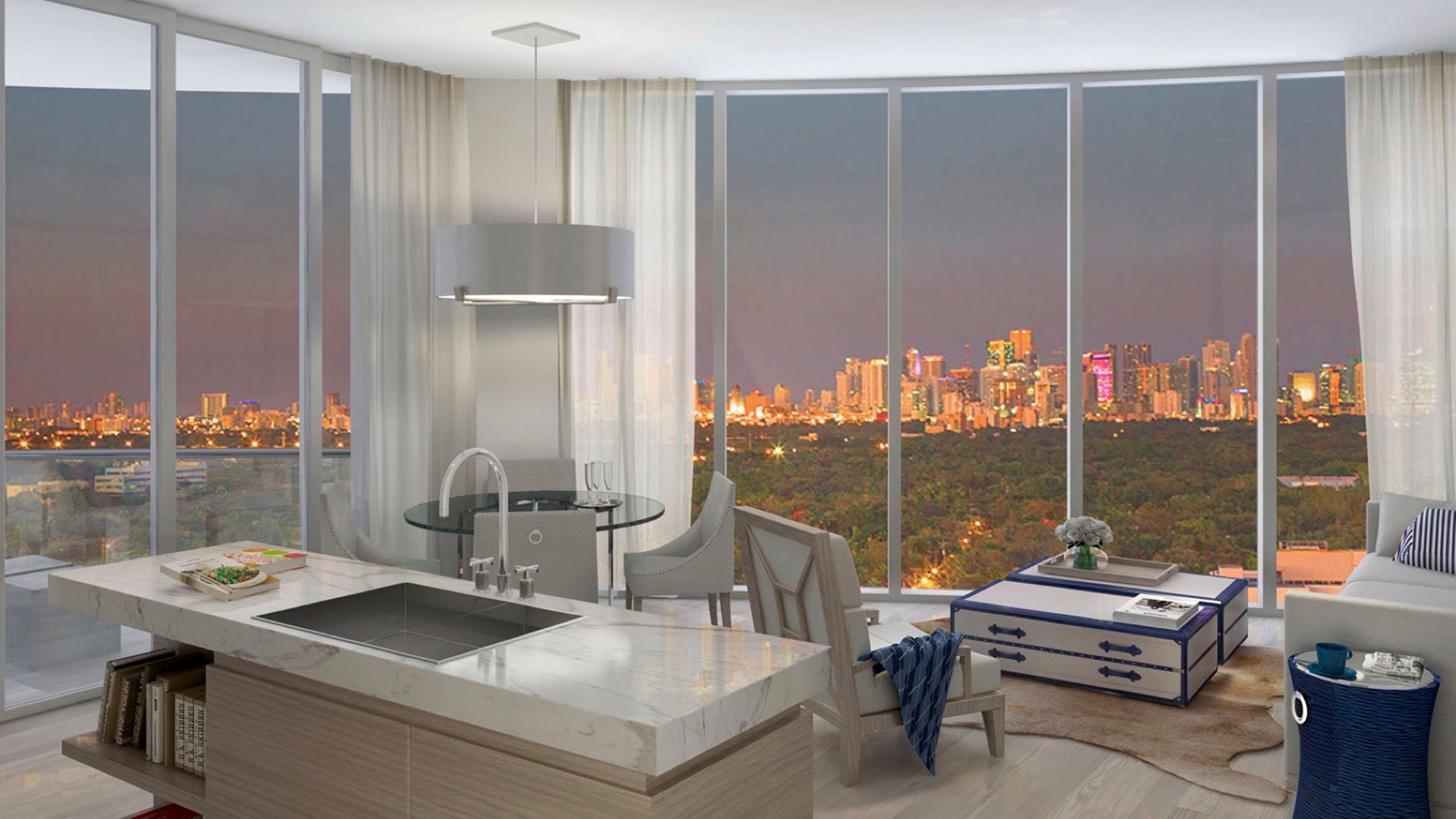
For a buyer whose day includes confidential calls, investment decisions or conversations across time zones, working from home is as much an infrastructure question as a design preference. A library may be serene without being suitable for a private meeting. A generator may support common areas without keeping a residence's router online. An impressive internet-speed claim says little about whether service survives an interruption.
That distinction frames the comparison between Park Grove and Four Seasons in Coconut Grove. Park Grove has clearer published evidence of purpose-built workspaces. Four Seasons presents announced shared spaces and services, alongside advertised connectivity features that warrant confirmation. Neither property's available descriptions establish a complete, outage-resilient connection from the internet provider to the resident's desk.
The purchase decision turns on three separate questions: where work happens, what connectivity is available, and what remains usable when normal power or service fails.
At Park Grove Coconut Grove, the workspace offering has tangible support. An on-site business center is advertised at One Park Grove. Advertised amenities also include private meeting rooms and a large conference room with video conferencing and integrated media systems.
For an owner who occasionally needs to move a meeting outside the residence, these details are more relevant than a general promise of lounge space. They establish an advertised business function, but not acoustic privacy, booking availability or technical performance.
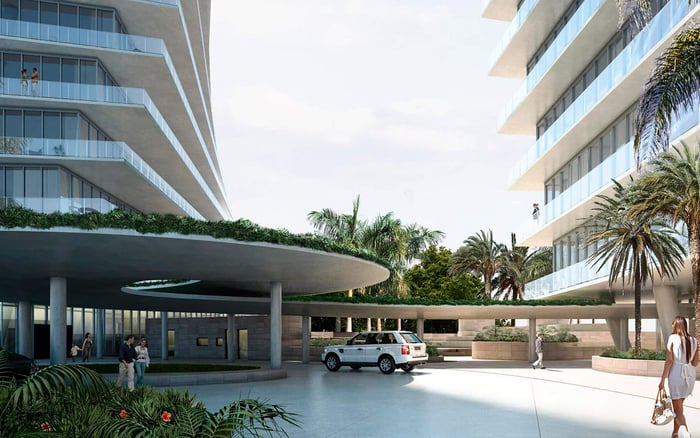
The tower distinction matters. Park Grove comprises One Park Grove at 2811 South Bayshore Drive, Two Park Grove at 2821, and Park Grove Club Residences at 2831. A buyer should not assume that every advertised room is accessible on identical terms from every tower. Request written confirmation of the specific residence's access rights, reservation procedures, operating hours, guest permissions and charges.
Then test the space against the actual working routine. Can the room accommodate consecutive calls? Is speech audible outside the door? Is the video equipment maintained and available for resident use? A tour should test the intended use, not merely confirm that a conference table exists.
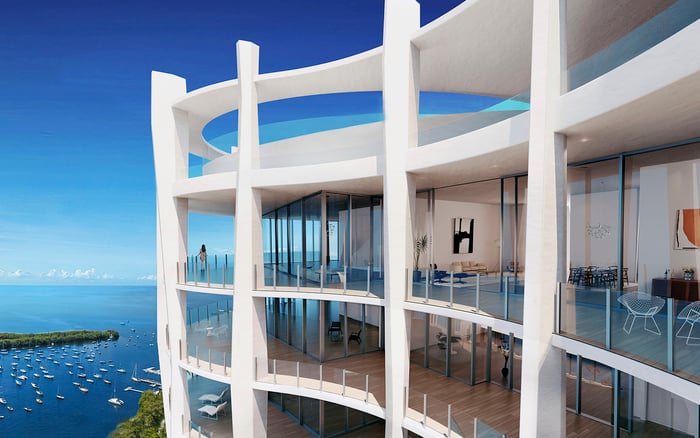
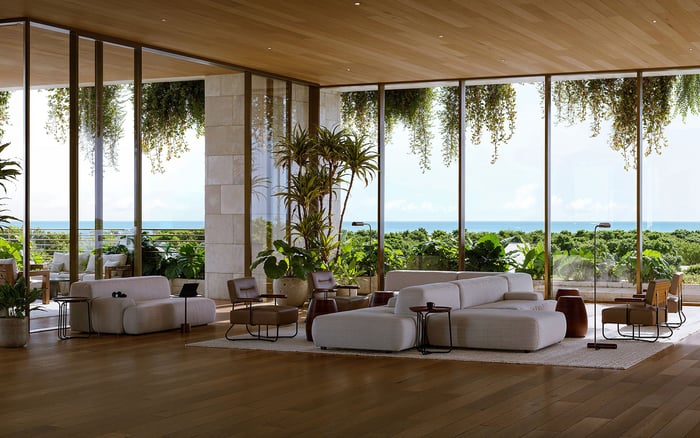
Four Seasons Residences Coconut Grove is listed at 2699 South Bayshore Drive. Announced in April 2024, the planned collection comprises 70 homes with two to four bedrooms. The announced shared spaces include a library and private event room, neither identified as a dedicated office or business center.
The distinction is material. A library might suit quiet reading, yet its name alone does not establish permission for calls, exclusive reservations or confidential discussions. Similarly, a private event room is not automatically a reservable boardroom. A private room or lounge is also advertised for intimate gatherings; that description should not be read as an office entitlement.
The announced restaurant, expansive pool deck and serviced bar lounge emphasize residential hospitality. The gym, yoga room and spa with cold plunge and hammam add a wellness dimension. These are meaningful lifestyle considerations, but they remain announced amenities rather than independently verified operating facilities in this comparison.
For buyers evaluating branded residences, service and work infrastructure merit separate assessments. Concierge assistance can be valuable without establishing an IT support obligation or a guaranteed place to conduct business.
Park Grove's advertised generator coverage refers to backup power for common areas rather than full power for individual residences. Treat that wording as a general description, not an electrical specification.
Common-area coverage does not, by itself, establish that telecom closets, Wi-Fi access points, conference-room equipment or in-residence routers remain energized. The useful question is not simply whether a generator exists, but which equipment and circuits it serves, under what conditions, and for how long.
Request a written coverage schedule identifying the relevant telecom equipment, meeting-room outlets and any backed-up circuits within the residence. Ask separately about generator runtime, testing and whether workspace equipment remains usable during an outage.
For Four Seasons, the available amenity and connectivity descriptions do not establish generator-backed internet service. That is an unresolved technical question, not evidence that backup is absent. At both properties, seek documentation specific to the tower and residence rather than treating a broad amenity statement as a continuity promise.
Common-area Wi-Fi is advertised for Four Seasons. Fiber-to-the-home with 2 Gbps symmetric internet is advertised separately. That claim warrants attention, but buyers should obtain the underlying developer specification before treating the speed and service configuration as confirmed.
Even as advertised, the figure does not establish generator-backed service or internet failover. Nor does common-area Wi-Fi specify the connection available inside a particular residence.
At either property, request a list of available internet service providers, the residence's service specification and details of any documented alternative connection. Ask whether failover is automatic or requires resident action, and whether it covers private residences, shared workspaces or both. Where redundant carriers are proposed, clarify their physical routing rather than assuming two subscriptions provide independent infrastructure.
Cellular reception belongs in the same review. Test the intended desk location and meeting spaces, then ask about rules governing resident uninterruptible power supplies, or UPS batteries. These checks help define a personal contingency plan without presuming building-wide resilience.
A buyer also considering Opus Coconut Grove can apply the same questions without assuming equivalent amenities or systems. Keep the comparison residence-specific: the room, the permitted use, the connection and the backup arrangements.
At Park Grove, prioritize the practical usability of the advertised business center and meeting rooms. At Four Seasons, establish whether the announced library or event room can accommodate the intended working pattern at all. In both cases, distinguish courteous assistance from a documented service commitment.
Bring a simple working-day scenario to the discussion: a private morning call, an afternoon meeting with visitors, and a power or internet interruption. Ask management or the sales team to explain how each would be handled. Request written answers where uninterrupted work is material to the purchase.
Park Grove's defensible advantage is clearer published evidence of purpose-built workspaces, not demonstrated superiority in internet reliability. Four Seasons offers an announced hospitality-led setting and advertised connectivity features, but neither establishes dedicated office access or outage performance.
Neither property's available descriptions settle the full telecom design, redundant carrier arrangements, generator runtime or in-residence backup circuits. The discerning buyer should value what is documented, clarify what is merely advertised, and avoid paying for an assumed capability.
For a considered approach to Coconut Grove residences and the details that shape ownership, connect with MILLION.
If branded residences are on your mind — as a home or as an allocation — we would be glad to share what we are seeing, privately.
Begin a quiet conversationYes. The One Park Grove buyer brochure advertises an on-site business center, and published Park Grove amenity descriptions include private meeting rooms.
Published amenities include a large conference room with video conferencing and integrated media systems. Buyers should confirm access, equipment availability and outage usability.
The available descriptions do not establish identical access rights across the three towers. Confirm the specific residence's booking rules, hours, charges and guest permissions.
The published description refers to common-area backup rather than full power for individual residences. It is not an electrical specification, so circuit coverage requires written confirmation.
No. That description alone does not confirm power to telecom equipment, Wi-Fi access points, meeting-room systems or in-residence routers.
The announced shared spaces include a library and private event room, neither identified as a dedicated office or business center. Their suitability and permitted use for work need confirmation.
Third-party marketing advertises fiber-to-the-home with 2 Gbps symmetric internet. Obtain the underlying developer specification before treating the claim as confirmed.
The available descriptions do not establish generator-backed internet or failover arrangements. This remains a technical question to resolve, not proof that backup is absent.
Park Grove has clearer published evidence through its business center, private meeting rooms and conference-room amenities. That does not establish superior internet reliability.
Request written confirmation of workspace access, generator circuit coverage, telecom equipment power, provider options and failover arrangements. Also check cellular reception and rules for resident UPS batteries.