A buyer-focused examination of association estimates, service-charge boundaries, and unresolved escalation provisions at two planned Design District residences, with a framework for evaluating long-term ownership costs.
The appeal of a branded residence extends beyond architecture and address. It promises a considered daily life: well-maintained shared spaces, responsive service, and fewer practical demands on the owner. The financial question is what that promise costs, who controls the bill, and which obligations continue beyond the initial purchase.
At Kempinski Residences Miami Design District and Miami Tropic Residences, buyers should distinguish the advertised acquisition price from the continuing cost of ownership. Preliminary estimates and service descriptions provide a starting point, but neither establishes a complete, binding picture of future assessments or operator charges.
A compelling service promise is not a defined service obligation. That distinction belongs in the purchase review, not in a conversation after closing.
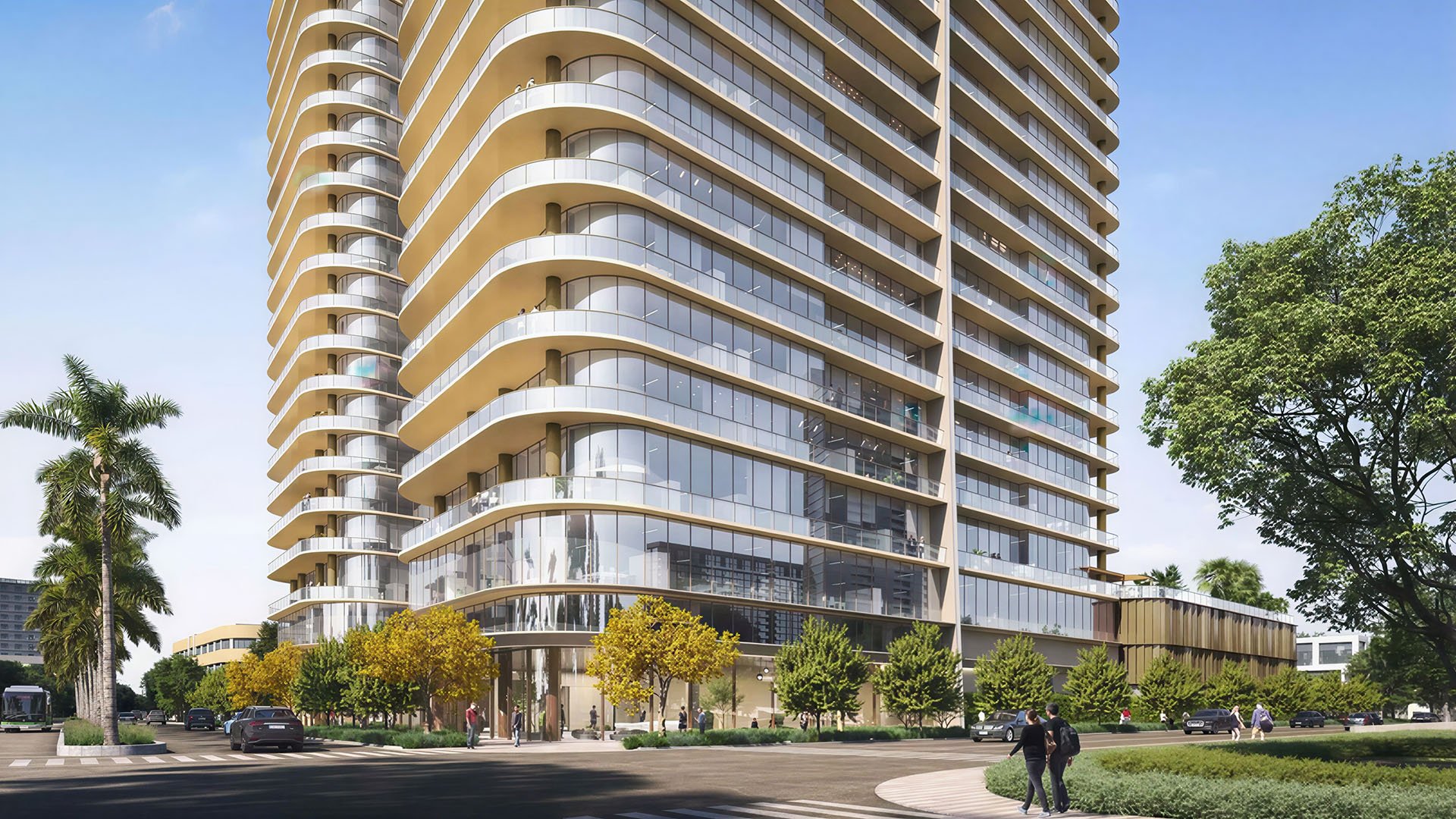
Kempinski is planned at 3801 and 3883 Biscayne Boulevard, along the Design District's Biscayne Boulevard edge. Plans call for two 23-story towers with approximately 132 residences, plus six townhomes and private guest suites. Starting prices are approximately $3.7 million for two bedrooms, $4.5 million for three bedrooms, and $5 million for four bedrooms.
Jean-Georges Miami Tropic Residences is planned at 3501 NE 1st Avenue. Starting prices are approximately $1.1 million for one bedroom, $2.2 million for two bedrooms, $3.3 million for three bedrooms, and $4.9 million for four bedrooms.
These are marketing figures, subject to change-not a like-for-like measure of ownership value. Buyers need a unit-specific acquisition price alongside a documented operating budget. A lower purchase threshold does not establish lower annual service costs; a higher threshold does not demonstrate that more services are included.
Kempinski association-charge estimates are $2.25 per square foot per month. Monthly examples range from $4,840 to $6,073, with separate unit-specific estimates of $6,042 for unit 801 and $6,980 for unit 1101. These figures are planning references, not verified contractual assessments.
That variation warrants a written, unit-specific calculation. Buyers should ask which area measurement applies, how expenses are allocated, and whether the quoted figure includes every association-funded component. One residence's monthly estimate should not be assumed to translate directly to another.
Described maintenance inclusions cover the building exterior, common areas, elevators, management, landscaping, pool service, recreation facilities, internet/Wi-Fi, cable, and interior pest control. Broad language such as “all amenities” does not establish that every branded service or individually requested service is available without an additional charge.
Ownership is described as including condominium-association membership, with the association governing and funding shared amenity levels and building services. A final assessment schedule, reserve-study assumptions, and a binding ceiling on future common expenses have not been established in the information reviewed.
Miami Tropic's legal language explicitly states that “additional fees may apply.” That warning identifies neither a complete service-charge schedule nor an operator-fee escalation formula. A comparable monthly association assessment, detailed operating budget, and documented annual fee-increase formula are also absent from the information reviewed.
The appropriate response is to assume neither expensive service nor comprehensive inclusion. Request a schedule distinguishing association-funded services from optional, privately billed services. Ask whether any charges are mandatory regardless of use, how rates may change, and which document governs those changes.
A useful written answer should identify the service, the payer, the charging basis, and the party authorized to revise the price. General assurances about hospitality are no substitute for those terms.
A disciplined ownership model separates four categories rather than compressing them into a single monthly number.
Regular association assessments fund the shared obligations described in the governing documents and budget. Consider special assessments separately from ordinary recurring charges; ask how they can be authorized and allocated without presuming one is planned.
Private-use service charges belong in their own category. Request written treatment of valet and transportation, guest-suite use, and separately billed services rather than assuming access and consumption are priced identically. Their precise economics remain questions for the documents.
Finally, owner expenses include taxes, insurance, utilities, repairs, and rental management where applicable. Confirm the boundary between association-paid expenses and individual obligations to avoid omissions or double counting. That distinction is particularly useful when comparing a primary residence with an occasionally occupied second home.
No project-specific contractual escalator is established for either development in the information reviewed. Buyers should not assume a fixed annual increase, inflation linkage, labor-cost pass-through, guaranteed maximum, or fee cap.
Instead, ask counsel to locate every provision permitting a change in management, brand, amenity, or service charges. Establish the calculation basis, adjustment frequency, notice requirements, and any approval rights. If the documents include a pass-through, determine which expenses qualify and whether limits apply.
The same document-first discipline belongs in a comparison with Cipriani Residences Brickell. A shared place on a buyer's shortlist does not make service agreements interchangeable or establish similar ownership costs.
Brand-license duration, renewal rights, termination provisions, and operator pass-through expenses remain unresolved for the two Design District developments in the information reviewed. These are material review questions, not established adverse terms.
Both developments outline payment schedules of 20% at contract, 10% at groundbreaking, 10% at top-off, and 60% at closing. Kempinski also specifies a $50,000 reservation. Confirm its treatment in the signed documents rather than assuming how it is credited.
Kempinski's projected schedule anticipates groundbreaking in Q2 2027, top-off in Q2 2028, and closing in Q4 2029. These are projections, not completed milestones or guarantees.
A staged purchase schedule defines capital commitments, not the eventual operating burden. Ask whether the proposed budget reflects stabilized staffing and service levels, and which assumptions could change after owner turnover. Review insurance, utilities, reserves, and operator costs individually rather than relying on the opening assessment alone.
Request complete offering documents and exhibits, including proposed budgets, reserves, the declaration, bylaws, management agreements, brand agreements, amenity-service agreements, and fee-related addenda. Seek written clarification of staffing, insurance assumptions, guest-suite economics, and separately billed services.
The decisive comparison rests on documented obligations: what owners fund collectively, what they purchase privately, and how either amount can change. A residence can offer exceptional service while requiring a more substantial carrying-cost commitment. The objective is informed ownership, not the lowest advertised monthly figure.
For a discreet perspective on your South Florida residential shortlist, explore MILLION.
If branded residences are on your mind — as a home or as an allocation — we would be glad to share what we are seeing, privately.
Begin a quiet conversationIt is planned at 3801 and 3883 Biscayne Boulevard, along the Biscayne Boulevard edge of Miami's Design District.
The development is planned at 3501 NE 1st Avenue in Miami's Design District.
No. The $2.25 per square foot per month figure is a planning estimate, not a verified contractual assessment.
The unit-specific estimates differ, but those figures do not establish the reason for the variation. Request the written assessment calculation for the residence you are considering.
No. Broad amenity language does not establish that every branded or individually requested service is included without additional charges.
The information reviewed does not establish a comparable monthly association assessment or detailed operating budget. Its legal language warns that additional fees may apply.
No project-specific contractual escalator is established in the information reviewed. Do not assume a fixed increase, inflation linkage, pass-through, or fee cap.
Both outline 20% at contract, 10% at groundbreaking, 10% at top-off, and 60% at closing. Kempinski also specifies a $50,000 reservation whose treatment should be confirmed in the signed documents.
The projected Q2 2027 groundbreaking, Q2 2028 top-off, and Q4 2029 closing are not completed milestones or guarantees.
Request the complete offering documents, budgets, reserve information, declaration, bylaws, management and brand agreements, amenity-service agreements, and fee-related addenda. Seek written clarification of included services and adjustment provisions.