EDITION Edgewater’s service offering invites a closer look at the documents behind the experience. Buyers should distinguish branding rights from operating duties, included services from optional purchases, and estimated maintenance fees from a funded association budget.
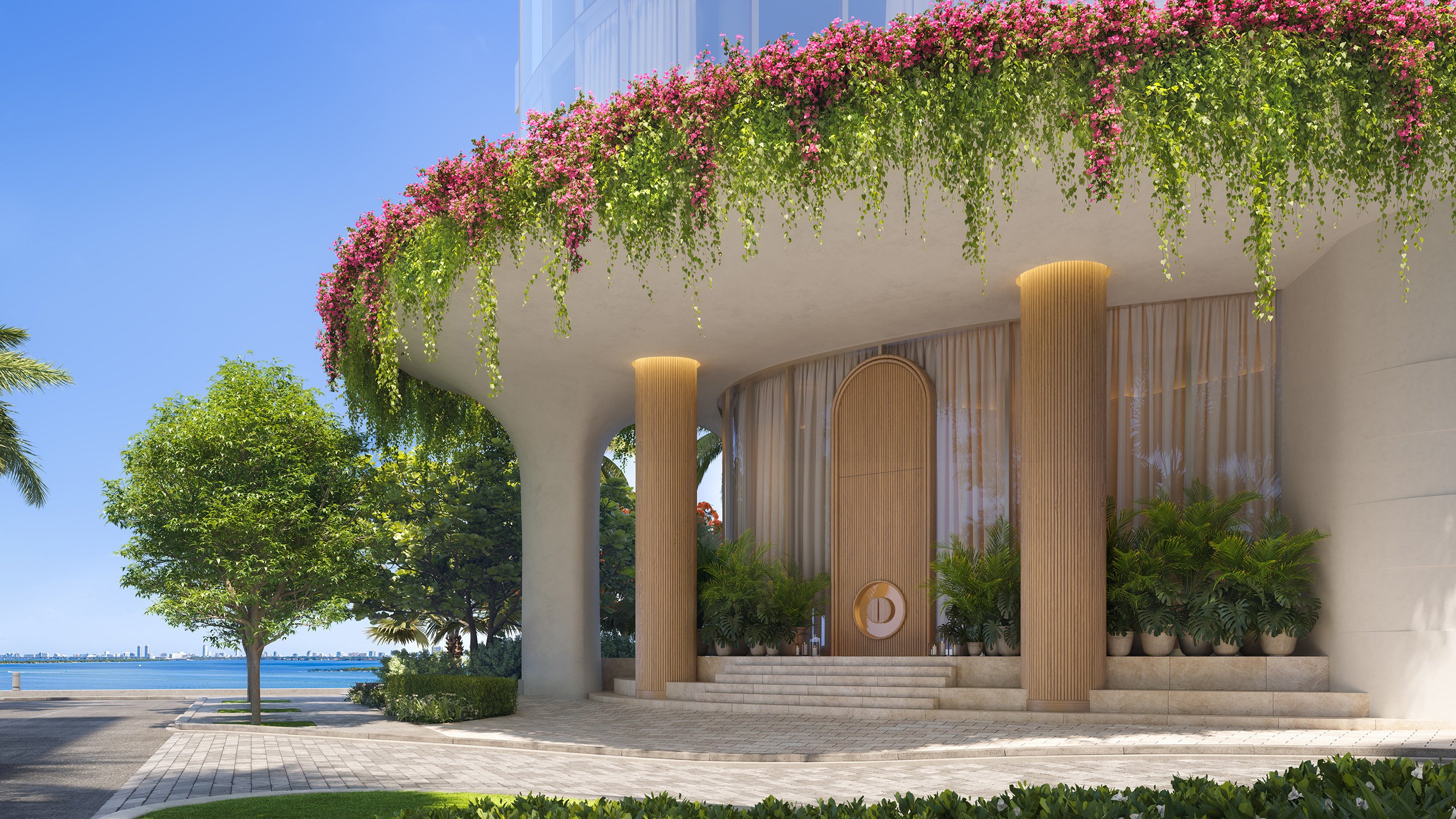
The most persuasive luxury service is almost invisible: an arrival handled gracefully, a delivery anticipated, a home prepared before its owner returns. At EDITION Edgewater, the marketed offering pairs fully serviced condominium residences with approximately 45,000 square feet of amenities. Located at 2121 N Bayshore Drive, Miami, FL 33137, the project is described as purely residential rather than a hotel.
For a buyer, the central question is not whether that vision is attractive. It is who must deliver it, to what standards, and with whose money. A service promise is easier to evaluate when the contractual obligation, staffing plan and funding can be examined together.
Residential-only status does not, by itself, establish how costs are allocated or whether any subsidy exists. Nor is hotel-style language proof that a hotel operating structure supports the condominium experience.
Under the disclosed legal arrangement, TRD Biscayne LLC uses EDITION and certain Marriott trademarks for residential sales and marketing under a limited, non-exclusive, non-sublicensable license from Marriott. That arrangement concerns trademark use. It does not establish who employs the concierge team, supervises the butlers or bears responsibility for missed service commitments.
Ask counsel to identify the relevant entities across the purchase documents, condominium documents and any applicable management agreement. The distinction is between permission to market under a name and an obligation to perform a task. Buyers should also ask whether service standards are incorporated into governing agreements, who can amend them and who has enforcement rights.
A buyer also considering St. Regis® Residences Brickell should conduct the same document-by-document inquiry independently. One branded residence’s name or positioning cannot establish another’s operating obligations.
The advertised program includes 24-hour butler, doorman and porter services, alongside 24-hour security and valet parking. Common-area housekeeping and maintenance also appear in the offering. These are meaningful elements of the ownership proposition, but the wording alone leaves practical questions unanswered.
For each service, request a schedule defining scope, coverage and limitations. Does round-the-clock availability mean a dedicated staffed position, a shared team or an on-call arrangement? What staffing is planned for overnight periods, employee leave and overlapping requests? Are response expectations defined, or does the commitment stop at availability?
Ask how staffing assumptions align with payroll, benefits, supervision and outside contracts in the operating budget. These are verification questions, not established provisions at EDITION Edgewater. The objective is to make the buyer’s expectations explicit: each advertised service should be traceable to a responsible party, a defined duty and a corresponding budget allowance.
The marketed service program extends to owner and bicycle storage, newspaper, magazine and package delivery or storage, reservation assistance and move-in coordination. Hotel and guest-suite reservations should not be read as evidence that the tower itself operates as a hotel. Nor does arranging a reservation establish that the underlying stay, meal or treatment is included.
A separate à la carte category covers grocery shopping, laundry and dry cleaning, dog walking, nanny services, personal chefs, in-home spa treatments, personal training, travel planning and vacant-home care. Optional engineering offerings include light-bulb replacement, furniture assembly or repair, vendor coordination, and appliance and outdoor-area cleaning.
Second-home buyers should pay particular attention to vacant-home care. Ask what inspections or visits can be ordered, who performs them, how access is authorized and what documentation follows. The à la carte label identifies a service category; it does not establish prices, guaranteed availability or vendor responsibilities. A written fee schedule and service terms are more useful than an assumption of unlimited access.
The quoted maintenance estimate is approximately $1.90 per square foot per month. For an illustrative 2,000-square-foot residence, that equals approximately $3,800 monthly, or $45,600 annually, before separately charged services. This is a marketing-stage estimate, not a verified adopted association budget.
Treat that number as the starting point for underwriting. Request the supporting budget and ask which service expenses it includes. Examine proposed payroll, management charges, vendor contracts, insurance, utilities, maintenance and reserves as applicable. Ask whether developer contributions, phased expenses or other assumptions affect the initial figure, without assuming those arrangements exist.
For an Edgewater buyer weighing Villa Miami alongside EDITION, the useful comparison is what each fee covers, not the headline rate alone. Build a personal ownership estimate that separates common charges from anticipated optional spending. That prevents frequent in-home services from being overlooked within an apparently comprehensive monthly number.
An on-site fine-dining restaurant and catering kitchen are promoted as amenities. Their presence in the offering does not establish ownership, operating hours, access conditions or inclusion in association fees. Ask who is expected to operate each space, whether residents receive contractual access rights and how operating costs are allocated.
Apply the same discipline to continuity. Have counsel examine any relevant provisions governing management renewal, termination, replacement and changes to brand affiliation. Ask what happens to service standards if an operator changes, whether transition duties are specified and which decisions require owner or association approval.
These questions do not imply that a departure is expected or that one would necessarily affect resale value. They separate the appeal of a branded identity from the mechanisms intended to sustain day-to-day service. Continuity warrants its own review; the name alone does not settle it.
Before committing, request a concise service matrix covering each advertised benefit, the responsible party, hours, included or optional status, charging basis and applicable agreement. Pair it with the budget and ask counsel to explain available remedies for nonperformance, including any notice, cure or dispute procedures that actually apply.
The enforceability of particular marketing statements requires legal review. Neither automatic enforceability nor blanket dismissal is a sound assumption. Similarly, a maintenance estimate cannot establish funding adequacy without an examination of the underlying commitments and expenses.
A considered purchase decision values the experience while examining what supports it. At EDITION Edgewater, that means distinguishing what is marketed, what is contractually undertaken and what is budgeted-without treating those categories as interchangeable.
For a considered approach to South Florida’s branded residential market, explore MILLION.
If branded residences are on your mind — as a home or as an allocation — we would be glad to share what we are seeing, privately.
Begin a quiet conversationThe project address is 2121 N Bayshore Drive, Miami, FL 33137.
It is described as a purely residential tower with EDITION-branded services and amenities, rather than a hotel. Reservation assistance does not change that distinction.
TRD Biscayne LLC uses EDITION and certain Marriott trademarks for residential sales and marketing under a limited, non-exclusive, non-sublicensable license. That disclosure does not establish day-to-day management responsibilities.
The marketed program includes 24-hour butler, doorman, porter, security and valet services. Buyers should verify staffing arrangements and contractual scope separately.
Approximately 45,000 square feet of amenities are marketed. That figure does not demonstrate that operating obligations are funded.
They are marketed as à la carte offerings, alongside services such as laundry and nanny assistance. Buyers should obtain pricing and terms rather than assume universal inclusion.
The marketing-stage estimate is approximately $1.90 per square foot per month. It should not be treated as a verified adopted association budget.
The illustrative calculation is approximately $3,800 monthly or $45,600 annually before separately charged services. It is not a confirmed assessment for a particular residence.
An on-site fine-dining restaurant and catering kitchen are promoted, but fee inclusion, ownership and operating hours are not established. Buyers should request the relevant operating and access terms.
Ask counsel to review applicable management renewal, termination, replacement and brand-affiliation provisions. Confirm who can enforce service duties and what remedies the relevant agreements provide.