At Oceana Bal Harbour, enduring value lies in land, privacy, planning and service. Buyers should assess the residence, shared spaces and operational infrastructure as one complete ownership proposition.

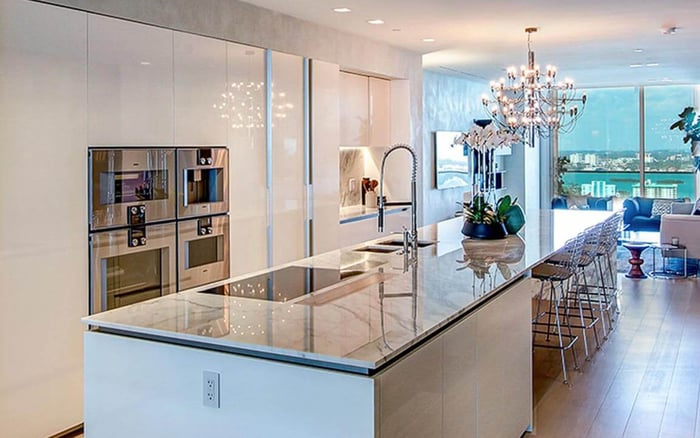
At Oceana Bal Harbour, the most consequential luxuries are not necessarily those captured in a listing photograph. Stone, millwork and lighting can be changed. The amount of land, the building’s orientation, the distance between daily activities and the quality of service are considerably harder to replicate.
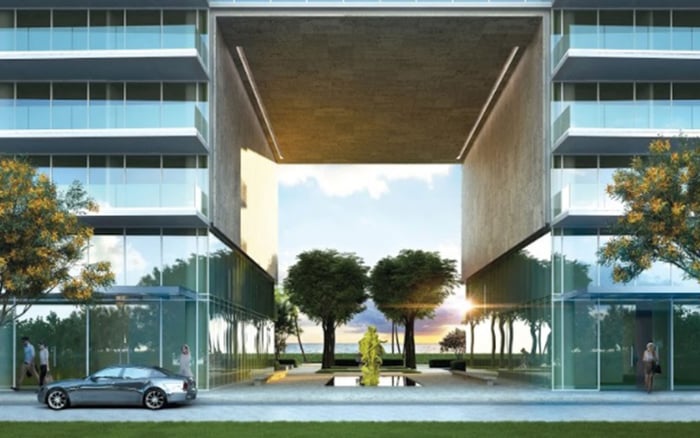
The property occupies roughly 5.5 acres, with about 400 feet of beachfront. Less than 15 percent of the site is covered by the building, leaving approximately 4.8 acres for open space and amenities. In Bal Harbour, that allocation creates something increasingly scarce: room for the residential experience to unfold beyond the tower itself.
This is the first principle of evaluation. A buyer should understand not simply what the residence contains, but what the entire site makes possible. Landscape, arrival, recreation, privacy and circulation collectively define the sense of calm.
The 28-story development contains about 240 residences, including four penthouses and four duplex upper penthouses with private pools. Published totals vary slightly, so buyers should confirm the current legal and association records during diligence.
The building runs parallel to the beach, an orientation intended to favor unobstructed ocean and bay outlooks while reducing cross-building sightlines. Residences feature flow-through plans, private elevator lobbies, high ceilings and large terraces. These are structural attributes. They shape daylight, the separation between entertaining and private rooms, the elevator arrival and the relationship between interior space and each terrace.
That distinction is essential in resale evaluation. A beautifully renovated home with compromised circulation may be less satisfying than a dated residence with a superior plan. Buyers should walk the route from the elevator to the kitchen, principal suite and outdoor space, noting privacy at every threshold and how service functions intersect with daily life.
Oceana’s grounds support a large relaxation pool, an Olympic-style lap pool, two oceanfront jetted spas and two clay tennis courts. Four poolside cabanas are available for daily reservation. The amenity mix also includes landscaped areas within a site plan by Arquitectonica, interiors by Piero Lissoni and landscape design by Enzo Enea.
The buyer’s task is to move beyond the amenity inventory. Ask how cabanas are reserved, whether demand changes seasonally, when the tennis courts are busiest and how pool and beach services operate during peak occupancy. Observe shade, wind and walking distances at the hours when the household would actually use the grounds.
Oceanfront acreage feels luxurious when it provides choice without friction. A lap swimmer, a family settling near the relaxation pool and an owner seeking a quieter cabana should be able to use the property without competing for the same small zone.
The service proposition includes a 24-hour concierge, pool and beach services, a poolside bar-and-grill, a private restaurant and an outdoor café overlooking the landscaped pool area. Together, these elements give the property a hospitality-oriented character, but their value depends on execution rather than description.
A serious buyer should confirm current restaurant and spa access, operating schedules, reservation procedures, guest policies and the scope of concierge assistance. Staffing levels during holidays and high season deserve particular attention, as do service consistency, response times and the practical ease of arranging a long stay.
This operational review is especially important for a second-home owner. The building’s LEED certification and multilevel security are notable, but seasonal residents should still ask how access, deliveries, vacant-unit oversight and vendor entry are managed. A Shabbat elevator operating through the service elevator also addresses a specific consideration for residents whose routines require it.
The wellness program includes a two-story spa and fitness center, ocean-view workout areas and dedicated space for yoga, meditation and Pilates. Shared entertaining facilities include a grand salon, chef’s kitchen and bar. A children’s activity room, billiards and a private cinema or media room broaden the program beyond formal entertaining.
Buyers comparing the northern beachfront corridor may also tour Rivage Bal Harbour, The Surf Club Four Seasons Surfside and Eighty Seven Park Surfside. The purpose is not to compare finishes in isolation, but to clarify which combination of scale, shared space, service and location best matches the household’s lifestyle.
During an Oceana visit, assess whether the wellness areas feel appropriately sized at likely peak hours. For entertaining rooms, review booking rules, fees, catering limitations and guest access. Amenities deliver their greatest value when governance supports spontaneous use while protecting residential quiet.
Parking can reveal as much about a luxury condominium as its lobby. Oceana’s garage accommodates approximately 530 cars, and residents have access to two levels of underground valet parking, private storage and bicycle storage. Electric-vehicle charging stations are also part of the offering.
Buyers should verify valet staffing, retrieval times, guest-parking procedures, charger count, billing and access rules. Storage dimensions and assignment status should be documented rather than assumed. These details become particularly important for households with multiple vehicles, bicycles, seasonal belongings or staff movements.
Financial and physical diligence should extend to association reserves, insurance, maintenance history and planned capital work. Review renovation rules, contractor access, work-hour restrictions and seasonal occupancy provisions. Quiet luxury is partly the absence of avoidable disruption, and that depends on disciplined governance.
At Oceana, the strongest proposition lies in the relationship among land, orientation, private arrival, outdoor space and full-service operations. A buyer can replace surfaces, appliances and furnishings. It is far more difficult to alter sightlines, site coverage, elevator configuration, parking capacity or the culture of service.
The best purchase decision therefore combines emotional response with operational scrutiny. Visit at different times, use the amenity routes, speak with the appropriate building representatives and read the governing documents closely. The objective is not merely a beautiful residence. It is an ownership experience that remains composed when the building is busy, the household is away and everyday requests test the infrastructure.
How large is the Oceana Bal Harbour site? The property occupies roughly 5.5 acres, including about 400 feet of beachfront.
How much of the site is open space? Building coverage is less than 15 percent, leaving approximately 4.8 acres for open space and amenities.
How many residences are at Oceana? The development contains about 240 residences, although published totals differ slightly and should be verified.
Why does the building’s orientation matter? Its parallel relationship to the beach is intended to favor ocean and bay views while limiting cross-building sightlines.
Which residential features deserve priority? Flow-through plans, private elevator lobbies, ceiling height and terrace proportions can matter more than replaceable finishes.
What swimming amenities are available? The program includes a relaxation pool, an Olympic-style lap pool and two oceanfront jetted spas.
Does the property offer private dining? Its hospitality program includes a private restaurant, outdoor café and poolside bar-and-grill, subject to current operating policies.
What should buyers ask about cabanas? Confirm reservation procedures, fees, guest rules and seasonal availability for the four daily-reservation cabanas.
What parking details require verification? Review valet capacity, retrieval procedures, assigned storage and the availability, access rules and billing for EV charging.
What documents matter before purchasing? Examine reserves, insurance, maintenance history, planned capital work, renovation restrictions and seasonal occupancy rules.
If you'd like a private walkthrough and a curated shortlist, connect with MILLION.
If branded residences are on your mind — as a home or as an allocation — we would be glad to share what we are seeing, privately.
Begin a quiet conversation