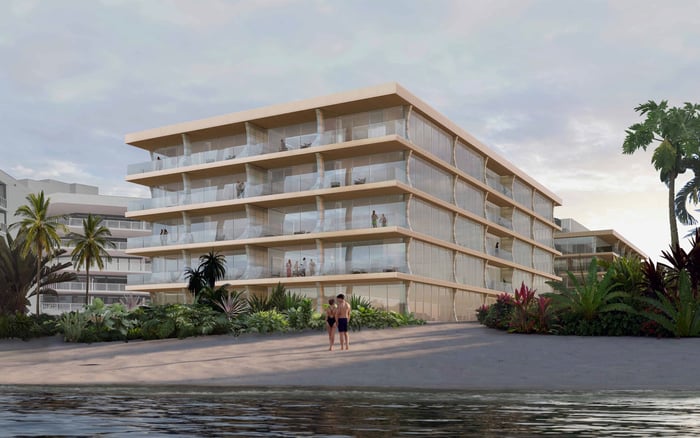
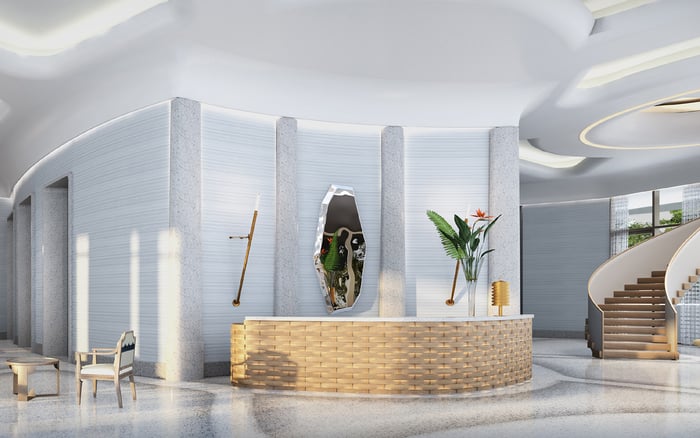
A discreet purchase-planning guide to caregiver access at The Bristol Palm Beach, separating advertised building services from county credentials, provider screening, and the written approvals buyers should obtain before closing.

For a buyer at The Bristol Palm Beach, an elegant arrival is only part of the ownership equation. If daily life includes a private caregiver, household employee, or recurring service provider, the more consequential question is how that person reaches the residence, under whose authorization, and with which verified credentials.
The building is at 1100 South Flagler Drive in West Palm Beach. Advertised features include private elevator entry to residence foyers and separate service elevators for staff and deliveries. Services include 24-hour door and front-desk staff, a full-time concierge, full-time security, and 24-hour valet. These are meaningful operational features, but they do not establish a caregiver approval or background-check protocol.
For purchase planning, keep three decisions separate: whether a caregiver meets applicable county requirements, whether the household considers that individual suitable, and whether the association authorizes access. None should be assumed to resolve the others.
Bristol’s advertised amenities do not specify caregiver registration, temporary credentials, recurring home-health worker approval, or after-hours access procedures. Nor do they establish whether the association independently conducts criminal-history checks on private caregivers, household employees, or service providers.
That distinction matters. A staffed entrance is not evidence that every visitor has been screened. A service elevator does not establish unrestricted access for household staff. Likewise, a county-badged caregiver should not be assumed to have automatic building approval.
Ask management to explain the access process in writing rather than treating a concierge conversation as a complete operating policy. The goal is not simply permission to enter, but a predictable arrangement that works when the resident is unavailable, a shift changes, or a substitute arrives.
Palm Beach County requires a Home Caregiver ID Badge for people receiving compensation, directly or indirectly, from a vulnerable adult for covered caregiving activities, subject to applicable exemptions. The ordinance includes Level 2 background checks, and applicants generally undergo a state and national fingerprint-based criminal-history check.
A badge indicates completion of the applicable fingerprint-based check without specified disqualifying criminal adjudications. It is not a general guarantee of competence or suitability. Families should treat credential verification as one step, not the entire hiring decision.
Home Caregiver ID Badges must be renewed every five years. Families can check badge status online through the county. Certain holders of specified current Florida licenses or certifications may be exempt; verify the applicable exemption with the county rather than assuming a professional title settles the question.
Caregivers previously screened through Florida’s Agency for Health Care Administration may use the county’s consent-and-authorization process to verify qualifying screening instead of submitting fingerprints again. That alternative does not establish building admission rights or replace the household’s assessment of qualifications.
Request the declaration, bylaws, rules, resident handbook, and current caregiver, vendor, and access-control policies from the association or managing agent. These are due-diligence recommendations, not documented Bristol requirements.
Then seek written answers on who may authorize access, whether preregistration is needed, what identification must be presented, and how temporary and recurring credentials are handled. Ask whether approvals carry expiration dates, floor restrictions, or permitted hours. Confirm how overnight shifts, live-in staff, and replacement caregivers are addressed.
For buyers also considering Forté on Flagler West Palm Beach, make the same document requests independently. A comparison is more useful when it tests the household’s actual care schedule rather than assuming different residences share access rules.
Retain the written responses with the purchase file. If an answer is incomplete or conflicts with another document, request clarification before relying on it for a move-in plan.
Building approval and county credentials address different questions from the quality of care. Ask an agency or employer about applicable licensing, insurance, screening, references, training, and ongoing monitoring. For directly hired workers, determine which checks the household must arrange rather than assuming another party has completed them.
Clarify who employs each individual and who provides replacements. A familiar agency name should not substitute for confirming the identity and credentials of the person assigned to the residence. Ask how the agency communicates staffing changes and how the household can verify a substitute before the shift begins.
For household employees and other service providers, do not assume the caregiver badge framework applies to every role. Confirm the applicable requirements for the work involved, then ask management separately about vendor registration and any building-level screening. Bristol’s internal staff credentialing standards remain unestablished by its advertised amenities.
A practical lifestyle review should follow a caregiver’s entire visit: arrival, parking, identification, elevator access, shift handover, and departure. Ask about caregiver parking, designated service entrances, and the handling of medical-equipment deliveries. Confirm the permitted elevator route rather than inferring it from the existence of separate service elevators.
Consider a late replacement, an overnight handover, or a resident unable to answer an authorization call. Ask who may approve entry in each situation, how emergency access is handled, and what procedures apply during a power failure. These are questions to resolve, not descriptions of established Bristol practices.
If Alba West Palm Beach is also on the shortlist, apply the same daily-life test there. Written answers make operational fit easier to assess without presuming equivalent staffing or policies.
Resale diligence should include confirmation of current access rules rather than reliance on arrangements described by a seller. Ask whether existing caregiver authorization must be replaced under new ownership and what the incoming household must submit before its first scheduled visit.
Second-home planning adds another question: who can manage access when the owner is away? Identify the household representative who may communicate with management, approve substitutes, and request credential deactivation. Ask whether access logs are maintained and who may review them, without assuming a particular system exists.
A buyer comparing Mr. C Residences West Palm Beach should request separate written answers. The relevant comparison is whether each residence can accommodate the proposed household arrangement under its current rules.
Before closing, organize county credential verification, provider qualifications, and building access approval as separate records. Note renewal dates, approved contacts, shift arrangements, and the procedure for removing access when employment ends. Avoid retaining sensitive screening information unnecessarily; ask what management actually requires.
The desired result is discreet, dependable access with clear accountability. At The Bristol, the advertised service infrastructure provides a starting point, while the household’s specific care arrangement still requires written confirmation.
For a considered approach to South Florida residential purchase planning, explore MILLION.
If branded residences are on your mind — as a home or as an allocation — we would be glad to share what we are seeing, privately.
Begin a quiet conversationThe Bristol Palm Beach is at 1100 South Flagler Drive, West Palm Beach, Florida.
Published features include private elevator entry to residence foyers and separate service elevators for staff and deliveries. Advertised services include 24-hour door and front-desk staff, full-time concierge, full-time security, and 24-hour valet.
Publicly disclosed amenities do not specify caregiver registration, temporary credentials, recurring home-health worker approval, or after-hours access procedures. Buyers should obtain current written policies from management.
The public disclosures do not establish whether the association independently conducts criminal-history checks on private caregivers, household employees, or service providers.
The requirement covers people receiving compensation, directly or indirectly, from a vulnerable adult for covered caregiving activities, subject to applicable exemptions.
The ordinance includes Level 2 background checks, and applicants generally undergo state and national fingerprint-based criminal-history checks. Qualifying prior AHCA screening may be verified through the county’s consent-and-authorization process.
A badge indicates completion of the applicable check without specified disqualifying criminal adjudications. It does not guarantee competence, suitability, or building admission.
Badges must be renewed every five years. Families can use the county’s online credential-verification resources to check badge status.
Certain holders of specified current Florida licenses or certifications may be exempt. Verify the applicable exemption with the county rather than relying solely on a professional title.
Request governing documents and current access policies, then confirm authorization, identification, overnight shifts, substitutes, elevator use, parking, emergency entry, and credential deactivation in writing.