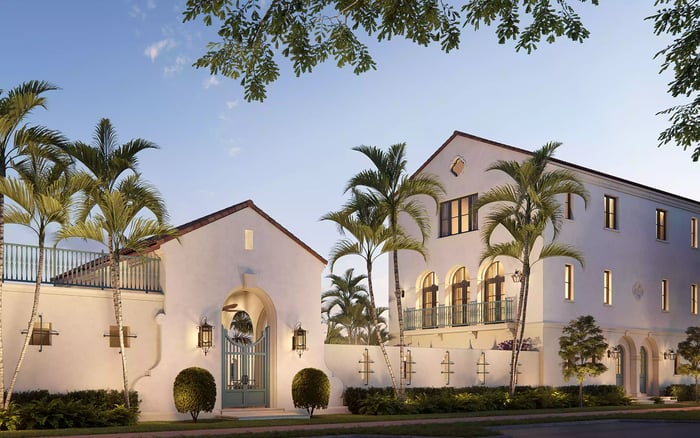
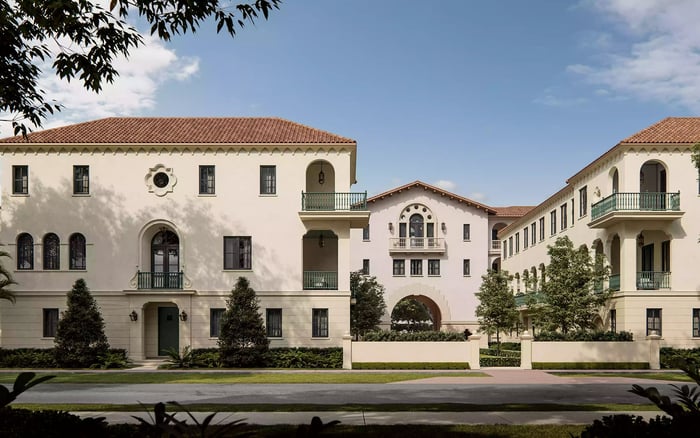
For a seasonal residence at Ponce Park Coral Gables, moisture control belongs in the purchase conversation. A disciplined plan connects humidity targets, HVAC maintenance, remote alerts, and authorized local response without assuming building services or equipment that have not been confirmed.

A residence that welcomes its owner back effortlessly requires more than a departure checklist. At Ponce Park Coral Gables, buyers planning extended absences should make moisture control part of their purchase review, alongside layout, finishes, and arrangements for the home's care.
Planned at 3000 Ponce de Leon Boulevard, Coral Gables, FL 33134, Ponce Park Residences comprises 58 residences across 11 stories, with two- to five-bedroom configurations. The Allen Morris Company is the developer, and Zyscovich is the architect. Completion is estimated for Q4 2027, not guaranteed.
That planning horizon offers an opportunity to clarify the less visible aspects of ownership. Unit-level dehumidification, remote sensors, automatic water shutoffs, and management response services all require written confirmation; none should be presumed amenities. The objective is straightforward: establish how the residence will stay dry, how problems will be detected, and who can intervene while its owner is away.
Controlling dampness is central to mold prevention. Indoor relative humidity should remain below 60%, with 30%-50% the preferred range when possible. Levels below 50% are preferable for controlling mold and dust mites. These are moisture-management guidelines, not a guarantee against mold.
A proposed 45%-55% operating band can be discussed with the HVAC professional as a planning option. It is neither a project specification nor a formal requirement, and its upper portion exceeds the preferred 30%-50% range. Ask what target the installed equipment can maintain and how performance will be checked during vacancy.
No universal Fahrenheit setting can replace that discussion. Request a vacancy temperature recommendation paired with an RH objective, rather than accepting a thermostat number alone. Air-conditioning and dehumidification can help reduce humidity; the purchase question is whether the specified system and its controls can support the intended operating plan.
The equipment schedule deserves attention alongside the finish schedule. Request written clarification of the residence's HVAC configuration, whether humidity is measured independently of temperature, and whether dedicated dehumidification or a humidity-control mode is included. If supplemental equipment is contemplated, ask whether it is permitted and how installation, drainage, and maintenance would be handled.
For buyers also considering Cora Merrick Park, the useful comparison is the quality of the answers-not an assumption that nearby developments provide equivalent systems. Apply the same questions to each residence without inferring shared specifications or services.
Regular HVAC inspection and maintenance belong in the ownership plan. Drip pans should remain clean and unobstructed, and condensate drainage should function properly. Ask who maintains each component, how service access is arranged, and where records will be kept. Venting moisture from showers and cooking to the outdoors also helps prevent damp conditions. Request clarification of the exhaust arrangement rather than assuming its configuration from the appearance of a grille.
A remote alert is useful only if someone can act on it. Before selecting devices, ask the developer and future property manager which installations are permitted, which functions are included, and which arrangements remain the owner's responsibility.
Discuss sensor coverage with the HVAC professional. Would readings cover bedrooms and enclosed storage as well as the main living space? Would leak sensors be permitted near plumbing and condensate equipment? Ask whether the proposed system can distinguish elevated humidity from a device going offline, and what notifications would follow a power or connectivity interruption.
A 60% warning and 65% escalation scheme may be considered as a planning proposal. Neither threshold is a confirmed project feature or a mandated alert protocol, and the higher figure is not an acceptable operating target. Because the objective is to remain below 60%, discuss an earlier advisory and an appropriate alert duration with the professional configuring the system.
Finally, designate a primary responder and a backup. Ask how notifications would be acknowledged, who could enter the residence, and who could authorize service. A staffed building is not the same as an agreed in-residence emergency response.
Purchase review should connect technical specifications with written responsibilities. Request clarification of HVAC servicing, condensate maintenance, waterproofing, plumbing repairs, emergency entry, and permitted leak-detection equipment. Establish where the owner's obligations end and building or association obligations begin, with the relevant documents reviewed by appropriate advisers.
The same discipline applies when evaluating The Village at Coral Gables. Compare documented obligations and access arrangements rather than inferring maintenance coverage from a project's positioning.
Clarify any proposed automatic water shutoff separately: whether installation is allowed, what it would control, and who may operate it. Do not assume its availability at Ponce Park. Likewise, ask whether any vacancy inspection service would require a separate agreement and fee. The goal is a clear division of responsibilities that remains understandable when the owner, manager, and service contractor are in different places.
Before an extended absence, arrange an HVAC inspection and confirm that condensate pans and drains are clean and unobstructed. Investigate existing condensation or wet spots, and repair plumbing or building-envelope leaks promptly. Do not leave a known moisture issue for the next visit.
For a proposed operating checklist, test the agreed alerts, confirm that the designated responder can gain authorized access, and document the equipment settings. Arrange a local inspection schedule suited to the residence and the owner's absence rather than relying exclusively on remote readings. No particular inspection interval is established here as a requirement.
If water is discovered, address both the moisture source and the affected area. Wet or damp areas should be dried within 48 hours to help prevent mold growth. This is a prompt-response objective-not permission to postpone repairs or an assurance that materials remain unaffected until the deadline. A reassuring humidity reading should not override visible water or condensation.
The most useful handover is a practical one: written system capabilities, a professionally selected humidity target, clear maintenance assignments, tested notifications, and authorized local access. Ask for the operating plan to be demonstrated before relying on it during a lengthy absence.
For a Ponce Park buyer, this is part of protecting the experience of ownership. The aim is not to promise a maintenance-free residence, but to make routine care and urgent decisions deliberate rather than improvised. Confirm the systems first, assign responsibility next, and use monitoring to connect the two.
For a discreet perspective on purchasing and planning a South Florida residence, explore MILLION.
If branded residences are on your mind — as a home or as an allocation — we would be glad to share what we are seeing, privately.
Begin a quiet conversationPonce Park Residences is planned at 3000 Ponce de Leon Boulevard, Coral Gables, FL 33134.
The project is planned with 58 residences across 11 stories, offering two- to five-bedroom configurations.
Completion is estimated for Q4 2027. That timing is a project estimate, not a guaranteed delivery date.
Keep indoor relative humidity below 60%, ideally 30%–50% when possible. Levels below 50% are preferable for controlling mold and dust mites.
No. It is a planning option to discuss with an HVAC professional, and its upper portion exceeds the preferred 30%–50% range.
There is no universal Fahrenheit setting established for this residence. Request a recommendation based on the installed equipment and the intended humidity objective.
These features should not be assumed. Request written confirmation of included equipment, permitted installations, and any owner responsibilities.
No, they are a possible planning scheme, not mandated thresholds or confirmed project settings. Discuss an earlier advisory because the operating objective is to stay below 60%.
Regular inspections and maintenance are important, including keeping drip pans clean and unobstructed and ensuring condensate drainage functions properly.
Dry wet or damp areas within 48 hours to help prevent mold growth, while correcting the moisture source promptly. Do not treat that window as permission to delay action.