In Palm Beach Gardens, storm resilience deserves attention before purchase contingencies expire. A disciplined review considers property records, equipment placement, generator scope, barrier documentation, insurance responsibilities, and post-storm access procedures.
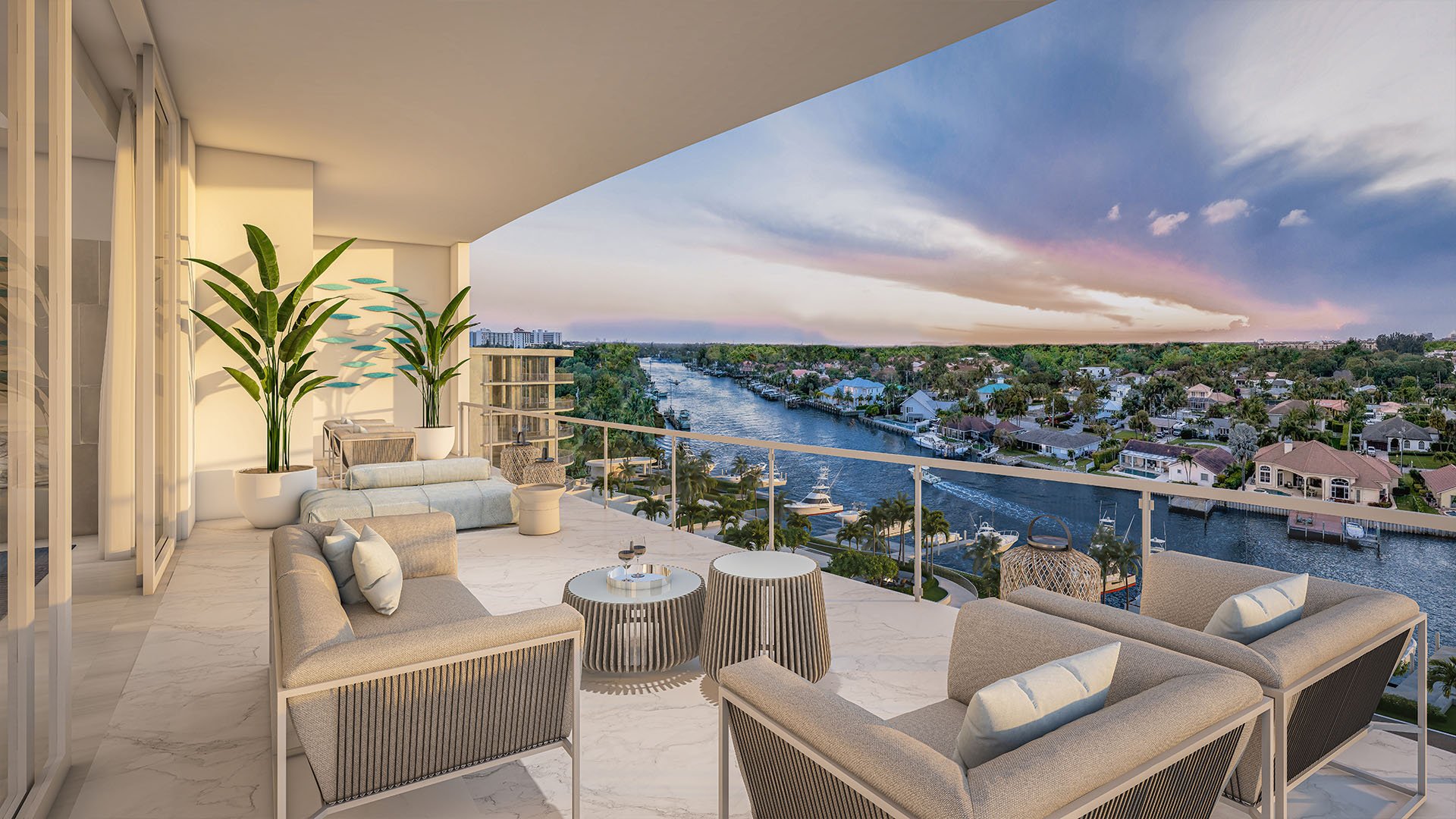
In Palm Beach Gardens, a beautiful arrival sequence can make storm infrastructure seem secondary. For a sophisticated buyer, however, flood exposure, mechanical placement, backup power, protective barriers, and post-event access form part of the property’s operating architecture. Together, they can influence the complexity of recovery.
This review is relevant across waterfront residences, gated enclaves, and estates, where customized systems may occupy several levels. The same discipline applies to new-construction condominiums, including The Ritz-Carlton Residences® Palm Beach Gardens, although the documents and responsible parties may differ between a private home and a managed building.
Storm resilience is not one feature, but a chain of elevations, systems, documents, and access rights.
A meaningful review should begin while contractual contingencies still permit investigation rather than waiting until shortly before closing.
A buyer should request the flood and elevation materials available for the specific property. The review can include the current map information, elevation certificate, survey, recorded revisions, permits, and any design documents supplied by the seller or association.
A neighborhood label, neighboring property, or broad zone description is not a substitute for a property-specific file. The practical inquiry is what is documented, what was permitted, and what physically exists at the residence.
Where records use terms such as base flood elevation or design flood elevation, the buyer’s qualified advisers should explain how those references apply to the property and contemplated work. Any inconsistency among the survey, certificate, permit history, and observed conditions deserves clarification before closing.
A resilience inspection should document the placement and protection of essential systems. Areas for review may include HVAC equipment, electrical panels, communications racks, pool pumps and controls, elevator machinery, generator components, transfer switches, and fuel-system equipment.
The inquiry should address both current conditions and future replacement. Buyers can ask whether replacing or modifying equipment would require a different platform, route, enclosure, or design under the requirements applicable at that time. That possibility can then be considered in acquisition planning.
For condominium buyers considering Palm Beach County residences such as Alba West Palm Beach or Forté on Flagler West Palm Beach, the review should extend beyond the unit. Emergency plans, reserve materials, engineering records, insurance documents, and procedures for accessing garages, roofs, mechanical rooms, and elevators can help clarify how responsibilities are divided.
A standby generator should be evaluated as an operating chain. Buyers can request available permits, load documentation, service records, fuel details, transfer-switch specifications, enclosure information, and platform records. The review should establish what the generator powers rather than relying on a broad description without supporting documentation.
Placement and protection deserve attention throughout the system. The generator, transfer switch, controls, fuel components, airflow, and service access should be considered together by qualified professionals.
Coverage also has a practical dimension. Buyers should identify whether cooling, elevators, pool systems, gates, communications equipment, and selected household circuits are included or excluded. In a condominium, private unit circuits may interact with common infrastructure. Buyers evaluating Mandarin Oriental Residences, West Palm Beach should ask how emergency-power responsibilities are divided among the residence, common systems, and building operations without assuming one project follows another’s plan.
For removable panels, gates, walls, berms, pumps, or drainage works, buyers should request available engineering documents, deployment instructions, storage details, inspection records, and maintenance information. The file should also identify who is responsible for installation, authorization, testing, and upkeep.
A barrier’s presence alone does not explain its intended role or performance. Qualified advisers should assess whether the documented design corresponds with the property’s conditions and whether the system depends on power, trained personnel, advance deployment, or coordinated drainage.
The review should also examine how protective components interact, where water is directed, what requires power, and which party maintains each element. Any barrier should be evaluated alongside the property’s elevation strategy rather than treated as a standalone answer.
Physical condition does not necessarily guarantee immediate access after an emergency. Buyers should confirm the procedures of the applicable jurisdiction, gated community, homeowners’ association, or condominium association.
Owners who expect household staff, property managers, contractors, or family-office representatives to inspect the residence should determine in advance what credentials and authorizations those parties may need. The closing file can include current contact details, ownership or occupancy documentation, association credentials, emergency authorizations, insurance contacts, vendor records, and secure access instructions.
Because procedures can change, the responsible local authority or association should confirm current requirements. Advance planning turns re-entry from an improvised response into an established operating protocol.
The strongest diligence process connects five questions: which flood and elevation records apply, where essential systems sit, what backup power covers, what barriers are documented to accomplish, and who may access the property after an emergency. Each answer should be supported by the property file and reconciled with the physical inspection by appropriate professionals.
For discreet guidance on evaluating South Florida’s most considered residences, connect with MILLION.
If branded residences are on your mind — as a home or as an allocation — we would be glad to share what we are seeing, privately.
Begin a quiet conversationBegin while contractual contingencies still permit investigation. This allows time to compare records with observed property conditions.
Request available flood and elevation materials, surveys, permits, recorded revisions, and relevant design documents. Qualified advisers can identify gaps or inconsistencies.
No. Buyers should focus on records and physical conditions specific to the property under consideration.
Review HVAC, electrical, communications, pool, elevator, generator, transfer-switch, and fuel-system components. Their placement and protection should be documented.
A future replacement may require changes to platforms, routing, enclosures, or system design. Buyers should discuss that possibility with qualified advisers.
Request available permits, load documentation, service records, fuel details, transfer-switch specifications, and enclosure or platform records.
No. Buyers should verify the circuits and systems included in the documented generator scope.
Request available engineering documents, deployment instructions, storage details, inspection records, and maintenance information. Responsibility for installation and authorization should also be clear.
Review emergency plans, engineering and reserve materials, insurance documents, backup-power scope, and common-area access procedures.
Confirm current procedures with the applicable local authority, community, or association. Organize credentials, authorizations, contacts, and secure access instructions in advance.