Bike storage and service elevators are advertised at The Ritz-Carlton Residences® Pompano Beach, but e-bike acceptance, battery handling, charging permission, and transport routes require separate written confirmation. A buyer-focused framework turns those open questions into practical pre-closing diligence.

For an owner who expects an e-bike to be part of everyday coastal living, the decisive question is not simply whether a building offers bicycle storage. It is whether the residence, storage area, battery policy, and elevator route support that routine without uncertainty. At The Ritz-Carlton Residences® Pompano Beach, that distinction deserves attention before purchase-not after the bicycle arrives.
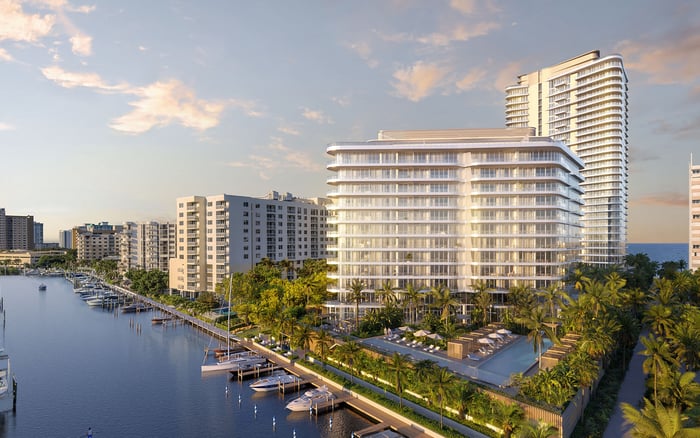
The project's listed address is 1380 S. Ocean Boulevard, Pompano Beach, FL 33062. Bike storage is identified among the association amenities; service elevators and a private elevator lobby for each residence are also advertised. These features provide a useful starting point. They do not establish permission to store, charge, or transport an electric bicycle.
The buyer's task is to secure a coherent written answer covering the complete journey: arrival, entry, elevator access, storage, battery handling, charging, and departure. A polished arrival experience is most valuable when its practical rules are equally clear.
Begin with the narrowest question: does the applicable bicycle policy expressly permit electric bicycles? The identified bike-storage amenity does not establish whether e-bikes are accepted or treated differently from conventional bicycles. A general assurance that there is a bike room is not enough.
Ask the authorized project or association representative to confirm whether your proposed bicycle falls within the permitted category. Provide its model, dimensions, and battery configuration so the response addresses the equipment you intend to bring. Request any applicable equipment, certification, or charger restrictions rather than assuming they exist-or do not.
Next, establish where the bicycle may be kept when not in use. Permission for common-area storage does not establish permission for storage inside a residence; neither is confirmed. Ask separately about residential interiors and designated bicycle areas. Confirm whether spaces are assigned, reserved, fee-based, or subject to registration, insurance, or resident-identification requirements.
Treat battery rules as a distinct part of the purchase review. It remains unconfirmed whether a battery may stay attached to an e-bike during storage or must be removed. The permitted location for a detached battery is also unresolved.
Obtain written answers for both configurations. If removal is required, ask where the battery may be kept and how it may be transported there. If attached-battery storage is allowed, confirm whether that permission applies to every approved storage location or only a designated area.
Charging permission remains unverified. Neither bicycle storage nor the presence of an outlet should be interpreted as authorization to charge. Request the approved locations, permitted outlets, hours, supervision requirements, and any battery or charger certification restrictions. Ask separately whether charging inside a residence is permitted.
The practical distinction is straightforward: a bicycle may be permitted in a location where charging is not. Secure both answers before deciding that the advertised amenity supports your intended routine.
The next document request should address exceptions, not just normal use. Ask for the policy governing damaged, recalled, swollen, leaking, overheated, or wet batteries, including any entry restrictions and removal procedures. These are questions to resolve, not established project rules.
Request the designated contact for a battery concern and the instructions for notifying building staff. Clarify who is authorized to determine whether equipment may enter or remain on the property, and which written procedure governs the response.
This review should not become an improvised technical assessment by the buyer. Its purpose is to identify the project's actual policy and responsible contacts. If an answer refers to another document, request that document rather than relying on a verbal summary. Any unresolved battery restriction should remain an explicit open item in the purchase review.
Service elevators are advertised, but their presence does not establish mandatory use for bicycles, reservation requirements, operating hours, dimensions, or concierge-approval procedures. Likewise, an advertised private elevator lobby does not establish permission to bring an e-bike through a residential lobby or private elevator.
Secured elevator access, card entry, and a doorman are also identified features. They describe access controls, not an approved bicycle route. That route requires separate confirmation.
Request an entrance-to-storage walkthrough identifying the permitted doorway, corridors, elevator, and destination. Confirm whether daily bicycle movements require reservations or staff coordination, and whether access differs from move-in or delivery procedures. Ask about padding requirements, elevator dimensions, and clearance with the bicycle in its normal transport configuration.
The most useful answer is operationally specific: which entrance, which elevator, which hours, and whose approval. A route approved for initial delivery does not necessarily establish how an owner may take the bicycle out and return each day.
Buyers considering Branded Residences should not mistake a shared brand identity or similar amenity description for a shared operating policy. The applicable answer must come from documents and authorized confirmation for the particular condominium under consideration.
A Pompano Beach shortlist might also include Ocean 580 Pompano Beach. Apply the same storage, battery, charging, and access questions independently; nothing established for one property should be assumed to apply to another.
The same discipline applies when evaluating Waldorf Astoria Residences Pompano Beach. These are comparison candidates, not evidence of equivalent e-bike permissions. Across a Broward search, compare the specificity of each property's written answers-not the familiarity of its amenity language.
Request the current declaration, bylaws, condominium rules, developer disclosures, bike-room rules, fire-safety policies, and move-in or delivery procedures. The complete bicycle, battery, charging, and elevator rules needed for this decision remain to be obtained.
For every answer, confirm the issuing authority, effective date, and applicable version. Ask which documents govern at contract and which will govern at closing. If written answers conflict, request clarification from the authorized party and have your advisers review the discrepancy before treating it as resolved.
Keep a compact decision record with separate entries for e-bike acceptance, storage location, attached-battery permission, detached-battery handling, charging, transport route, and abnormal-battery procedures. Mark each entry as confirmed or unresolved, and retain the relevant document alongside it. Do not treat a document bearing a similar condominium name as applicable without confirming the property's identity.
The final test is whether the confirmed rules accommodate your actual pattern of use. Consider departure and return times, battery handling, storage availability, and any required staff coordination together. Resolve unanswered permissions before relying on the bicycle as part of daily life.
Bike storage and service elevators are meaningful advertised features. The purchase decision becomes more precise when current, property-specific operating permissions support those features.
For a discreet perspective on South Florida residences and the details that shape ownership, explore MILLION.
If branded residences are on your mind — as a home or as an allocation — we would be glad to share what we are seeing, privately.
Begin a quiet conversationBike storage is identified among the association amenities. That does not establish whether electric bicycles are accepted.
E-bike acceptance remains unverified. Obtain written confirmation that the applicable rules permit your proposed bicycle.
The available amenity information does not establish permission for in-residence storage. Confirm residential and common-area storage permissions separately.
The disclosed information does not establish a battery-removal requirement or permission to leave it attached. Request written rules for both configurations.
Charging permission remains unverified. Ask for approved locations, outlets, hours, supervision requirements, and any equipment restrictions.
Service elevators are advertised. Their operating hours, reservation requirements, dimensions, and bicycle-use rules are not established by that feature alone.
Private elevator lobbies are advertised, but e-bike transport permission is not established. Request the specific approved entrance-to-storage route.
Request the applicable entry restrictions, notification contacts, and removal procedures. Do not assume a project-specific policy from the advertised amenities.
Request the current declaration, bylaws, condominium rules, developer disclosures, bike-room rules, fire-safety policies, and move-in or delivery procedures.
Confirm the issuing authority, effective date, and document version applicable at contract and closing. Resolve conflicting written answers with the authorized party and your advisers.