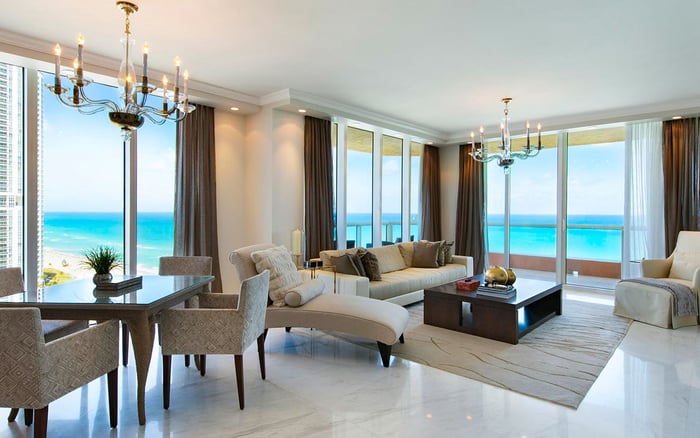
For Avenia Aventura buyers, hurricane readiness requires more than identifying protective glass or shutters. Written confirmation of balcony-clearance duties, access permissions, maintenance obligations, and absentee-owner arrangements is essential to understanding the residence’s practical ownership requirements.

For a buyer considering Avenia Aventura, hurricane preparation belongs alongside the more visible questions of layout, finishes, and outdoor living. The essential issue is not simply whether a residence has protective features, but whether the owner understands who must act, what must be cleared, and what happens when the owner is elsewhere.
That distinction matters especially for an Aventura residence intended for intermittent use. A carefully furnished balcony and a convenient departure routine are only part of the picture. Written operating arrangements should clarify how those choices intersect with storm preparation, access, and responsibility.
Avenia’s building-specific balcony-clearance deadline, shutter policy, preparation fees, owner-absence authorization, and emergency-entry protocol remain unverified pending written confirmation. This does not mean those policies do not exist. Buyers should treat them as document-request items, not assumed services.
Begin the review by requesting Avenia’s brochure and applicable developer disclosure documents. Request the condominium declaration, bylaws, applicable rules, and any building-specific hurricane plan. Ask which documents govern the residence under consideration and whether any operating procedures remain subject to adoption or revision.
The purpose is to distinguish a property description from an enforceable allocation of duties. A broad assurance about hurricane readiness does not establish whether an owner must remove outdoor furnishings, arrange a local representative, or pay for preparation work.
Organize the request around four practical areas:
The protective systems serving the residence.
The owner’s preparation and maintenance tasks.
The association’s or authorized representative’s permissions during an absence.
The availability and terms of any preparation services.
Request the governing language or written procedure for each area. A buyer’s attorney can then review how the documents fit together, particularly where service descriptions and ownership obligations appear to overlap.
Ask counsel to review the hurricane-protection specifications applicable to the building and explain how Florida condominium law applies to the residence. Request clarification of any requirements affecting the selection, installation, or replacement of protective components.
That review should begin with the particular system supplied at Avenia. Before discussing installation, operation, or replacement, buyers should identify the protection serving their residence and its classification under the declaration.
Request an explanation of any components requiring action before a storm, along with the applicable specifications. Do not assume that a reference to hurricane protection means movable shutters-or that installed protection eliminates separate balcony-preparation duties.
For a buyer also considering One Park Tower by Turnberry North Miami, these questions offer a useful comparison framework. Compare each property’s written obligations rather than transferring expectations from one development to another.
Treat balcony clearance as a distinct operational question, not a service implied by the presence of hurricane protection. Avenia’s clearance deadline, procedures, and any related fees require written confirmation.
Ask what must be removed, what may remain, and how the clearance requirement is communicated. The response should distinguish among movable furnishings, planters, decorative objects, and any other categories addressed by the building’s rules. These are questions to resolve, not a statement that Avenia has adopted particular restrictions.
Timing deserves equal attention. Request the applicable trigger or deadline, the notification method, and the procedure when an owner cannot attend personally. Ask whether a designated representative may perform the work and whether contractor-access conditions apply.
Storage is a separate matter. Do not assume that furniture storage or staff-assisted clearance is available. If either is offered, obtain the permitted storage location, scope of work, scheduling conditions, and price in writing. Before selecting substantial outdoor furnishings, consider how they would be moved and accommodated under the confirmed rules.
An owner-absence arrangement should define permissions, not merely collect a telephone number. Avenia’s specific authorization form and emergency-entry protocol still require written confirmation.
Request any applicable form and ask whom it authorizes, for which tasks, and under what circumstances. Clarify whether the arrangement involves association personnel, an owner-appointed representative, or a separately engaged service provider. Do not presume that any option is available until confirmed.
The scope should be equally explicit. Permission to access a residence, move furnishings, and incur charges are separate matters. Ask how keys or credentials would be handled, how instructions are updated, and how the owner would receive confirmation of completed work. If post-storm inspections are offered, request their terms separately rather than assuming they accompany preparation.
For those weighing Bentley Residences Sunny Isles alongside Avenia, this is a useful ownership test: can the proposed absence arrangement be explained clearly in writing? Compare documented responsibilities, not presumed similarities in service.
Ask counsel to explain when an association may operate installed hurricane protection without separate owner permission and what limits apply to entry and preparation work. Do not treat a general description of emergency authority as unrestricted permission to enter or prepare a residence.
Nor should it be interpreted as a promise of staff-operated shutters, balcony clearance, furniture storage, or post-storm inspections at Avenia. Each proposed service requires separate confirmation, including who performs it and what authorization is needed.
Maintenance and cost allocation deserve their own review. Ask counsel to identify the declaration provisions and applicable legal requirements governing maintenance, repair, replacement, and associated costs for each hurricane-protection component. Obtain a clear explanation of which obligations belong to the owner and which belong to the association.
Distinguish those continuing obligations from charges for a specific preparation service. They answer different questions: who must keep the system functional, and who, if anyone, can be engaged to act before a storm.
The final diligence file should support a simple, residence-specific plan covering the applicable preparation trigger, required tasks, responsible parties, authorized access, potential charges, and communication procedure. Keep unconfirmed items visibly separate from established obligations.
Before relying on an absence arrangement, request written acknowledgment of its scope and clarify what happens if the designated person or service is unavailable. The objective is not to assume uninterrupted assistance, but to understand realistically what the owner must arrange independently.
For a luxury residence, discretion and convenience are most valuable when supported by clarity. Evaluate hurricane readiness at Avenia through documented duties and permissions, rather than inferring it from the broader residential experience.
For a discreet conversation about South Florida residences and ownership priorities, connect with MILLION.
If branded residences are on your mind — as a home or as an allocation — we would be glad to share what we are seeing, privately.
Begin a quiet conversationRequest the brochure, applicable developer disclosures, declaration, bylaws, applicable rules, and any building-specific hurricane plan. Ask which documents govern the residence and whether procedures remain subject to adoption or revision.
The deadline remains unverified pending written confirmation. Buyers should request the applicable trigger, notification method, and procedure for an absent owner.
These services are not established and should not be assumed. If offered, obtain their scope, scheduling conditions, storage arrangements, and fees in writing.
No; identify the actual system serving the residence before discussing its operation. Request written instructions for any components requiring action before a storm.
Request the building’s applicable specifications and have counsel review them alongside the governing documents. Ask how Florida condominium law applies to the residence and any proposed installation or replacement.
Ask counsel to review the declaration and applicable legal requirements for maintenance, repair, replacement, and costs. Obtain a clear allocation of owner and association obligations for each component.
Ask counsel to confirm when that authority applies and what limits govern entry or preparation work. Do not assume emergency authority includes optional services or unrestricted access.
A building-specific form remains unverified pending written confirmation. Request any applicable form and clarify the authorized people, tasks, access arrangements, and spending permissions.
No; buyers should confirm whether inspections are offered and obtain their scope, authorization requirements, and any charges separately.
No; an unverified procedure is a matter for written confirmation, not evidence that the policy does not exist.