A private elevator can offer a more discreet arrival, but access control and mechanical reliability deserve separate scrutiny. For Miami condo buyers, the decisive questions concern permissions, maintenance records, emergency access, and who ultimately pays.
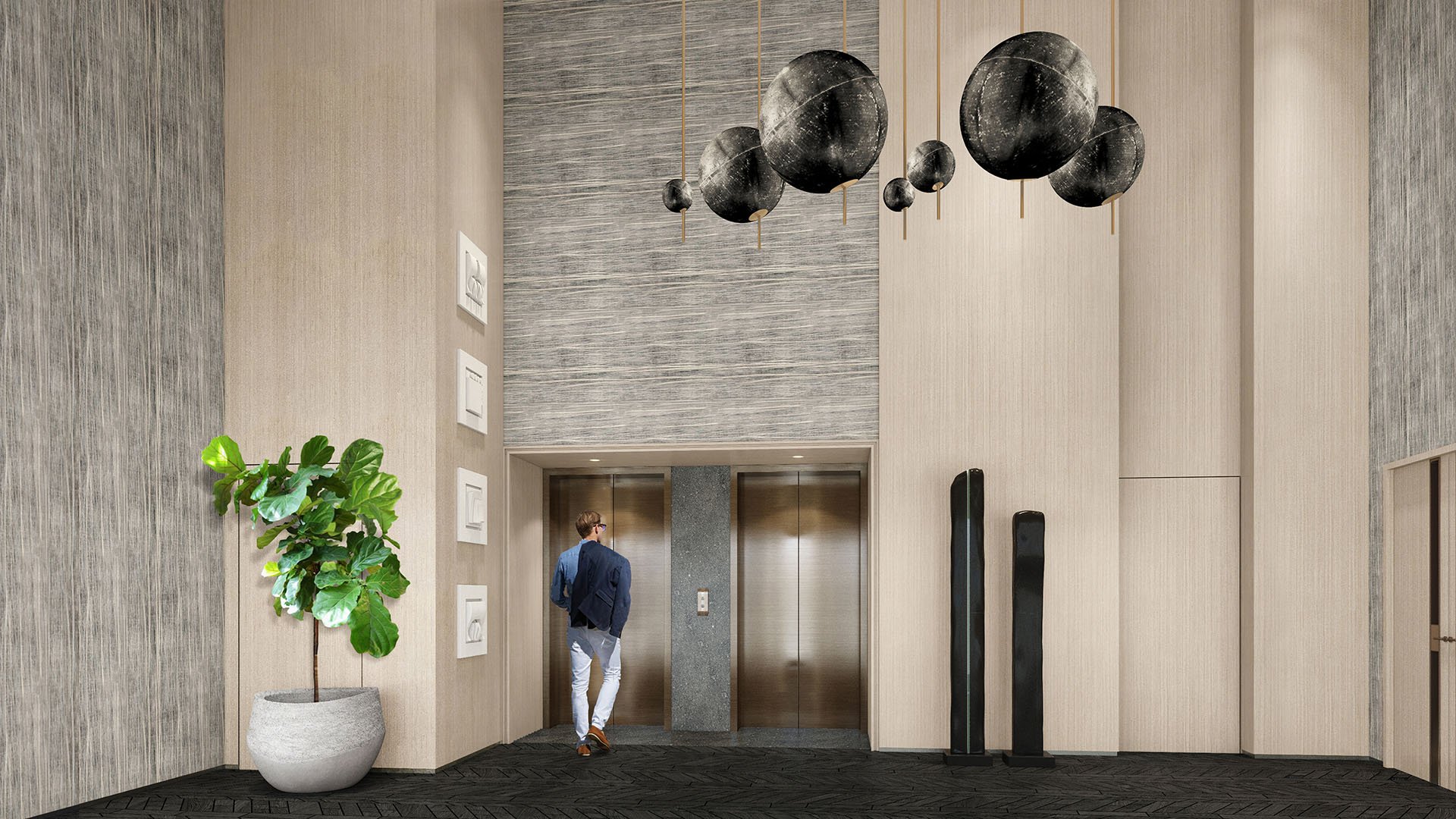
An elevator opening at your residence offers an appealing transition from public life to private space. For a Miami condominium buyer, that arrival can matter as much as the floor plan. Yet “private elevator” should begin a conversation, not conclude one. The phrase alone does not establish who can reach the landing, who maintains the machinery, or who funds its eventual replacement.
The distinction is straightforward: access control and mechanical stewardship are separate questions. A carefully restricted elevator can still have unresolved maintenance obligations. A well-maintained elevator can still have guest-access procedures that warrant scrutiny. A compelling luxury offering addresses both through documents and a practical demonstration, not an amenity description alone.
Start by distinguishing a dedicated elevator from a semi-private arrival or a system that restricts passengers to authorized floors. These arrangements are not interchangeable. Ask how many residences share the car or landing, where credentials are checked, and whether the doors open into a locked vestibule or directly into living space.
At Aston Martin Residences Downtown Miami, a destination-dispatch system is configured to permit passengers access only to their own floor. SLS LUX Brickell offers residential entry through semi-private elevators protected by biometric technology. These are distinct approaches to controlling arrival, not evidence of a uniform private-elevator standard.
Neither feature establishes comprehensive security on its own. During a viewing, ask management to explain the access sequence, including what happens when an owner brings guests home or authorizes a contractor.
The security discussion should follow permissions from the lobby to the residence. Who creates credentials? Who can deactivate a lost credential, and how is that request handled? Can a guest reach only the intended destination? What permissions do staff, household employees, and service providers receive?
Clarify surveillance coverage and the boundary between the elevator landing and the home. A locked vestibule and direct entry into living space raise different diligence questions. Ask management to demonstrate the arrangement rather than relying on the word “private.”
For buyers considering Una Residences Brickell, request the specific residence’s access plan and operating procedures rather than inferring a configuration from the project’s positioning. The same discipline applies throughout Brickell: assess the apartment and its permissions, not simply the building’s luxury credentials.
Under the 2025 version of Florida’s Elevator Safety Act, the elevator owner is responsible for safe operation, proper maintenance, inspections, and correction of code deficiencies after a certificate of operation is issued. Identifying that owner is a substantive diligence task, not a semantic detail.
Elevators covered by the act generally require an annual inspection by a Florida-certified elevator inspector or an authorized local government. Certificate renewal requires a current satisfactory inspection, subject to applicable exceptions. Consider the certificate alongside the maintenance history, not as a substitute for reviewing it.
A narrow annual-inspection exception applies to elevators serving only two adjacent floors while covered by a qualifying service-maintenance contract. Owners relying on that exception must annually verify that the contract exists and is being performed. The exception does not eliminate responsibility for safe operation and proper maintenance. Nor should it be assumed to apply simply because an elevator is called private.
Florida’s rules also provide for annual routine examinations and Category 1 safety testing, with Category 5 testing every five years where applicable. Have a qualified professional confirm the requirements for the particular equipment and its current status.
“Private” describes an experience more readily than a legal allocation of expenses. Have condominium counsel establish the equipment’s classification and explain which obligations belong to the association, the individual owner, or another responsible party under the governing documents.
Separate routine service from emergency repairs, modernization, and full replacement. Ask how each expense is allocated and what funding has been established. A maintenance contract and a replacement funding plan answer different questions.
Florida’s statutory definition of a service-maintenance contract includes routine examination, lubrication, cleaning, adjustment, replacement of parts, and applicable code-required safety tests. Read the agreement to understand its scope, exclusions, and response obligations. A contract’s existence does not resolve every potential expenditure.
Request three years of inspection reports, violation corrections, service-call logs, and maintenance contracts, along with modernization proposals and related assessments. Read the documents together: an inspection finding, its correction, and subsequent service calls provide more context than any one record alone.
Ask management to explain recurring interruptions and outstanding work. Establish what has been corrected, what remains proposed, and which costs have already been approved. Where the records raise technical questions, seek an elevator professional’s review before treating the amenity as a settled benefit.
For a Miami Beach search that includes The Perigon Miami Beach, request documentation appropriate to the project’s stage rather than assuming an operating history exists. The same diligence applies in Sunny Isles Beach: establish the equipment, responsibilities, and available records for each property.
A private arrival is only one part of residential access. Confirm alternative access, emergency egress, backup-power capabilities, and procedures for entrapment, fire alarms, flooding, and outages. These answers should be building-specific, not assumptions based on price or branding.
Ask exactly what backup power supports and how residents are informed during an interruption. Clarify who receives an emergency call, who coordinates the response, and how residents reach their homes if the usual elevator is unavailable. For anyone with mobility needs, discuss the practical alternatives before committing to a residence.
There is no established universal Miami annual ownership cost, failure rate, security-risk reduction, or resale premium for private elevators. Assigning a standard financial uplift would obscure the questions that matter: controlled access, documented maintenance, clear expense allocation, and workable emergency procedures.
The answer to the title’s question can be both. Restricted access may support privacy, while the machinery carries continuing maintenance obligations. The strongest purchase is one in which those obligations are understood, appropriately funded, and consistent with the buyer’s expectations of daily life.
For a discreet conversation about evaluating Miami condominium living, connect with MILLION.
If branded residences are on your mind — as a home or as an allocation — we would be glad to share what we are seeing, privately.
Begin a quiet conversationNo. Evaluate floor permissions, credential management, guest access, surveillance, and the boundary between the landing and the residence separately.
No. A dedicated elevator, a shared semi-private arrival, and floor-restricted destination dispatch are distinct arrangements that require different questions.
Elevators covered by Florida’s Elevator Safety Act generally require annual inspection by a Florida-certified inspector or an authorized local government, subject to applicable exceptions.
A narrow exception applies to elevators serving only two adjacent floors under a qualifying service-maintenance contract. Owners must annually verify that the contract exists and is being performed.
No. The owner remains responsible for safe operation and proper maintenance even when the annual-inspection exception applies.
Do not infer responsibility from the word private. Have counsel review the equipment’s legal classification and governing documents to identify service, repair, modernization, and replacement obligations.
Request three years of inspection reports, violation corrections, service-call logs, and maintenance contracts, along with modernization proposals and related assessments.
Florida’s rules provide for annual routine examinations and Category 1 testing, with Category 5 testing every five years where applicable. A qualified professional should confirm the equipment-specific requirements.
Confirm backup-power capabilities, alternative access, emergency egress, and communication procedures. Ask precisely what remains operational and how residents reach their homes during an interruption.
No universal Miami resale premium is established here. Assess the residence’s access arrangements, maintenance condition, and financial obligations rather than assigning an automatic uplift.