Private-elevator living at One Thousand Museum should be evaluated as a complete arrival experience rather than as a stand-alone amenity. Buyers should verify the specific residence configuration and assess how privacy, circulation and access may affect daily use and resale positioning.
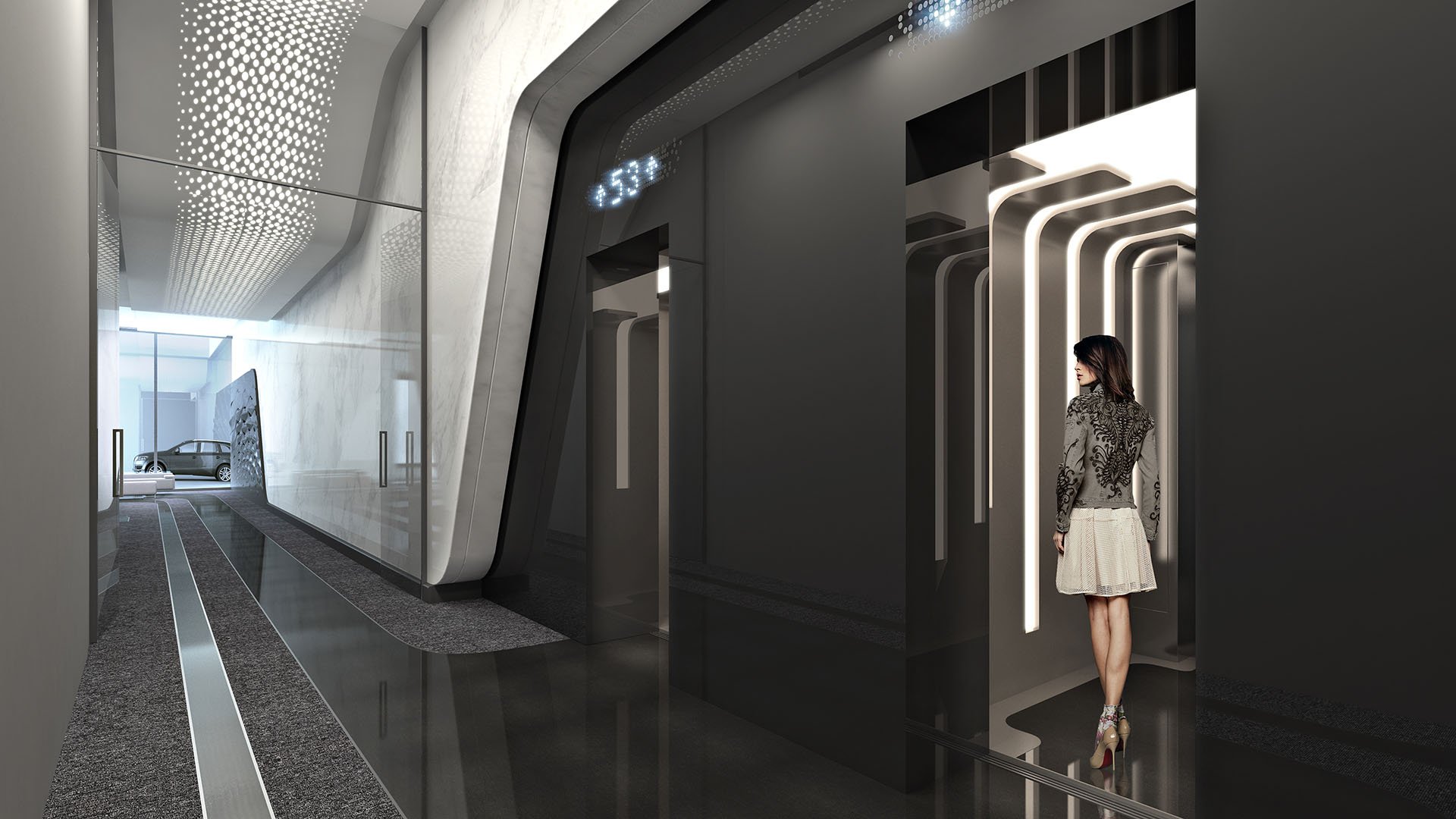
At One Thousand Museum in Downtown Miami, buyers considering private-elevator living should look beyond the elevator doors. The relevant experience begins at the building entrance and continues through reception, access control, elevator circulation and the residence threshold.
This sequence matters because privacy is not defined only by separation from other residents. It also depends on how clearly the route is managed, how guests are admitted and how routine arrivals feel at different times of day.
Marketing terminology does not replace an inspection of the individual home. Buyers should confirm where the elevator opens, whether the entry area is private or shared, how credentials operate and whether the residence has a vestibule or another transition before the main living space.
The floor plan should also be reviewed alongside the physical route. An arrival can feel discreet yet still create practical concerns if it directs guests into a service area, limits separation between entertaining and private rooms or offers little space for packages and luggage.
A private-elevator experience should work for household members, visitors, staff, deliveries and service providers. Buyers can ask how each group enters, who authorizes access and whether service circulation remains distinct from the primary residential route.
The answers may affect convenience as much as privacy. A well-considered system should suit the household’s actual routine rather than an idealized version of occasional arrivals.
The most useful comparison is not simply whether another building uses similar language. Buyers can compare circulation, access protocols and residence layouts across central Miami options such as Aston Martin Residences Downtown Miami and Waldorf Astoria Residences Downtown Miami.
A broader comparison may also include The Residences at 1428 Brickell. Each property should be evaluated on its own plans, procedures and current condition rather than on branding or neighborhood alone.
Private access may help distinguish a residence for buyers who prioritize discretion, but it should not be treated as proof of a resale premium. Value also depends on the home’s layout, condition, views, floor position and the market at the time of sale.
For sellers, the strongest presentation explains how the complete arrival route works in practice. Clear information about access, guest handling and the transition into the home is more useful than relying on a single amenity label.
During a showing, buyers should walk the same path they would use on an ordinary day. They can test the transition from arrival to residence, inspect the elevator opening and note whether the route feels intuitive with guests or luggage.
Building representatives should be asked to explain current access procedures, delivery handling, service circulation and emergency protocols. Relevant documents and representations should be reviewed before a purchase decision because procedures and residence configurations may differ.
The central benefit of private-elevator living is the possibility of a more controlled transition between shared building space and the home. At One Thousand Museum, that proposition should be judged through the specific residence, the operating procedures and the buyer’s own expectations.
For resale, the feature is best understood as one component of the complete property. Its importance will vary by buyer, making careful verification more reliable than assumptions about universal demand or value.
What should buyers verify about the elevator entrance? Confirm where it opens, whether the area is private or shared and how it connects to the residence layout.
Why does the full arrival route matter? Privacy depends on the complete transition from building entry to the home, not solely on the elevator ride.
Should buyers rely on the term “private elevator”? No. They should inspect the specific residence and confirm the applicable access arrangement.
How should guest access be evaluated? Ask who authorizes visitors, how they reach the residence and whether the process fits the owner’s preferences.
Why are delivery procedures relevant? Package and service handling can affect convenience, privacy and the use of the residence entrance.
Can private access guarantee a resale premium? No. Resale outcomes depend on the complete residence, building experience and market conditions.
What should buyers compare with other buildings? Compare circulation, access protocols, layouts and the transition between shared areas and the residence.
Should the floor plan be reviewed before buying? Yes. The plan can clarify how the elevator entry relates to entertaining areas, private rooms and service spaces.
What should happen during a showing? Buyers should walk the ordinary arrival route and consider how it functions with household members, visitors and luggage.
What is the most reliable way to assess arrival privacy? Combine an in-person inspection with confirmation of current building procedures and residence-specific details.
For a tailored shortlist and next-step guidance, connect with MILLION.
If branded residences are on your mind — as a home or as an allocation — we would be glad to share what we are seeing, privately.
Begin a quiet conversation