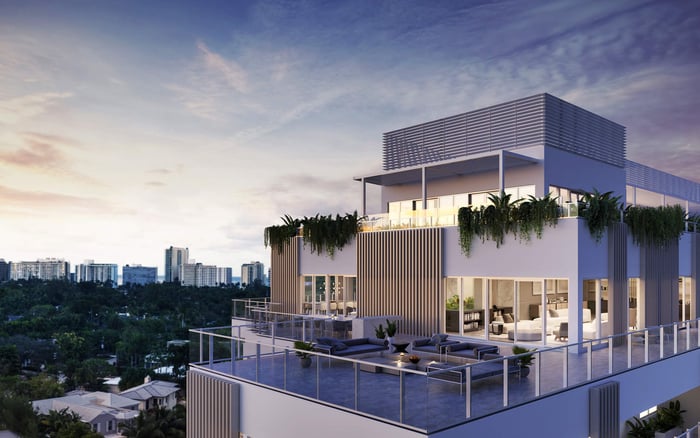
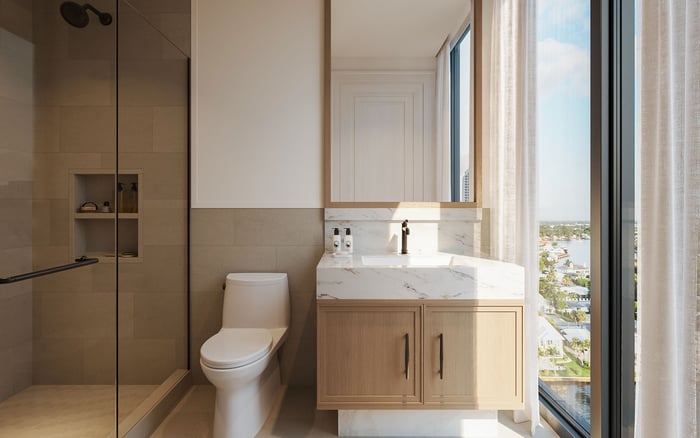
Origin Bay Harbor Islands frames private dining as an extension of the home, giving residents a controlled setting for meals and gatherings while keeping service details central to due diligence.
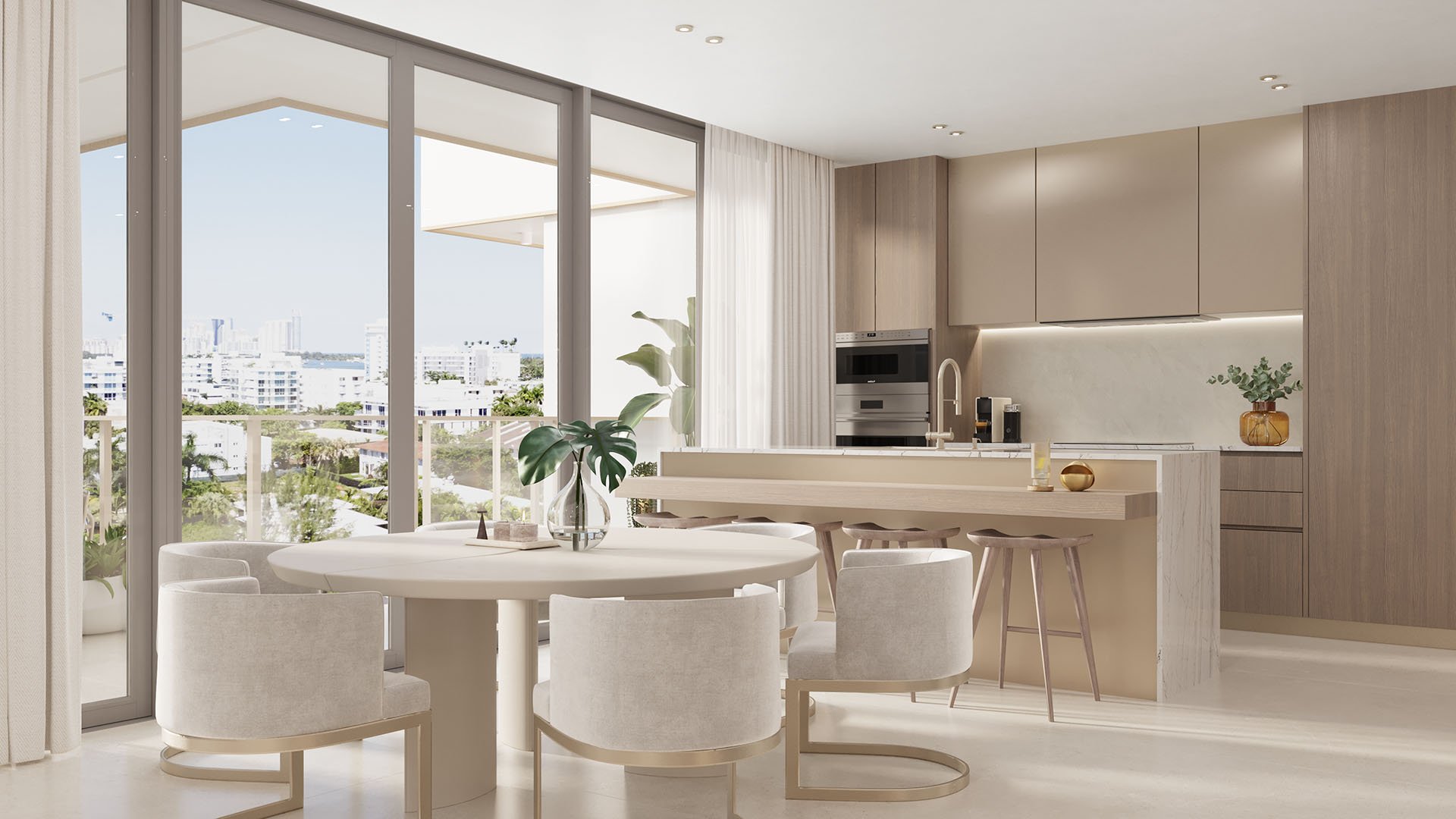
At Origin Bay Harbor Islands, private dining is positioned as a residential amenity rather than a public restaurant experience. The distinction matters. This is not simply a handsome room near the lobby, but a service-oriented setting within the building's private environment, reserved for residents and their invited guests.
For owners, the appeal is as practical as it is atmospheric. A dedicated dining venue can accommodate meals, celebrations, and hosted gatherings without requiring the residence to absorb every aspect of the occasion. It expands the usable footprint of ownership while preserving privacy within the home.
This reflects a more consequential direction in luxury residential lifestyle planning: amenities are increasingly judged by how gracefully they support everyday routines, not merely by how well they photograph.
A public restaurant must serve a broad audience, maintain public-facing circulation, and balance the expectations of unrelated patrons. Resident-only hospitality operates within a more controlled social setting. Neighbors may encounter one another, owners can welcome invited guests, and access remains tied to the residential community rather than general demand.
That structure can create a calmer framework for entertaining. Dinner no longer has to involve securing an outside reservation, coordinating transportation, or opening the private residence to a larger group. For a second-home owner arriving for a limited stay, that convenience may be especially relevant.
Exclusivity alone does not guarantee the benefit. Value emerges when access, service, and management work together reliably. A beautiful dining room with restrictive hours or unclear booking procedures may prove less useful than a simpler space with responsive operations.
The strongest ownership case for private dining is separation. Owners can host beyond the walls of their residence while keeping bedrooms, family spaces, personal collections, and daily household rhythms discreetly removed from the event.
This makes the amenity potentially useful across different scales of living. It may serve an intimate meal, a celebration, or a hosted gathering that would otherwise require furniture changes and extensive cleanup at home. The shared setting effectively extends entertaining capacity without requiring owners to purchase additional interior space solely for occasional use.
That logic can resonate in a boutique residential context, where every shared room is expected to earn its place in daily life. It also shifts the buyer's attention from the number of amenities to a more precise question: What can this space allow me to do comfortably?
Prospective buyers should distinguish between access to a private dining room and a fully staffed culinary service. The first may provide a purpose-designed venue while leaving owners responsible for catering and coordination. The second could involve a broader service structure, with materially different costs and expectations. Buyers should not assume dedicated chefs or a particular staffing level unless expressly confirmed.
Reservations are equally important. Priority rules, operating hours, cancellation terms, guest limits, and private-event policies determine whether the room can support spontaneous dinners or requires substantial advance planning. Cleanup responsibilities and food-service arrangements also shape the experience long after the table is set.
Cost deserves the same scrutiny. Dining-related expenses may be included in association assessments, charged by use, or billed directly by an outside provider. Each structure changes the relationship between occasional use and recurring ownership expense. A buyer who expects to entertain frequently may assess that equation differently from someone who values the room primarily as an available option.
These are the details sophisticated buyer's guides should emphasize. Hospitality becomes meaningful when its delivery is clear, consistent, and suited to the owner's actual schedule.
Origin sits within a broader Bay Harbor Islands residential conversation. Buyers considering the area may naturally compare it with The Well Bay Harbor Islands, Onda Bay Harbor, and Alana Bay Harbor Islands. The useful comparison is not which project has the longest amenity list, but which operating approach best matches the buyer's habits.
A household that entertains often may prioritize reservation access, guest allowances, food-service flexibility, and cleanup. Another buyer may place greater value on privacy and occasional availability. Those also considering Miami Beach can broaden the geographic comparison with The Perigon Miami Beach while keeping the same ownership questions in view.
Marketing language can establish intent, but it should not be treated as a binding service guarantee. Buyers should review condominium documents, available budgets, current management policies, and any rules governing private events. They should also ask who administers reservations, who may enter with a resident, and what happens when demand exceeds availability.
The most revealing questions are operational. Is food service required or optional? May an owner bring an outside caterer? Who handles setup and cleanup? Are there minimum charges, deposits, or cancellation fees? Can policies change, and under whose authority?
For Origin Bay Harbor Islands, private dining is best understood as a framework for the ownership experience. Its lasting value will depend on whether the service model transforms a resident-exclusive room into a dependable extension of home.
Is private dining at Origin Bay Harbor Islands a public restaurant? It is positioned as a residential amenity for residents and their guests, not as a publicly accessible restaurant experience.
What is the principal benefit for an owner? It provides a purpose-designed setting for hosting while helping preserve privacy within the residence.
Does private dining mean a dedicated chef is included? Buyers should not assume a dedicated chef or fully staffed culinary program unless that service is expressly confirmed.
Can residents use the space for celebrations? The amenity can provide a setting for meals, celebrations, and hosted gatherings, subject to building policies.
Are guests permitted? The concept includes residents and their invited guests, though buyers should verify guest limits and access procedures.
How are dining costs likely to be handled? Expenses may be included in assessments, charged per event, or billed by an outside provider; buyers should confirm the applicable structure.
What reservation terms should buyers examine? Review priority, operating hours, advance-booking windows, cancellation rules, and private-event policies.
Why does cleanup matter in evaluating the amenity? Responsibility for setup and cleanup can materially affect the convenience, staffing needs, and total cost of hosting.
Can the dining amenity replace entertaining at home? It can extend a residence's practical hosting capacity, but its usefulness depends on access, availability, and operating rules.
Which documents should a prospective owner review? Examine condominium documents and current management policies rather than relying solely on marketing descriptions.
For a discreet conversation and a curated building-by-building shortlist, connect with MILLION.
If branded residences are on your mind — as a home or as an allocation — we would be glad to share what we are seeing, privately.
Begin a quiet conversation