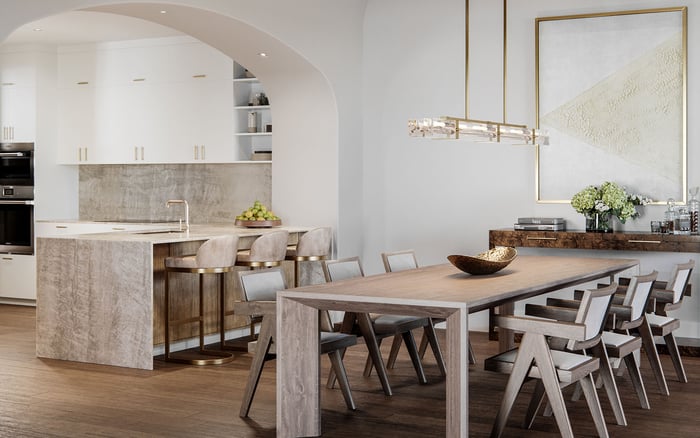
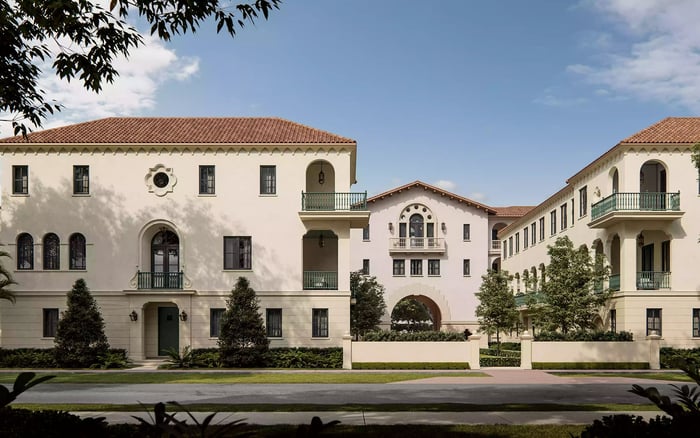
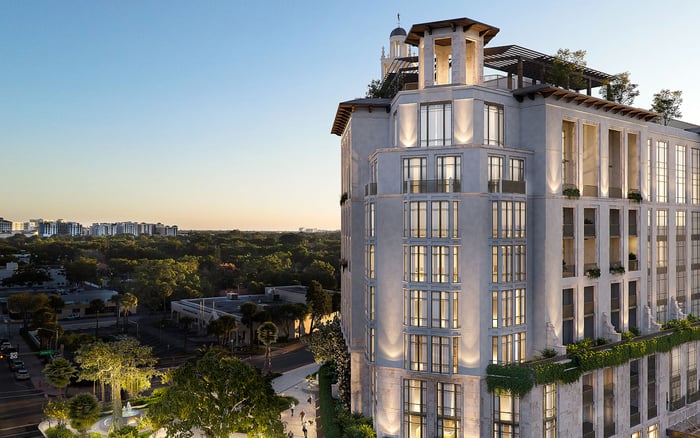
Cora Merrick Park’s private dining concept reframes a shared amenity as part of everyday ownership. Its value rests on privacy, convenience, entertaining utility, and the quality and cost of long-term operations.
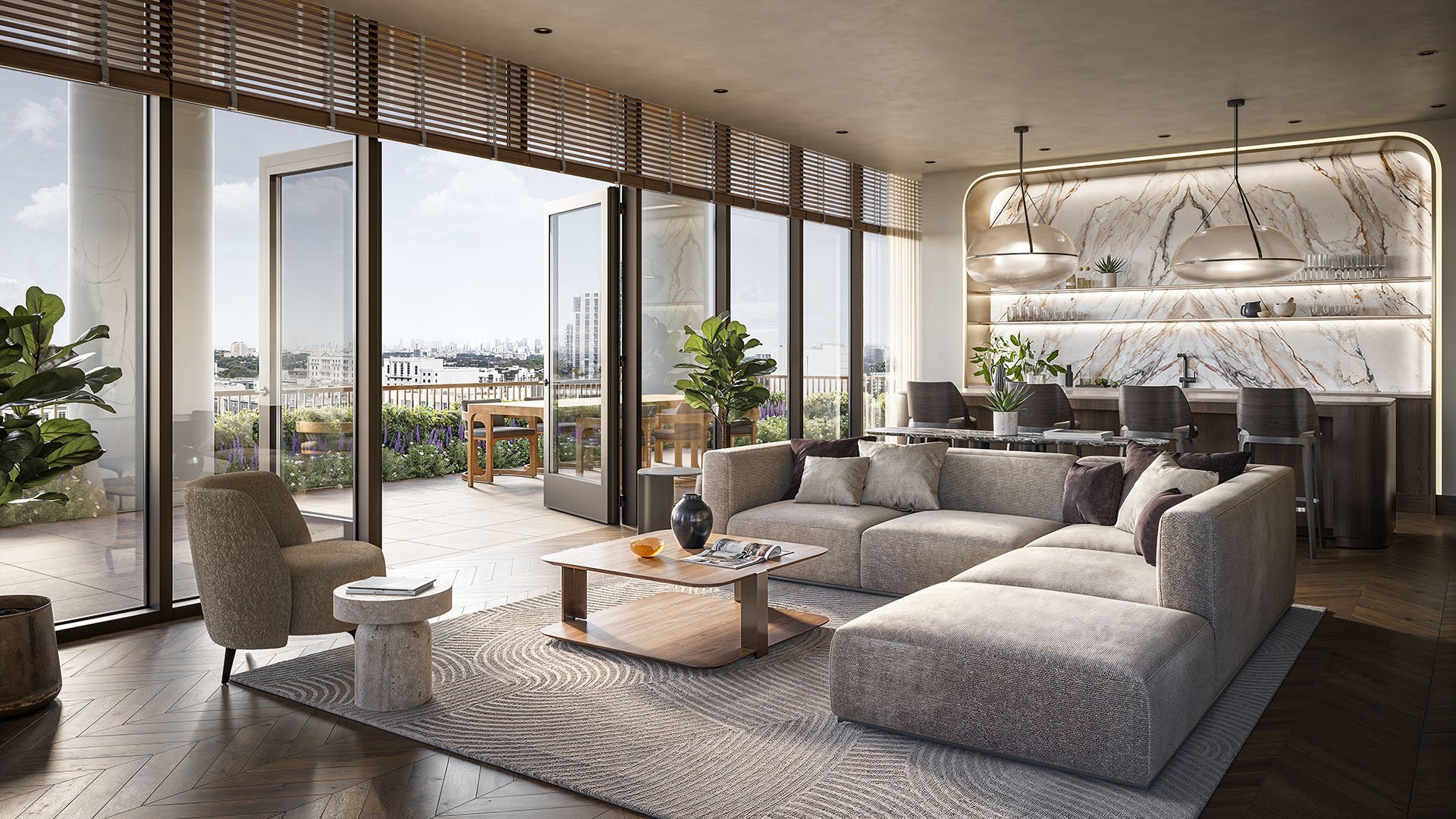
At Cora Merrick Park, buyers evaluating private dining should separate the appeal of the concept from the details of its eventual operation. Resident-only hospitality can extend the home into a shared setting for meals and entertaining, but its practical value depends on access, service, and cost.
A conventional amenity may impress during a tour yet see little use after move-in. Dining has the potential to fit more naturally into daily life, whether as an alternative to cooking or as a place to receive guests without hosting the entire occasion inside a residence.
For luxury buyers in Coral Gables, the relevant question is not simply whether a dining space is part of the plan, but how effectively it could become part of ownership.
The central appeal of resident-only dining is the possibility of expanding the functional boundaries of home. The residence can remain private while an owner uses a hospitality-oriented setting elsewhere within the property. In practical terms, that could make a quiet dinner, an impromptu meal, or a hosted occasion easier to manage.
This proposition may be especially relevant when privacy and convenience carry equal weight. Compared with dining away from home, a controlled residential setting could reduce travel and simplify planning. The actual experience, however, will depend on reservation procedures, capacity, guest policies, and operating hours.
A shared dining room may also create opportunities for informal interaction among owners. That outcome is not guaranteed, and buyers should assess the amenity as a service proposition rather than assume it will produce a particular social atmosphere.
Private dining may appeal differently to primary residents, seasonal owners, and pied-à-terre buyers. A full-time resident might view it as an extension of the weekly routine. A seasonal owner might value an on-site meal option after arrival. For a mobile owner accustomed to hotels or private clubs, the concept may reduce friction around entertaining and day-to-day dining.
Second-home ownership can magnify the value of dependable services within a building because time in residence may be limited. The private-dining proposition at Cora Merrick Park will be strongest if the operating model delivers that convenience consistently.
A dining room can present well visually, but its enduring appeal will be operational. Food quality, hospitality, reservation access, and consistency cannot be judged from the physical space alone. Design establishes the setting; service determines whether owners are likely to return.
Private dining should therefore be evaluated differently from a passive amenity. It depends on staffing, procurement, scheduling, and service standards. Its usefulness can shift with menu scope, hours, guest rules, pricing, and the ease of securing a reservation.
Buyers should ask which operational details are documented and which remain subject to change. The identity of any operator or chef, along with menus, pricing, schedules, and access procedures, should be verified rather than assumed.
For owners who host, resident-only dining can occupy a useful middle ground between entertaining entirely at home and meeting at a public venue. Its value will depend on whether the eventual rules support invited guests and the types of occasions an owner expects to arrange.
Buyers should confirm how guest privileges work, whether reservation rules differ by party size, and whether private occasions involve separate charges or restrictions. They should also ask whether an owner must be present and how the property manages competing requests.
The potential appeal is discreet rather than theatrical: less preparation inside the residence, fewer off-site logistics, and a hospitality setting connected to home.
Private dining should sit within a broader assessment of location, residence design, service, and shared amenities. Buyers assembling a Coral Gables shortlist may consider Ponce Park Coral Gables and The Village at Coral Gables alongside Cora Merrick Park, then decide which overall ownership proposition best fits their priorities.
Those broadening a South Florida search to Coconut Grove might also review Four Seasons Residences Coconut Grove. The purpose of comparison is not to reduce the decision to one amenity, but to determine how much weight resident hospitality should carry within the complete residential experience.
The financial structure of private dining warrants the same attention as its lifestyle promise. Prospective owners should review the applicable condominium documents and ask how staffing, maintenance, and operational support may affect association expenses. They should also establish whether meals are charged per use, supported through common charges, or subject to another arrangement.
The strongest due-diligence questions are specific: Who may reserve? How far in advance? Are invited guests permitted without the owner present? What are the service hours? How often can menus change? What happens if demand exceeds capacity? Are operating standards documented, and how may they be modified?
These questions do not diminish the amenity; they clarify its possible value. An elegant room with limited access or inconsistent service may prove less useful than expected. Conversely, dependable service, transparent charges, and reasonable availability could make it a frequently used shared space.
For buyers, the decisive point is execution over time. Private dining becomes meaningful when culinary quality, service, privacy, access, and cost remain in balance.
Is Cora Merrick Park’s private dining open to the public? Buyers should verify the access policy and confirm precisely how resident-only use and invited guests are defined.
Can owners use the dining amenity for everyday meals? Its usefulness for routine meals will depend on the eventual service schedule, reservation process, and access rules.
May residents entertain guests there? Buyers should confirm guest privileges, party-size limits, owner-presence requirements, and any associated charges.
Is a chef or restaurant operator confirmed? The identity and role of any chef or operator should be verified directly through current project materials and documents.
Has a menu or service schedule been established? Buyers should request the latest information on menus, meal periods, operating days, and how those details may change.
Who may benefit most from private dining? Primary residents, seasonal owners, and pied-à-terre buyers may value the concept differently according to their routines and entertaining needs.
Will dining costs be included in common charges? Buyers should determine whether costs are assessed per use, supported through common expenses, tied to minimum spending, or handled through another structure.
Could the amenity affect association expenses? Staffing, operations, maintenance, and any subsidy may influence expenses, so the applicable documents deserve careful review.
How should buyers assess the amenity before opening? They should distinguish the planned physical space from operational details and seek clarity on hours, reservations, menus, staffing, pricing, and guest access.
What will determine its long-term value? Consistent quality, attentive service, reasonable access, privacy, and transparent costs will matter more than appearance alone.
To compare the best-fit options with clarity, connect with MILLION.
If branded residences are on your mind — as a home or as an allocation — we would be glad to share what we are seeing, privately.
Begin a quiet conversation