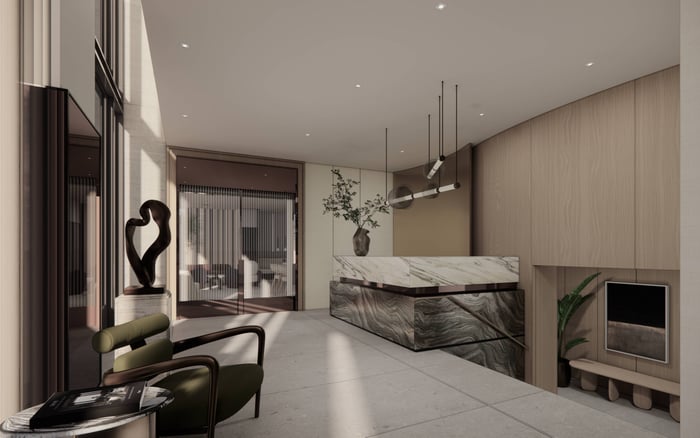
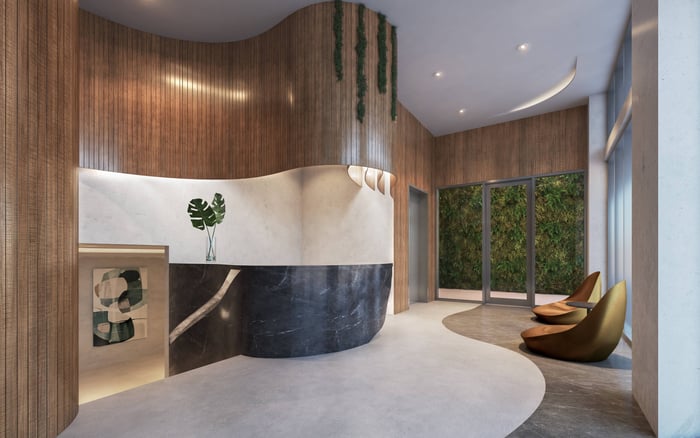
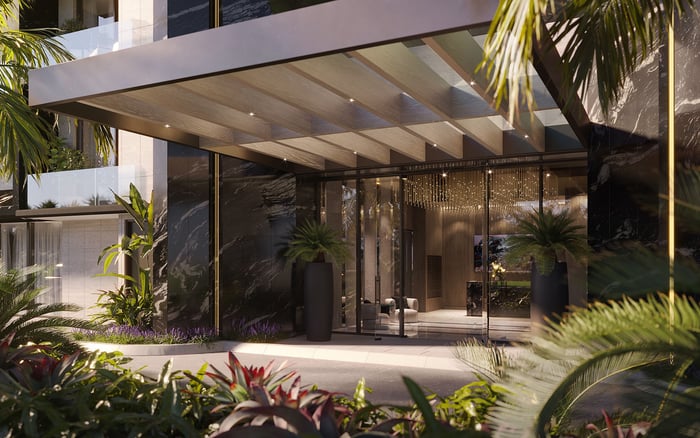
At Alana Bay Harbor Islands, private dining is best understood as an extension of home. Its ownership value rests not on restaurant theater, but on controlled access, hosting flexibility, privacy, and the convenience of entertaining without leaving the property.
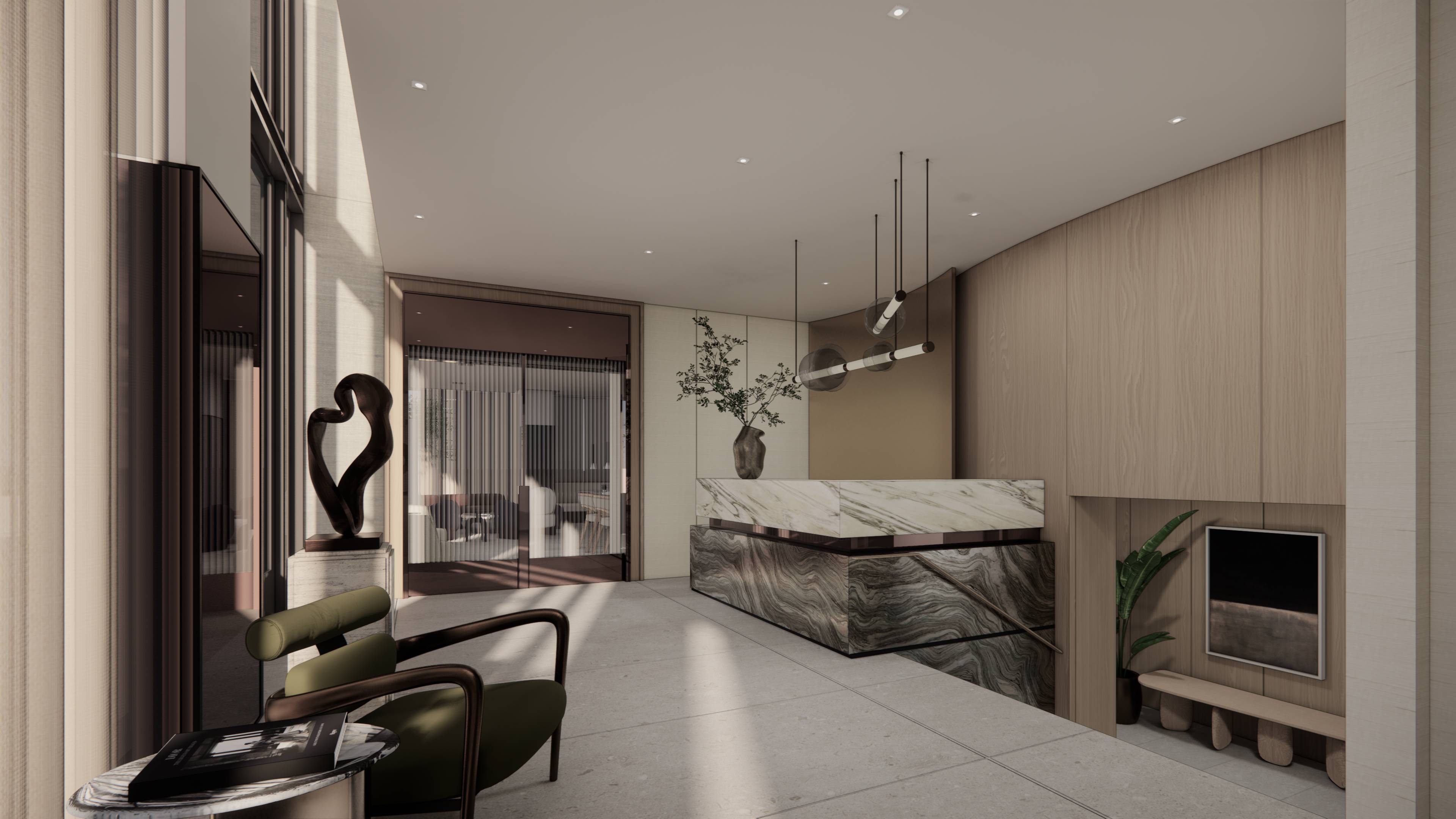
At Alana Bay Harbor Islands, private dining belongs to the residential experience, not the realm of a public restaurant. That distinction is central to its appeal. The premise is not simply that residents have another place to eat, but that ownership includes access to a composed setting for gathering, dining, and hosting without leaving the property.
For buyers evaluating amenity-rich residences, this is a practical advantage presented as an indulgence. A private dining environment can expand the functional boundaries of home. It may offer an alternative when dinner feels too formal for the residence, too personal for a public venue, or too logistically demanding to arrange elsewhere.
The defining luxury is controlled access. Resident-only hospitality can preserve a level of discretion that public-facing venues cannot replicate. It also keeps the experience connected to the rhythms of the building, making dining part of daily ownership rather than a destination reserved for rare occasions.
Public hospitality depends on visibility, volume, and a changing audience. Residential hospitality serves a different purpose. Its value lies in proximity, familiarity, and the ability to move between private and shared spaces with minimal friction.
At Alana, the ownership question is not whether private dining can replace South Florida’s restaurant scene. It is whether the amenity creates useful options. A resident might envision a quiet meal beyond the residence, a gathering that benefits from separation from personal living areas, or an occasion when remaining on the property feels more comfortable than traveling to an outside venue.
That flexibility can matter to primary residents and second-home owners alike. For the former, repeated convenience is the measure. For the latter, an amenity that reduces planning can make shorter stays feel more complete. In both cases, hospitality is most valuable when it integrates naturally into ownership rather than serving as visual decoration.
Private dining can reshape the social architecture of a residence. Entertaining at home often requires a choice between complete intimacy and considerable preparation. A resident-only setting creates a middle ground: guests can be welcomed within the property while the residence itself remains private.
This separation may be especially relevant to owners who prefer to keep personal interiors, family routines, or work areas removed from a gathering. It also allows the host to preserve a residential atmosphere without moving the occasion into a fully public setting. The result is not necessarily more elaborate entertaining. Often, it is simply more controlled.
That is the lifestyle proposition behind the amenity. Convenience is paired with discretion, and sociability does not require surrendering the boundaries that make a private residence feel personal.
Luxury amenities are often photographed at their most theatrical. Ownership, however, is experienced through repetition. The more useful question is how often a feature can solve an ordinary need: where to meet another couple, how to host visiting family, or how to create a change of setting while remaining close to home.
Private dining becomes more meaningful when viewed through this everyday lens. It can expand at-home entertaining options without requiring additional residential square footage. In a boutique residential setting, that shared extension of home may feel especially deliberate because access remains tied to the resident community.
Buyers exploring the wider Bay Harbor market may also encounter Onda Bay Harbor, La Maré Bay Harbor Islands, and The Well Bay Harbor Islands during their search. Each project deserves assessment on its own disclosed offering. At Alana, private dining should be judged by how convincingly it supports an owner’s actual patterns of living and hosting, not by a generic amenity count.
The concept is clear, but its practical value depends on operating details. Buyers should confirm how access is managed, whether advance reservations are required, which charges may apply, and what guest policies govern use. They should also ask about hours, staffing, capacity, food-preparation arrangements, cleanup responsibilities, and any restrictions on private occasions.
These are not minor administrative questions. They determine whether the space accommodates spontaneous use, planned dinners, or both. They also reveal how the building balances individual access with fairness to the broader resident community.
An investment-minded purchaser should evaluate the amenity in equally grounded terms. Private dining may strengthen personal enjoyment and the broader ownership narrative, but buyers should not assign financial outcomes to it without evidence. The prudent approach is to assess utility first: Will the owner use it? Does it complement the residence? Are the rules compatible with the way that owner entertains?
Resident-only dining at Alana is best understood as an expansion of the domestic realm. It creates a framework for convenience, privacy, and hosting within the property while preserving a residential rather than public-facing atmosphere.
Its significance will vary by owner. For a frequent host, it may become a valuable social setting. For a private buyer, controlled access may matter more than frequency of use. Either way, the most persuasive measure is not spectacle. It is whether the amenity makes ordinary ownership feel easier, more flexible, and more complete.
What does private dining mean at Alana Bay Harbor Islands? It is a resident-only hospitality amenity within the residential experience rather than a public restaurant.
Why does resident-only access matter? Controlled access can support discretion and maintain a more residential atmosphere for owners and their guests.
Can residents host guests in the private dining setting? The concept supports entertaining on the property, but buyers should confirm the building’s specific guest policies before relying on any use case.
Is private dining intended only for special events? Its ownership value is better assessed through regular utility, including smaller gatherings and convenient changes of setting.
Does the space include a chef’s kitchen? Equipment and food-preparation arrangements should be verified directly, as those operational details are not specified here.
Are catering or table service included? Buyers should confirm whether catering or service is available, permitted, optional, or subject to separate arrangements and charges.
Will residents need reservations? Reservation procedures are not specified here, so purchasers should ask how access and scheduling are managed.
Are there additional fees for using private dining? Any usage charges, deposits, service costs, or cleanup fees should be confirmed as part of buyer due diligence.
How can the amenity benefit a second-home owner? It may offer another setting for hosting during shorter stays while reducing the need to organize every gathering off the property.
What is the most important question for a buyer? Determine whether the access rules and operating model align with how often-and in what way-you expect to entertain.
If you'd like a private walkthrough and a curated shortlist, connect with MILLION.
If branded residences are on your mind — as a home or as an allocation — we would be glad to share what we are seeing, privately.
Begin a quiet conversation