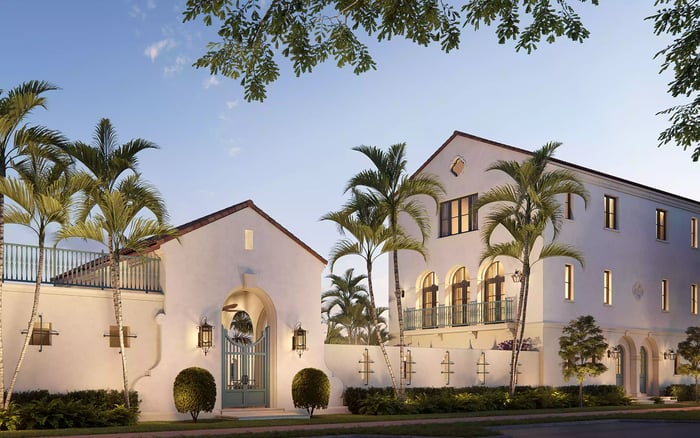
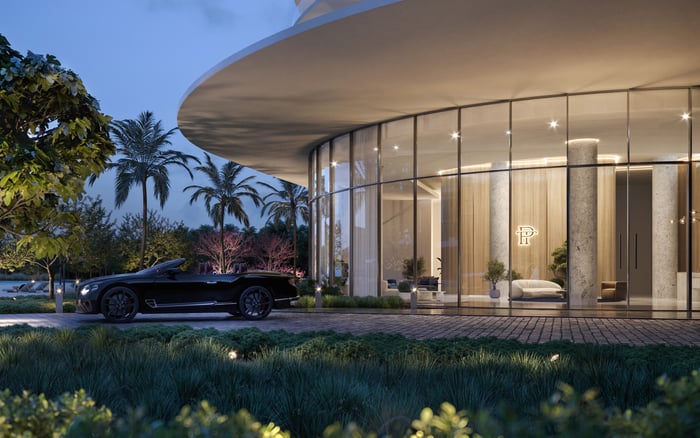
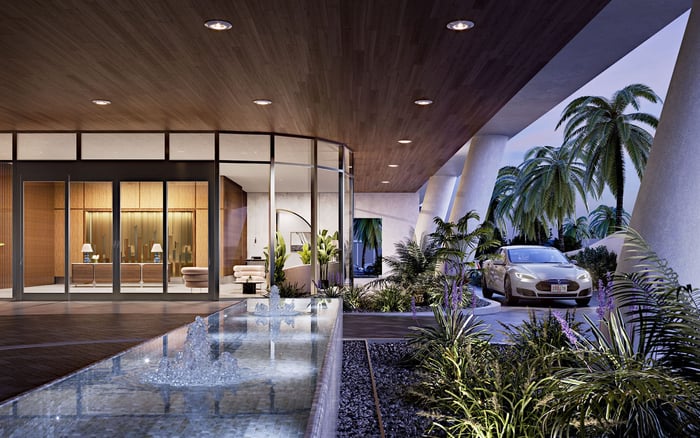
A buyer-focused framework for assessing private entertaining at The Village at Coral Gables, from governing rules and guest circulation to valet choreography and outdoor-space management.

At The Village at Coral Gables, privacy for entertaining is best assessed as an operating system, not a single amenity. Architecture matters, but so do condominium governance, guest-access procedures, elevator circulation, valet operations, outdoor-space management, and applicable Coral Gables regulations.
For the discerning host, the priorities are discretion, control over guest movement, prevention of disturbances, and protection from reputational friction. A beautiful residence can serve those objectives only when its rules and service protocols complement the floor plan. Buyers should therefore examine the full guest journey-from curbside arrival through departure-before deciding whether a residence suits their style of hospitality.
Party rules define the practical boundaries of residential entertaining. Before purchasing, request the current declaration, bylaws, house rules, management materials, and all policies governing gatherings in residences or shared amenities. Key considerations include event-capacity limits, quiet hours, advance notice, guest registration, deposits, insurance requirements, vendor access, security staffing, cleanup obligations, and restrictions on music or commercial activity.
Condominium governance can shape both private gatherings and the use of common spaces, while local regulations may impose another layer. Neither an elegant setting nor a generous floor plan should be taken as evidence that a particular event format is permitted.
This governance review is equally useful when comparing nearby options such as Cora Merrick Park and Ponce Park Coral Gables. The objective is not to assume identical policies, but to evaluate each property through the same disciplined lifestyle lens.
Elevator configuration determines who crosses paths, where guests wait, and how readily movement can be contained. Buyers should not, however, assume private elevators, controlled floors, dedicated resident entrances, or any particular access technology without documentary confirmation.
Ask management to demonstrate the route in real time. Where does a guest check in? Who authorizes elevator access? Can a visitor reach only the intended floor or amenity? How are caterers, musicians, florists, and other vendors handled? What happens when several guests arrive at once? The answers show whether privacy is embedded in daily operations or dependent on improvisation.
A rigorous review traces separate routes for residents, invited guests, service providers, deliveries, and staff. It should also examine the return journey: an orderly departure can be as important as an inconspicuous arrival. Buyers considering Four Seasons Residences Coconut Grove can apply the same circulation test without presuming its procedures match those at The Village.
Valet service shapes discretion because it governs the opening and closing moments of an event. The critical considerations are operational: vehicle queuing, key custody, guest identification, front-desk communication, retrieval timing, rideshare handling, and protocols for chauffeurs or security personnel.
Request the current valet protocol and ask whether special arrangements are available for private events. Confirm rather than presume. A polished arrival requires coordination among the host, valet, access control, elevator operations, and residence staff. If those parties operate independently, even a modest dinner can create avoidable exposure or congestion.
Conduct a walkthrough under conditions resembling the host’s likely schedule. Note visibility from the street and shared areas, where guests might gather, and whether departures create a bottleneck. The goal is not theatrical secrecy, but calm, predictable movement with minimal impact on neighbors.
Outdoor entertaining introduces visual and acoustic considerations that interior spaces may soften. A terrace, courtyard, garden, or shared open-air amenity should be evaluated for sightlines from neighboring residences and common paths, sound transmission, lighting spill, and proximity to circulation zones.
Management policy is equally consequential. Ask how outdoor areas are reserved, whether use is exclusive or shared, which furniture and catering arrangements are permitted, and what time, occupancy, music, and cleanup rules apply. Never infer permission from the mere presence of an outdoor entertaining area.
When possible, visit at more than one time of day. A setting that feels secluded in the afternoon may function differently after dark or during periods of greater resident activity. The same due-diligence approach can guide a comparison with Ziggurat Coconut Grove while keeping the analysis centered on verified documents and observed circulation.
Residence type can alter the route guests take, but it does not eliminate the need for governance review. A townhouse may appear to provide a more direct threshold, while a condominium residence may depend more heavily on common entries and elevators. In either case, buyers should map the actual route and verify the governing restrictions.
Before contract, obtain written answers to a concise entertaining brief covering the intended number of guests, frequency of gatherings, preferred hours, use of outdoor space, staffing needs, catering deliveries, vehicle volume, and privacy expectations. Counsel can review governing documents, while property management can clarify current procedures. Because rules and operations can change, current written materials carry more weight than informal assurances.
Are private parties permitted at The Village at Coral Gables? Buyers should verify the current declaration, house rules, management policies, and applicable local regulations for the intended gathering.
Are there published event-capacity limits? No specific capacity limit is established here. Request the current rules for both residences and shared amenity spaces.
Does the property have private elevators? Private elevators are not confirmed here. Review the plans and ask management to demonstrate the precise guest route and access controls.
Can elevator access restrict guests to an authorized floor? Access controls can limit guest movement, but the property’s current configuration and procedures should be verified directly.
How should guest registration be evaluated? Determine who submits names, when identification is checked, how access is authorized, and how groups or late arrivals are handled.
Is event-specific valet service available? No private-event valet arrangement is confirmed here. Request the current protocol, available accommodations, fees, and advance-notice requirements.
What matters most for discreet arrivals? Coordinated valet, access control, elevator authorization, and clear host communication create the most predictable arrival sequence.
Can outdoor areas be reserved for private use? Reservation rights are not established here. Confirm whether each space is exclusive or shared, then review its booking and use policies.
How can a buyer assess outdoor acoustic privacy? Visit at different times, observe neighboring exposures, and ask management about music, occupancy, quiet-hour, and enforcement rules.
What should be reviewed before making an offer? Examine governing documents, current management policies, guest circulation, valet procedures, outdoor-space rules, and relevant Coral Gables requirements.
If you'd like a private walkthrough and a curated shortlist, connect with MILLION.
If branded residences are on your mind — as a home or as an allocation — we would be glad to share what we are seeing, privately.
Begin a quiet conversation