A buyer-focused review of advertised association fees, privacy questions, and the budget and contract checks that matter when comparing these two Four Seasons residential addresses.
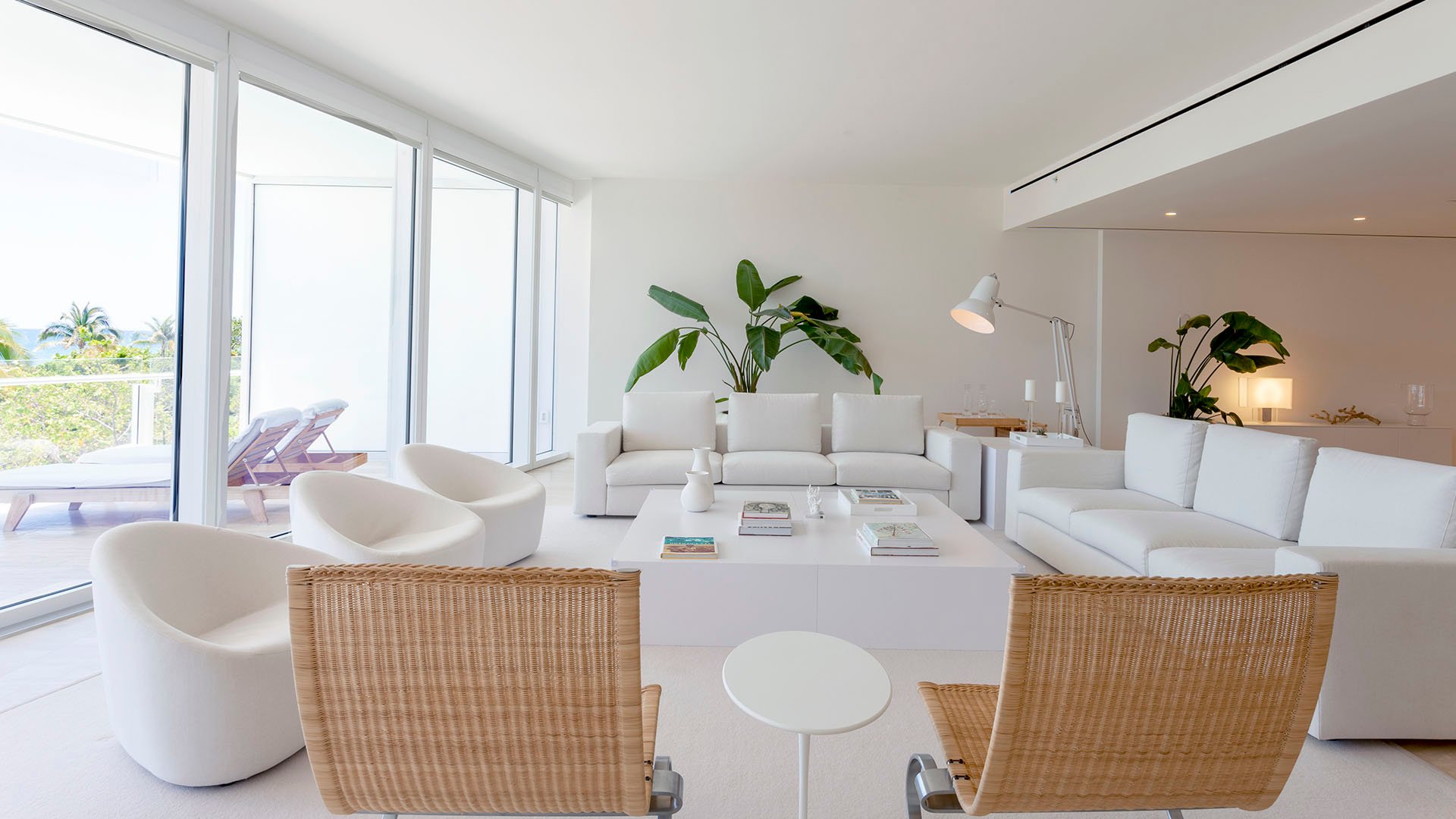
At this level of ownership, luxury is as much about what remains unobtrusive as what is immediately visible. Arrival, household assistance, guest access, and service requests should feel effortless. For a buyer, that ease deserves a precise financial and operational definition.
The comparison between Four Seasons Hotel & Private Residences Fort Lauderdale and The Surf Club Four Seasons Surfside begins with two distinct questions: what must the owner fund, and what privacy and service does that funding actually secure?
Advertised association fees are useful starting points. They do not establish current invoices, complete service entitlements, or future increases. A well-informed purchase connects the unit's bill to the adopted budget, governing agreements, and everyday experience of arriving home.
At 525 N. Fort Lauderdale Beach Boulevard, the observed advertised monthly association fees range from $4,574 to $6,432 across four residences. These are unit-specific observations, not a building-wide tariff or a current fee schedule.
Residence 702 showed monthly dues of $4,574, with cabana, fitness-center, pool, and elevator amenities listed. Residences 1605 and 1705 each showed $5,875 monthly. For 1705, listed inclusions covered common areas, cable TV, HVAC, insurance, internet, grounds maintenance, reserve funding, and security. Residence 1605's description identified common areas, cable TV, and recreation facilities among its services.
Residence 1509 showed $6,432 monthly, with HVAC identified as an association-fee inclusion. Differences in these descriptions do not prove that a service unmentioned for one residence is excluded from its dues.
For perspective, $5,875 monthly annualizes to $70,500 if unchanged for twelve months. That is an arithmetic baseline for the advertised association charge, not a complete annual ownership budget. Confirm the effective date, billing frequency, and any separately billed obligations before relying on it.
At The Surf Club, the observed advertised monthly fees range from $6,365 to $11,341. Residence N-515, listed at 9111 Collins Avenue, showed $11,341 monthly. Its stated inclusions cover security, insurance, exterior maintenance, pool service, trash removal, air-conditioning maintenance, cable TV, elevators, parking, sewer, and water.
N-914 showed $6,365 monthly, with security, trash removal, air-conditioning maintenance, cable TV, elevators, hot water, parking, water, and internet/Wi-Fi among the listed inclusions. S-402 showed $8,368 monthly, including insurance, security, common areas, exterior maintenance, pool service, and air-conditioning maintenance.
At 9001 Collins Avenue, S-201 showed $10,690 monthly and S-910 showed $6,830. These figures belong to their respective residences; they should not become shorthand for the entire property.
The Surf Club examples are not matched to the Fort Lauderdale examples by interior area, tower, ownership structure, or service allocation. Their higher observed dollar amounts therefore establish neither inferior value nor greater service intensity, and they do not demonstrate a like-for-like premium. Reconcile the bills first, then compare annual mandatory recurring charges against verified interior square footage.
Residence 702's description identifies a doorman, secured elevator, and secured lobby. Those features do not establish resident-only circulation, staffing levels, or screening procedures. Likewise, security among The Surf Club's listed inclusions does not explain how residents and hotel guests move through the property.
For either address, request a walkthrough from vehicle arrival to the residence, then follow the routes to pools, beach areas, and concierge service. Confirm which lobbies, elevators, garages, and amenity areas are dedicated to residents and which are shared.
Ask management to explain visitor authorization, deliveries, household-staff access, and after-hours assistance. Seek written clarification of staffing coverage and service channels rather than relying on a quiet tour alone. Security labels are not enough to declare either property the privacy winner.
Request three years of adopted budgets, financial statements, reserve schedules, insurance renewals, assessment notices, and relevant board minutes. Read them together to understand how recurring operations, future capital needs, and exceptional expenses are funded.
Build a unit-specific reconciliation that separates condominium dues from any master or shared-facility charges, brand or club fees, utilities, parking or storage charges, optional services, taxes, and assessments. Treat these categories as questions to resolve, not charges presumed to exist at either property.
Then clarify scope. An HVAC inclusion does not, by itself, define responsibility for every component or replacement. An insurance inclusion does not establish the owner's separate coverage needs. Reserve funding in a fee description says nothing about reserve adequacy.
Amenity access and personalized hotel services also require separate treatment. Ask for the included-service schedule and any applicable optional-service pricing. Neither an amenity list nor broad service language establishes that monthly dues include unlimited hotel assistance.
Advertised fees establish neither a project-wide contract-escalator formula nor a long-term service-cost trajectory. Review the applicable management, brand, hotel-service, and shared-facility agreements with qualified advisers before projecting increases.
For each agreement, identify the fee basis, renewal dates, termination rights, and approval authority. Determine whether changes involve fixed annual increases, inflation-index links, minimum increases, annual caps, labor pass-throughs, or expense reimbursements. These are review questions, not confirmed contract provisions at either address.
Ask whether any cap governs the entire charge or only one component. Separate contractual increases from budget changes driven by insurance, staffing, coastal maintenance, or reserve contributions. A limit on one contractual fee is not a limit on the total association bill.
Build a baseline from confirmed mandatory charges, then add optional services that reflect your household's intended use. Keep special assessments and capital contingencies separate from ordinary recurring expenses. Stress-test insurance, staffing, maintenance, and reserve contributions without presenting an assumed increase as a property forecast.
If the search also includes Auberge Beach Residences & Spa Fort Lauderdale, apply the same unit-level reconciliation and access review rather than assuming similar service obligations from positioning alone.
The stronger choice is the residence whose documented privacy arrangements, service scope, and funding commitments fit the owner's expectations. A lower advertised bill is not automatically better value; a higher one does not prove more attentive service.
For a discreet discussion of your South Florida residential priorities, connect with MILLION.
If branded residences are on your mind — as a home or as an allocation — we would be glad to share what we are seeing, privately.
Begin a quiet conversationThe observed examples ranged from $4,574 for residence 702 to $6,432 for residence 1509. Residences 1605 and 1705 each showed $5,875 monthly.
The observed examples ranged from $6,365 for N-914 to $11,341 for N-515. These are residence-specific advertised amounts, not a current property-wide fee schedule.
The advertised examples do not establish that conclusion because they are not matched by interior area, tower, ownership structure, or service allocation. Compare confirmed mandatory charges using verified interior square footage.
Listed inclusions encompassed common areas, cable TV, HVAC, insurance, internet, grounds maintenance, reserve funding, and security. Confirm the scope of each inclusion in the applicable documents.
The listed amenities and fee descriptions do not establish unlimited hotel services. Request an included-service schedule and pricing for optional services.
The available security descriptions do not establish a privacy winner. Confirm dedicated resident access, hotel-guest circulation, screening procedures, and staffing coverage at each property.
Request three years of adopted budgets, financial statements, reserve schedules, insurance renewals, assessment notices, and relevant board minutes. Reconcile those documents with the specific residence's current invoices.
The advertised fees do not establish a project-wide escalation formula. Review applicable agreements for fee formulas, inflation links, caps, pass-throughs, renewal terms, and approval authority.
Do not assume it does. Confirm which component the cap covers and separately evaluate budget changes involving insurance, staffing, maintenance, and reserves.
Begin with confirmed mandatory charges, add optional services suited to the household's routine, and model potential changes in major expense categories. Keep assessments and capital contingencies separate from recurring costs.