Pompano Beach offers the stronger documented combination of municipal arts programming and explicit freight-corridor access. Hillsboro Beach instead suits collectors who value a quieter coastal address and are comfortable treating Boca Raton, Fort Lauderdale, and West Palm Beach as their regional cultural circuit.
For an art-focused buyer, the most consequential distinction between Pompano Beach and Hillsboro Beach is not their shared Atlantic horizon. It is the operating system surrounding the residence: where exhibitions take place, how often cultural venues are active, and how a shipment moves from port, airport, or rail-linked infrastructure to its final installation site.
Pompano Beach presents the more complete documented package for buyers seeking arts programming within the city and clearly articulated access to transportation corridors. Hillsboro Beach offers a different proposition. Its appeal is regional, positioning a collector between the cultural markets of Broward and Palm Beach counties, with Boca Raton nearby and Fort Lauderdale and West Palm Beach forming part of a broader driving circuit.
Pompano Beach favors local cultural access, while Hillsboro Beach favors regional cultural reach.
Neither location eliminates the practical demands of collecting. Climate-controlled transportation, custom crating, insurance, security, customs coordination, condition reporting, and skilled installation remain separate requirements. The better address is therefore the one whose surrounding network aligns with the buyer’s acquisition, lending, entertaining, and exhibition habits.
Pompano Beach has the clearer municipal arts framework. Its Cultural Affairs Department manages four venues: the Pompano Beach Cultural Center, Ali Cultural Arts Center, Bailey Contemporary Arts Center, and Blanche Ely House Museum. Together, they give residents multiple civic points of contact with visual art, performance, and local cultural programming.
The Pompano Beach Cultural Center sits beside City Hall in the revitalized downtown, hosting music, dance, theater, and art exhibitions. Its address at 50 W. Atlantic Boulevard places it in a central civic setting. Bailey Contemporary Arts, commonly known as BaCA, is located at 41 NE 1st Street and maintains regular public hours Tuesday through Saturday. The Blanche Ely House Museum also hosts public gallery events.
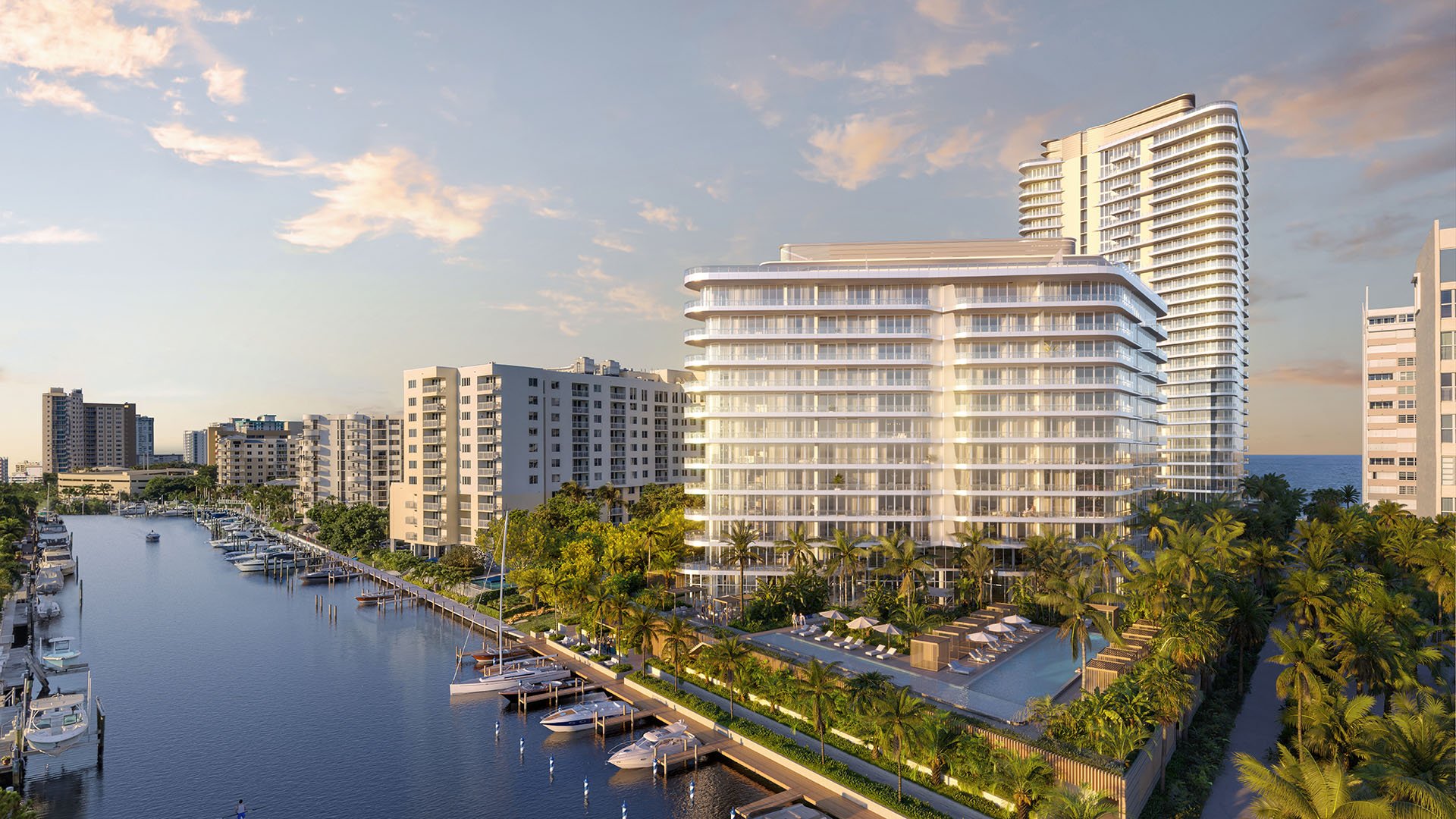
For collectors, this matters less as a substitute for major museums than as an everyday layer of cultural life. In-city programming can make openings, performances, and community arts events easier to incorporate into a weekly routine. Buyers considering oceanfront choices such as Armani Casa Residences Pompano Beach or The Ritz-Carlton Residences® Pompano Beach can evaluate that cultural network alongside the residence itself, without assuming every venue or logistics route will be equally convenient from every address.
Hillsboro Beach occupies northeastern Broward, positioned between nearby cultural markets rather than around a documented municipal arts district of its own. Boca Raton is an estimated 5- to 10-minute drive, while Fort Lauderdale and West Palm Beach are each less than 30 minutes away. Actual travel times should be verified from the specific property and at the hours a buyer expects to make the trip.
That geography can suit a collector who prefers cultural variety across several cities and does not require frequent programming within the immediate municipality. A Hillsboro Beach owner might approach gallery visits, performances, advisory meetings, and collection-related appointments as planned excursions rather than neighborhood activities. Rosewood Residences Hillsboro Beach provides a relevant residential reference point for buyers considering this coastal setting, while The Residences at Mandarin Oriental Boca Raton illustrates the nearby Boca Raton market that helps define the area’s regional context.
The absence of a comparable documented cluster of city-operated venues in Hillsboro Beach should not be interpreted as proof that private galleries or arts businesses are absent. It does mean buyers should map their preferred institutions and cultural calendars individually rather than rely on an in-town civic arts network.
Pompano Beach is explicitly associated with proximity to I-95, Tri-Rail, the Florida East Coast Railway corridor, three international airports, and two major seaports. Tri-Rail stops west of I-95 within the city, and Pompano Beach lies between Brightline stations in Boca Raton and Fort Lauderdale. Fort Lauderdale-Hollywood International Airport is approximately 30 minutes away, although the journey from a specific property may differ.
The freight context is especially relevant for collectors receiving large, fragile, or internationally sourced works. Florida East Coast Railway operates a 351-mile freight mainline between Jacksonville and Miami and is the exclusive rail provider for Port Everglades, PortMiami, and the Port of Palm Beach. Port Everglades includes a 43-acre near-dock intermodal container transfer facility operated by the railway, along with a dedicated project-cargo track that may be relevant to oversized or specialized shipments.
The broader intermodal network connects Florida’s ports with the national rail system and routes serving the eastern United States, Canada, Latin America, the Caribbean, and Asia. This infrastructure is meaningful, but it should not be confused with door-to-door fine-art handling. Rail and port access can support the larger supply chain; a qualified art shipper must still manage custody, environmental conditions, customs, security, unpacking, and installation.
For buyers comparing Pompano’s emerging residential landscape, W Pompano Beach Hotel & Residences can be considered within this broader connectivity discussion. The essential next step is to assess the exact building entrance, loading procedures, elevator dimensions, service access, and route from the preferred logistics provider.
Location is only one part of the acquisition. Before choosing either city, buyers should determine whether a residence can receive and preserve art discreetly. Due diligence should cover loading access, freight-elevator rules, doorway and corridor dimensions, floor loading where relevant, installation permissions, contractor scheduling, backup power, humidity management, glazing, direct sunlight, and building insurance requirements.
Collectors should also distinguish routine deliveries from exceptional works. A framed photograph and a monumental sculpture place different demands on vehicles, staging areas, rigging, and structural review. Port Everglades’ project-cargo capability may be useful at the infrastructure level, but it says nothing about the final residential approach. The last mile can determine whether an otherwise attractive home is genuinely collection-ready.
Route verification is equally important. Current, property-specific drive times to ports, airports, terminals, galleries, and museums are not established here. Buyers should run timed routes from each shortlisted address, consult specialist shippers, and request written operating rules from building management before committing.
Pompano Beach is the stronger documented choice for a buyer prioritizing regular in-city arts engagement and explicit proximity to freight, road, rail, airport, and seaport infrastructure. It supports a lifestyle in which local cultural programming coexists with access to a sophisticated regional logistics network.
Hillsboro Beach is better suited to the collector who prioritizes privacy and a coastal residential setting, then engages with culture across nearby cities. Its position near Boca Raton and within reach of Fort Lauderdale and West Palm Beach broadens the itinerary, but makes cultural participation more dependent on planned travel.
The final decision should follow the collection itself. Buyers with frequent international acquisitions, oversized works, or active museum loans may place greater weight on logistics and service access. Those whose collecting life revolves around private appointments and scheduled regional outings may find Hillsboro Beach’s location entirely compatible. In either market, the winning property is the one that combines the desired setting with verified routes, appropriate building systems, and a credible specialist team.
For discreet guidance on comparing collection-ready residences in both markets, connect with MILLION.
If branded residences are on your mind — as a home or as an allocation — we would be glad to share what we are seeing, privately.
Begin a quiet conversationPompano Beach has the stronger documented network, with four venues managed by its Cultural Affairs Department.
The city manages the Pompano Beach Cultural Center, Ali Cultural Arts Center, Bailey Contemporary Arts Center, and Blanche Ely House Museum.
A comparable city-operated cultural cluster was not documented. That does not establish that Hillsboro Beach has no private galleries or arts businesses.
Boca Raton is estimated at 5 to 10 minutes away, while Fort Lauderdale and West Palm Beach are described as less than 30 minutes away.
It has explicit proximity to I-95, the Florida East Coast Railway corridor, airports, seaports, and a local Tri-Rail stop.
No. Fine-art movements still require appropriate crating, climate control, insurance, security, customs support, and installation expertise.
Port Everglades has a 43-acre near-dock intermodal container transfer facility and rail infrastructure that includes a dedicated project-cargo track.
Tri-Rail stops in Pompano Beach west of I-95, and the city lies between Brightline stations in Boca Raton and Fort Lauderdale.
They should review loading access, freight elevators, door and corridor dimensions, environmental controls, installation rules, and insurance requirements.
Hillsboro Beach may be the better fit for a buyer comfortable planning cultural visits across Boca Raton, Fort Lauderdale, and West Palm Beach.