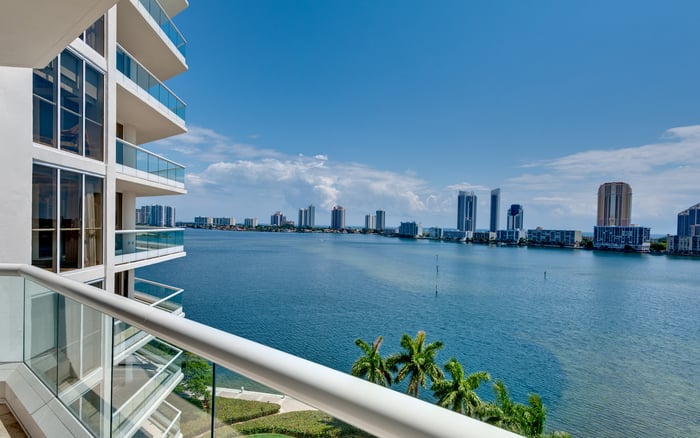
A disciplined framework for testing occupancy, payroll, utility, insurance, tax, and reserve assumptions before relocating a business to Pompano Beach.

Relocating a business to Pompano Beach requires more than a comparison of asking rents. Payroll, power consumption, insurance structure, taxes, common-area charges, and reserve requirements can each change the economics after a lease or acquisition is completed.
The strongest review begins with the target property’s records, the proposed allocation of risk, and the company’s operating profile. Executives should distinguish verified inputs from estimates and identify which assumptions still require documentation before approval.
The most credible relocation budget separates every occupancy cost before testing how each one can rise.
This framework belongs in both corporate site selection and executive relocation planning. It can also inform residential discussions involving options such as Armani Casa Residences Pompano Beach, provided household expenses remain separate from the company’s operating model.
Begin with a line-by-line occupancy schedule. Separate base rent from real-estate taxes, property and liability insurance, common-area maintenance, utilities, administrative markups, and special assessments. A blended figure can obscure which charges are controllable, capped, reconciled, or passed through without a ceiling.
Request the current expense schedule, available reconciliation history, tax bills, insurance renewals, CAM definitions, exclusions, and administrative-fee provisions. For an acquisition, use property-specific tax records and the proposed basis rather than relying on a residential proxy or a figure from a different asset.
Review each lease or purchase provision against the financial model. Confirm how capital work, repairs, management fees, security, landscaping, parking, and after-hours services are treated. Any unclear allocation should remain a diligence item instead of being converted into an unsupported budget assumption.
The model should show both annual totals and comparable occupancy measures appropriate to the property. It should also identify the party responsible for each expense, the timing of reconciliations, and any contractual limit on increases.
Payroll planning should distinguish salary competitiveness from household purchasing power. Housing preferences, commuting patterns, family needs, and temporary accommodation can influence relocation support, but they should not be blended into recurring compensation without a clear rationale.
Benchmark compensation against the relevant South Florida labor market and model relocation benefits separately. This allows decision-makers to distinguish continuing payroll from one-time transition costs such as temporary housing, travel, moving support, or recruitment assistance.
Housing discussions may include newer coastal options such as Ocean 580 Pompano Beach. For senior recruits, present multiple housing scenarios rather than relying on one assumed condominium budget. Each scenario should identify which expenses are paid by the employee and which, if any, are reimbursed by the business.
A sensitivity analysis can test whether the relocation package still supports recruitment and retention when housing, transportation, or insurance assumptions change. The objective is not to predict every household decision, but to prevent personal living costs from being hidden inside the corporate occupancy budget.
Residential utility estimates should not be carried directly into a business model. Obtain available bills for each meter, identify peak usage, and confirm who pays for cooling, after-hours HVAC, water, sewer, gas, trash, and irrigation. Normalize the records for occupancy, operating hours, equipment loads, and seasonal variations.
Build a monthly dashboard comparing consumption, rates, occupancy, and a relevant business activity measure. This helps the finance team identify whether a variance reflects price, usage, operating hours, or an incorrect assumption.
Where records are incomplete, document the gap and use clearly labeled scenarios rather than a single precise forecast. A base case can reflect expected operations, while downside and severe-weather cases can account for higher consumption, interrupted operations, or additional recovery needs without presenting them as certain outcomes.
Utility responsibilities should also be reconciled with the lease. Confirm whether any service is included in CAM, billed directly, allocated among occupants, or subject to an administrative charge. That distinction can materially affect both cash flow and the company’s ability to control consumption.
Insurance requires a coverage-by-coverage review. Obtain property-specific indications for property, wind, flood, liability, and business interruption as applicable, then examine deductibles, exclusions, limits, waiting periods, and liquidity needs. A premium estimate from another building or a residential policy is not a substitute for a quotation tailored to the proposed business location.
The review should connect insurance terms to the company’s operating plan. Consider whether coverage limits align with replacement needs, whether interruption assumptions reflect the business model, and whether the company can fund deductibles and uncovered expenses.
Executives considering coastal living may also review The Ritz-Carlton Residences® Pompano Beach, but residential coverage and association costs should remain distinct from corporate occupancy underwriting. Each residence or commercial property should be evaluated through its own documents, quotations, and coverage structure.
Avoid compressing insurance into a single percentage of rent or property value unless the underlying quotation supports that treatment. The approval file should retain the assumptions behind every premium, deductible, and coverage limit used in the model.
Reserve contributions are often under-modeled because they do not resemble a current operating bill. Yet future repairs, replacements, deferred work, and special assessments can create meaningful cash requirements. The budget should therefore identify known reserve obligations and distinguish them from discretionary contingency funds.
For association-controlled, mixed-use, or condominium property, request governing documents, current budgets, reserve studies, insurance details, and special-assessment histories. Determine whether reserve funding or capital work can flow through association dues, CAM, landlord operating expenses, or direct owner contributions.
Model base, downside, and severe-weather cases for reserve contributions, insurance deductibles, utility escalation, and special assessments. A residence such as W Pompano Beach Hotel & Residences should be reviewed through its own governing documents, budgets, and coverage rather than a generalized coastal assumption.
Reserve inflation should be visible as a separate input. This lets decision-makers see whether the project remains financeable when planned contributions rise or when an unplanned capital need occurs.
A board-ready model should show occupancy costs, payroll and relocation expenses, escalation cases, post-event liquidity, and every uncapped pass-through. It should compare the proposed budget with available historical records and clearly label assumptions that remain subject to verification.
The approval process should also assign responsibility for unresolved items. Legal review can address lease language and pass-through rights, insurance advisers can evaluate coverage design, and finance leaders can test cash-flow effects. The final model should reconcile those workstreams rather than presenting them as separate checklists.
Approve the relocation only after the base case supports the business plan, the downside case remains manageable, and the severe-weather case has a defined response and source of liquidity. This approach keeps the decision focused on documented property obligations and the company’s capacity to absorb change.
For discreet guidance on aligning an executive move with South Florida property objectives, connect with MILLION.
If branded residences are on your mind — as a home or as an allocation — we would be glad to share what we are seeing, privately.
Begin a quiet conversationSeparate base rent, real-estate taxes, insurance, CAM, utilities, administrative markups, and special assessments. Each category may follow different payment and reconciliation terms.
No. Review updated expense schedules, available historical reconciliations, and the definitions in the proposed lease.
Use property-specific tax records and the proposed ownership basis. Do not rely on a residential proxy or an unrelated asset.
Model recurring compensation separately from one-time relocation support. Clearly assign temporary housing, travel, moving, and recruitment expenses.
Review available meter-level bills, operating hours, equipment loads, peak usage, and responsibility for each service. Label gaps and estimates clearly.
Review property, wind, flood, liability, and business interruption coverage as applicable. Examine limits, exclusions, deductibles, and liquidity needs.
Reserve contributions, deferred work, and special assessments can increase occupancy or ownership costs. A separate assumption makes that exposure visible.
Request governing documents, current budgets, reserve studies, insurance details, and special-assessment histories. Confirm how costs may pass through to an owner or tenant.
Show occupancy, payroll, relocation, escalation, and liquidity assumptions. Identify uncapped pass-throughs and items still awaiting verification.
Confirm that the base case supports the plan, the downside remains manageable, and the severe-weather case has a defined response and source of liquidity.