For luxury buyers who plan to attend or host during the Formula 1 Miami Grand Prix, the decisive property attribute is not simple proximity. Route redundancy, advance driver staging, privacy before security, and a precise guest plan create a more resilient race-weekend experience.
For a South Florida owner, Formula 1 Miami Grand Prix weekend is as much an exercise in logistics as spectacle. The closest home on a map may not provide the most dependable arrival when traffic controls, event operations, and concentrated demand affect the surrounding road network.
Route redundancy is the more useful purchase test. A residence with access to several major arteries and practical off-site meeting points may be better positioned than one dependent on a single approach. This principle is particularly relevant for owners who expect to entertain, coordinate several vehicles, or preserve discretion around arrival and departure.
On Formula 1 weekend, route choice can matter more than map distance.
The traffic plan should be treated as a multi-day condition rather than a brief race-day inconvenience. Event procedures can affect arrival patterns before the principal sessions begin and can continue through post-event departures.
A property inspection in ordinary traffic therefore reveals only part of the ownership experience. Buyers should test likely approaches during busy periods, identify where routes converge, and consider how a closure or delay on one corridor would affect the household plan.
The goal is not to predict an exact journey time. It is to determine whether the residence provides credible alternatives when the preferred route becomes impractical.
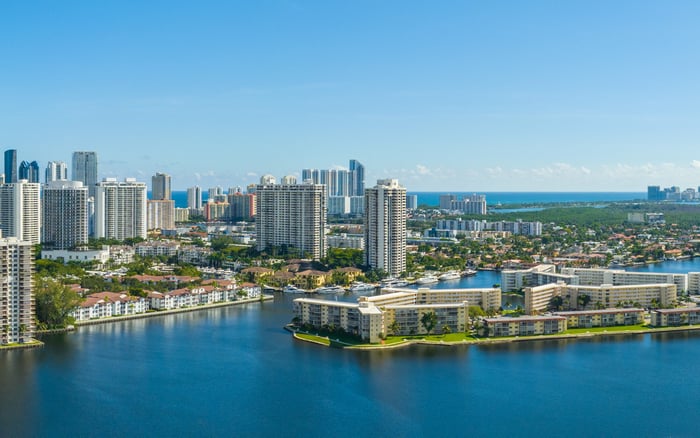
Aventura can serve as a coastal base for owners who value access to more than one north-south route and can establish a rendezvous point away from the busiest event approaches. Buyers considering Avenia Aventura should evaluate both the primary drive and a backup transfer plan for owners, guests, and drivers.
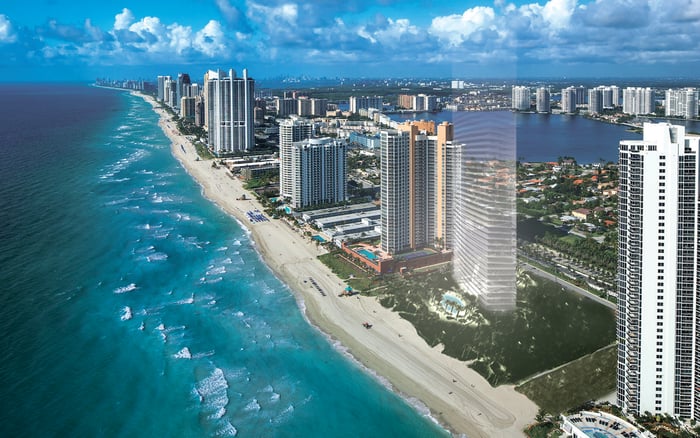
The same discipline applies farther east. From Sunny Isles Beach, a buyer comparing Bentley Residences Sunny Isles can model separate arrangements for owner transport, guest transfers, and driver holding. The objective is to identify more than one credible route to a controlled handoff point.
Miami Beach generally calls for a broader door-to-seat assessment. For owners evaluating The Perigon Miami Beach, the prudent calculation includes departure sequencing, road travel, the transfer point, walking, screening, and the return journey.
Broward can also fit an event strategy when paired with carefully selected staging north of Miami-Dade. A residence such as Shell Bay by Auberge Hallandale can be considered within that broader framework, with current event procedures reviewed before the household itinerary is finalized.
Privacy is strongest during the stages the household can control. A private driver can collect owners at home, coordinate event essentials, and use a predetermined rendezvous point for a precise handoff.
Guests should still expect public portions of the experience, including pedestrian movement and security screening. No residential location removes those stages. A privacy-conscious plan should therefore reduce uncertainty without implying private access where none has been arranged.
Professionally managed transport, a fixed handoff location, and clear guest instructions can make the journey more orderly. The household should also account for weather, walking comfort, and the needs of children, older guests, or anyone who may require additional assistance.
An improvised chauffeur drop-off near a major event is not a resilient strategy. Drivers need a lawful waiting location, a defined communications protocol, and clear instructions for both the outbound and return journeys.
Hosts should assign each guest a meeting point, arrival window, and departure procedure. Because event operations may change, the plan should be refreshed for each race weekend rather than copied forward without review.
A polished household itinerary can designate a lead driver, a remote holding location, and a single communications channel. It should also explain what happens if a guest is delayed, loses mobile service, or reaches the wrong meeting point. After the event, a prearranged meeting window away from the most congested perimeter is generally easier to manage than asking a driver to improvise.
Before committing to a residence, ask the driver to model primary and alternate outbound and return routes. Identify where those routes share the same bottlenecks, then select practical handoff points that do not depend on entering the busiest controlled area.
The property itself should support the plan. Consider whether several guests can depart without creating congestion, whether drivers have an appropriate waiting arrangement, and how the household will sequence vehicles. The review should encompass the full journey rather than road travel alone.
Finally, distinguish everyday convenience from race-weekend resilience. A home may perform beautifully throughout the year yet require a highly managed event protocol. For an informed buyer, that is an operating condition to test alongside privacy, building services, and the household’s broader South Florida lifestyle.
For discreet guidance on selecting a South Florida residence around your access priorities, consult MILLION.
If branded residences are on your mind — as a home or as an allocation — we would be glad to share what we are seeing, privately.
Begin a quiet conversationNo. A residence with alternate approaches and practical handoff points may provide a more resilient plan.
Traffic demand and event operations can influence travel beyond the principal race sessions. The household plan should cover the full period of expected activity.
The driver should confirm primary and backup routes, a lawful waiting location, meeting points, and a communications protocol.
Not necessarily. Private transport can control the journey from home, but guests may still encounter public walking and security stages.
Each guest should receive a meeting point, arrival window, departure procedure, and contingency instructions.
Alternate routes reduce dependence on a single corridor when congestion or event controls disrupt the preferred approach.
They should consider vehicle sequencing, handoffs, walking, screening, weather exposure, and the return journey.
No. Owners should review current event operations and update routes, meeting points, and driver instructions.
Use managed transport, fixed handoff points, and clear guest instructions while recognizing that public event areas remain outside household control.
They should test primary and alternate routes, identify shared bottlenecks, and confirm that the property can support coordinated vehicle departures.