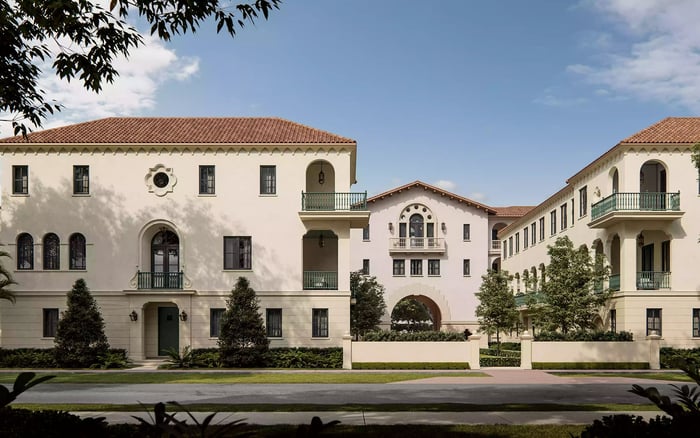
The first owner-controlled budget at The Village at Coral Gables should give buyers a clearer view of recurring costs, reserves and any movement from the published maintenance benchmark. For a 48-residence community, careful line-item review may be as important as the headline monthly assessment.
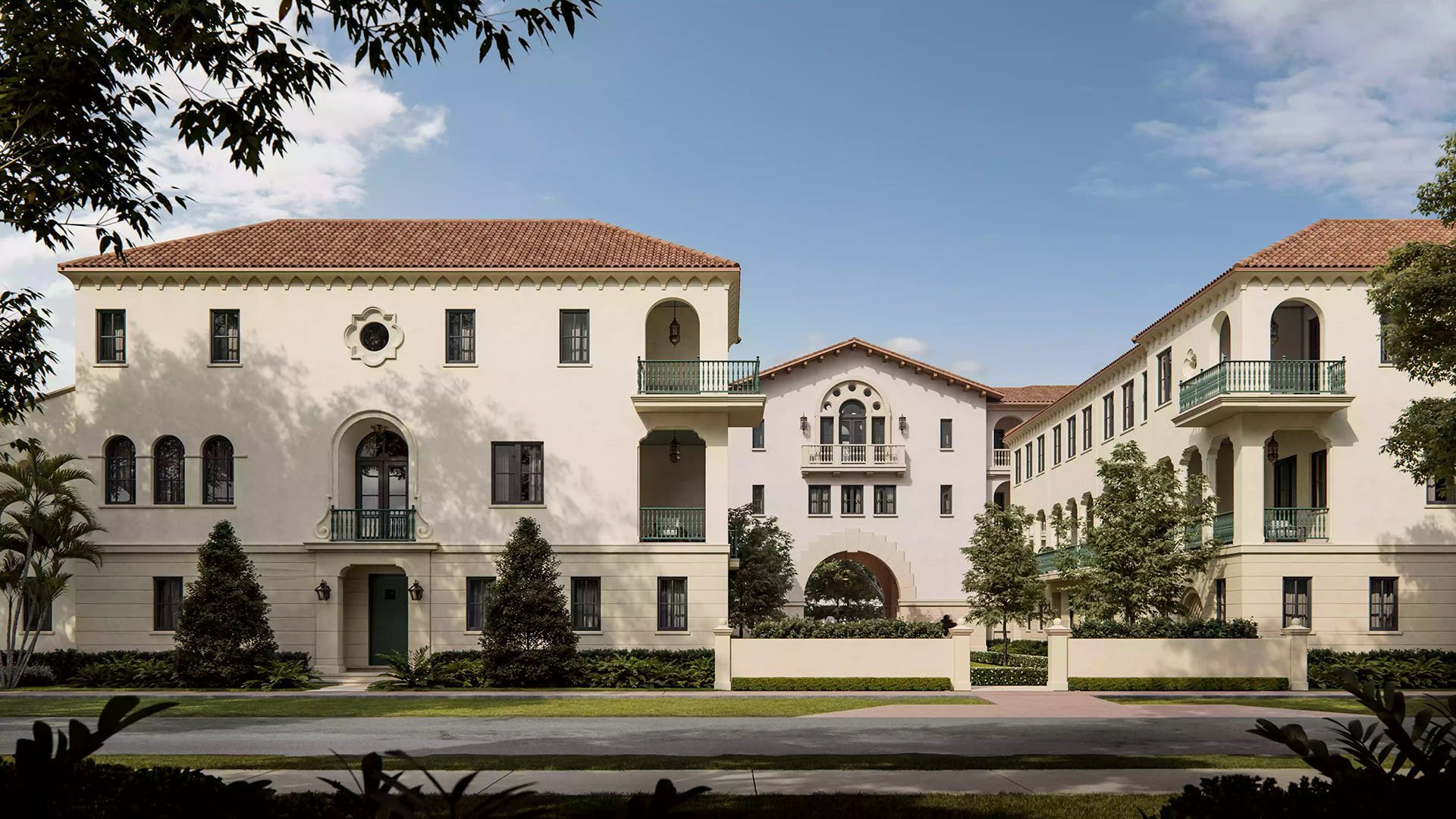
At The Village at Coral Gables, the appeal begins with scale and composition. The approximately 2.6-acre community at 535 Santander Avenue is planned as 48 residences distributed among multiple low-rise buildings and landscaped spaces. Its Mediterranean-inspired plan combines flats, townhomes and villas rather than following the familiar single-tower condominium model.
That distinction gives the purchase a particular character, but it also makes the association budget central to the value analysis. Shared expenses must be allocated across only 48 residences. Given that limited scale, a change in a fixed operating expense can have a noticeable per-unit impact, especially once owners assume control and test earlier assumptions against actual contracts and operating needs.
In a 48-residence community, the quality of the budget can matter as much as its headline assessment.
For buyers drawn to boutique, new-construction and pre-construction opportunities in Coral Gables, the first owner-controlled budget should be treated as a revealing financial document rather than a routine administrative update. It may show whether the initial maintenance benchmark anticipated the community's recurring obligations with sufficient depth.
Maintenance has been quoted at approximately $0.90 per square foot per month. That figure is the clearest published reference point for measuring the eventual owner-controlled assessment, but it should not be mistaken for a permanent, comprehensive or owner-approved budget.
The arithmetic is useful. At $0.90 per square foot, a 2,000-square-foot residence would imply approximately $1,800 per month, or $21,600 annually. Across the published interior-size range of roughly 1,698 to 3,246 square feet, the same calculation produces estimated monthly maintenance of about $1,528 to $2,921.
Those estimates help frame carrying costs for residences marketed with two to four bedrooms and pre-construction pricing of approximately $2 million to $3.8 million. Availability and asking prices can change before completion, however, and the assessment estimate remains only a benchmark until buyers can review the underlying line items.
A sophisticated comparison should therefore express any new assessment both in total monthly dollars and as an effective rate per square foot. This approach makes the magnitude of a post-turnover change easier to understand across residence sizes.
The most consequential question is not simply whether assessments rise or fall, but why they differ. The first budget adopted under owner control could clarify the expense assumptions, reserve contributions and funding arrangements behind the monthly figure.
Buyers should request the developer-era association budget and the first owner-controlled budget side by side. Each material variance deserves an explanation. A higher assessment could reflect expenses previously estimated differently, a change in reserve contributions or the end of a developer funding arrangement. A lower number would also merit scrutiny: the objective is not merely the smallest payment, but a credible plan for operating and preserving the property.
The available project details do not establish the contents of the declaration, reserve schedule, assessment guarantee, turnover audit or either budget. Once available, those documents should control the analysis. The published $0.90 figure can serve as a baseline, not a substitute for them.
This document-centered approach is equally useful when comparing the community with nearby options such as Cora Merrick Park and Ponce Park Coral Gables. The relevant comparison is not the assessment alone. Buyers should examine what each budget assumes, what it funds and how costs are distributed.
Construction reached its topping-off milestone in November 2024, when sales stood at approximately 60 percent. That percentage indicates that a material portion of inventory remained unsold at the time, but it does not establish completed closings, voting interests or the timing of association turnover.
Delivery estimates have also varied, ranging from 2025 or 2026 to completion by the end of 2025. A buyer should therefore verify delivery and turnover provisions directly in the purchase documents rather than treating marketing dates or sales percentages as controlling milestones.
The distinction matters because three events can occur on different schedules: construction completion, individual residence closings and transfer of association control. The first owner-controlled budget belongs to the governance timeline, not merely the construction calendar.
MG Developer is identified as the developer, with Torre Construction & Development included in the development team. The community secured a $67.5 million construction loan, while the overall venture cost was estimated in 2023 at close to $68 million. These figures provide development context, but they do not determine the association's future operating assessment.
Before committing, buyers can organize their review around a concise set of financial questions. First, identify exactly which expenses are included in the quoted maintenance figure and which obligations remain outside it. Second, obtain the line-item operating assumptions and determine whether any developer contribution, subsidy or guarantee affects the apparent assessment. Third, review reserve contributions separately from ordinary operations.
Next, compare the allocation method with the residence under consideration. A rate stated per square foot is helpful for preliminary planning, but the governing documents and adopted budget should establish the actual obligation. Buyers should also request written explanations of any variance between the developer-era and owner-controlled figures, together with the turnover audit when available.
Finally, stress-test the purchase beyond the promotional benchmark. A future assessment cannot yet be established, but a purchaser can model several carrying-cost scenarios and evaluate how each would affect annual ownership expenses. For a 2,000-square-foot residence, the starting benchmark is $21,600 per year. Any revised figure can be measured directly against that amount.
The same discipline applies across South Florida. Someone considering the low-rise character of The Village may also be studying Ziggurat Coconut Grove as part of a broader selection process. In either case, the documents and cost structure behind the design, location and lifestyle warrant close attention.
The first owner-controlled budget will not answer every question about long-term ownership, but it could provide the clearest early evidence of whether the published maintenance benchmark aligns with the community's actual financial requirements. In a limited collection of 48 residences, transparency around fixed costs, reserves and temporary funding arrangements is especially valuable.
The most informed purchase decision will pair the architectural proposition with document-level financial review. Buyers should preserve the $0.90-per-square-foot estimate as a reference, verify the applicable budget and turnover terms, and seek professional legal and financial guidance on the final materials.
For discreet guidance on South Florida luxury property, connect with MILLION.
If branded residences are on your mind — as a home or as an allocation — we would be glad to share what we are seeing, privately.
Begin a quiet conversationThe boutique community is planned with 48 residences across multiple low-rise buildings.
The residential mix includes flats, townhomes and villas with two to four bedrooms.
Marketing information quotes approximately $0.90 per square foot per month, but this is not a substitute for an adopted line-item budget.
At the published benchmark, estimated maintenance would be about $1,800 monthly or $21,600 annually.
Applying the benchmark to approximately 1,698 to 3,246 square feet gives an estimated range of about $1,528 to $2,921 per month.
With only 48 residences sharing expenses, changes in fixed costs may have a meaningful per-unit impact.
No. Sales, completed closings, voting interests and association turnover are not necessarily equivalent milestones.
A buyer should request the developer-era budget and first owner-controlled budget, then review material line-item differences.
Buyers should seek the declaration, reserve schedule, assessment guarantee, turnover audit and documentation of any developer funding arrangements when available.
No. It is a published marketing benchmark, not proof of a permanent or owner-approved assessment.