Aria Reserve Miami markets private wine lockers and watersports storage, but those amenities do not establish a residence-specific entitlement. Buyers should document allocation, exclusivity, and transfer terms before treating storage as part of a purchase.
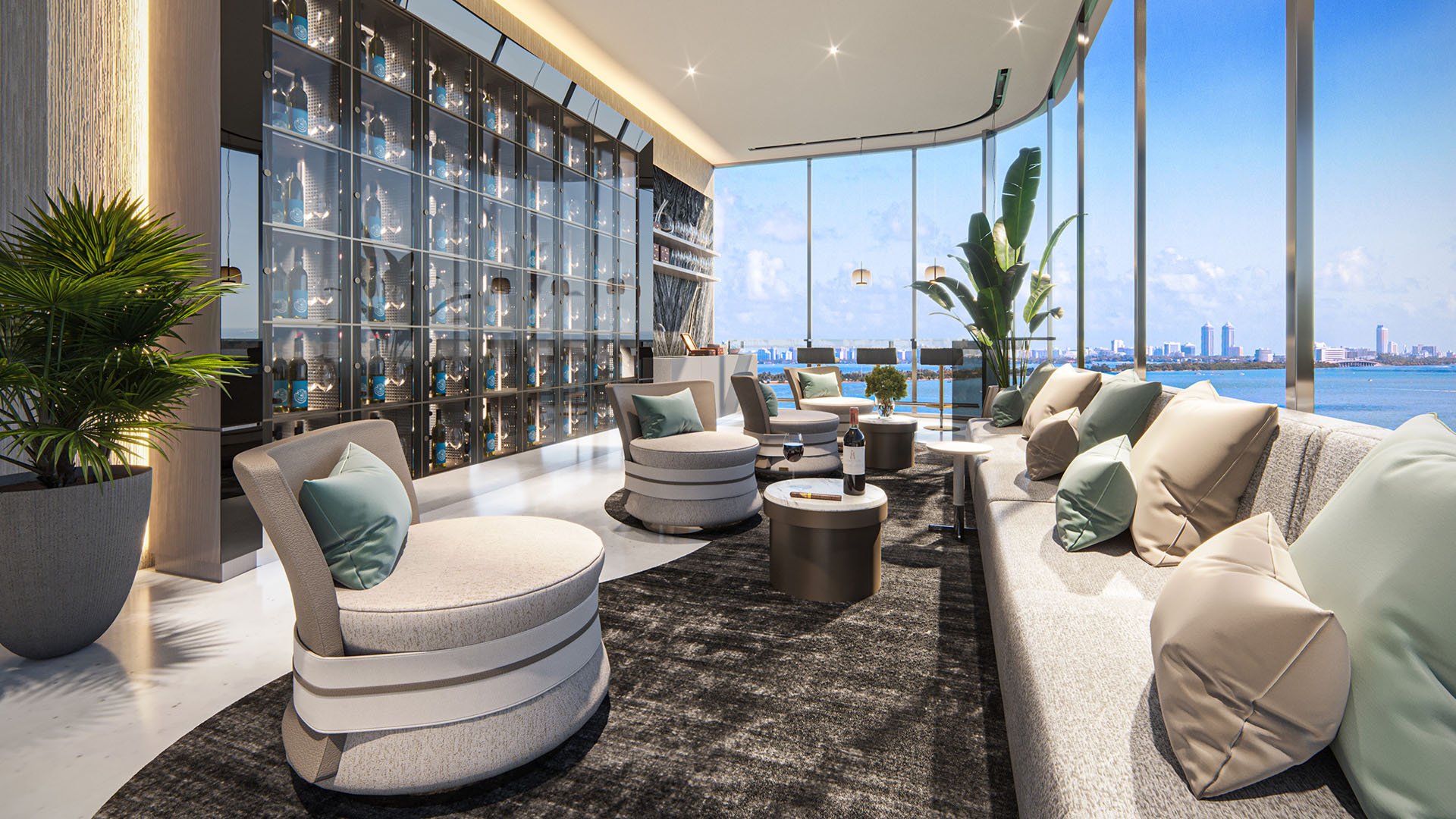
At Aria Reserve Miami, the purchase conversation extends beyond the residence to the practical luxuries of everyday living: a place for wine, space for equipment, and clarity about what remains yours after closing. The project is at 700 NE 24th Street in Miami’s Edgewater neighborhood.
The essential distinction is between a marketed amenity and a right attached to a particular residence. Publicly described wine facilities and watersports storage do not, on their own, establish who receives an allocation, whether use is exclusive, or whether the right passes to a subsequent purchaser. That does not mean such rights do not exist. It means buyers should establish them through the documents for the specific home.
A desirable amenity and a transferable purchase inclusion are not the same thing.
The marketed residents-only sky lobby includes a wine cellar room, lounge space, and business facilities. Wine-related descriptions have changed over time: the 2021 wording was “Private wine cellar room,” while the June 2023 description was “Wine Lounge With Private Wine Lockers.”
Those phrases are not interchangeable. Describing a room as private does not establish that an individual owner owns it. Nor does the presence of private lockers establish that every residence automatically receives one.
For a collector, the useful questions are precise. Does the proposed benefit provide access to a communal wine space, exclusive use of an identified locker, or another documented arrangement? Is it included in the purchase or subject to a separate agreement? What rules govern access and use?
The public descriptions do not resolve whether allocations depend on residence type, purchase inclusion, or an optional arrangement. Historical descriptions also do not confirm current operating rules. Request current written terms rather than assuming the most appealing interpretation applies to the home under consideration.
The marketed bay-level watersports marina includes kayak and paddleboard service and storage. That is a defined amenity category, not evidence of a general-purpose owner-storage entitlement.
Buyers planning to keep seasonal belongings, luggage, or household items outside the residence should ask separately about general owner storage. Publicly disclosed details do not establish a unit-specific allocation scheme for that category. Watersports storage cannot fill that gap.
For each proposed storage benefit, request written details of its intended use, location, capacity, access terms, and restrictions. These are diligence questions, not confirmed specifications. Keeping the categories separate prevents a broad statement such as “storage is included” from obscuring what is actually available.
The available public descriptions do not establish a separately defined valet-storage program. References to valet parking should not be read as evidence of a right to store personal belongings or equipment.
If a seller or sales representative uses the term “valet storage,” ask for a precise definition and the agreement that supports it. What is being stored? Who provides the service? Does the arrangement attach to the residence or to its current occupant? Can a purchaser continue it?
Until those questions are answered, treat the phrase as a claim requiring clarification, not a confirmed purchase inclusion. Convenience has value, but its scope should be explicit.
Start with the condominium declaration, the unit schedule, the purchase agreement, and any storage or wine-locker assignment relevant to the residence. Ask your real-estate attorney to reconcile the claimed inclusion with those documents and any applicable current rules.
For each space or locker represented as part of the purchase, build a written record covering five points:
The exact identifier and location of the space or locker.
The current holder of the right and the document establishing it.
The nature of the right, including whether it is deeded, licensed, assigned, or available for use.
Whether use is exclusive and what conditions, charges, or restrictions apply.
Whether the right transfers at closing and what steps, if any, are required.
These are possible legal and operational distinctions to investigate, not confirmed classifications at Aria Reserve. The public amenity descriptions do not resolve them.
If your search also includes EDITION Edgewater, apply the same document-first approach independently. Compare what each proposed purchase actually includes, not the similarity of its amenity language.
A seller’s statement that a locker or storage space “comes with the unit” requires verification. Evidence of the seller’s current use does not, by itself, establish whether a purchaser inherits the same right.
Publicly disclosed details do not establish automatic resale transferability or a specific transfer procedure for storage, wine lockers, or wine-room rights at Aria Reserve. Ask counsel to determine whether the relevant documents provide for transfer with the residence, require a separate assignment, call for consent, or describe another arrangement. Do not assume any one of those mechanisms applies.
If the benefit matters to your decision, have counsel address it expressly in the transaction documents. Identify what the seller is promising, what evidence supports that promise, and what must happen before or at closing.
Before closing, request written confirmation from the party authorized under the governing documents that the proposed transfer is recognized. A clear contractual promise and confirmation of the governing procedure answer different questions; both deserve attention.
For buyers who entertain frequently or spend only part of the year in Miami, well-defined storage can meaningfully influence a residence’s suitability. Its personal value, however, should not substitute for certainty about availability, duration, and transfer.
When weighing Aria Reserve against another candidate such as Villa Miami, distinguish shared amenity access from exclusive, documented rights. This is a comparison framework, not a claim that the projects offer equivalent storage arrangements.
The purchase standard is straightforward: identify the benefit, establish the right, confirm the holder, and document the transfer. Wine rooms, private wine lockers, watersports storage, general owner storage, and any claimed valet-storage service each require a separate answer. Once those answers are clear, the lifestyle proposition can be assessed with the same care as the residence itself.
For a considered approach to South Florida luxury property purchases, explore MILLION.
If branded residences are on your mind — as a home or as an allocation — we would be glad to share what we are seeing, privately.
Begin a quiet conversationThe project site is at 700 NE 24th Street, Miami, FL 33137, in Edgewater.
The marketed private wine lockers do not establish an automatic allocation to every residence. Buyers should confirm the inclusion for the specific home.
No individual room ownership is established by that description alone. Buyers should distinguish access to a wine room from exclusive rights to an identified space.
Public descriptions do not clearly establish whether allocations depend on unit type, purchase inclusion, or an optional arrangement.
Publicly disclosed details do not establish a unit-specific allocation scheme for general owner storage. Any claimed inclusion should be verified in the residence’s documents.
The marketed bay-level watersports marina includes kayak and paddleboard service and storage. That does not establish a general household-storage entitlement.
A separately defined valet-storage program is not established by the public descriptions. Valet-parking references should not be treated as proof of storage rights.
Public descriptions do not resolve whether individual rights are deeded, licensed, assigned, or simply available for use. The applicable documents must establish the arrangement.
Automatic transferability and a specific transfer procedure are not established by the public descriptions. Buyers should have counsel confirm the applicable terms before closing.
Request the condominium declaration, unit schedule, purchase agreement, and any relevant storage or wine-locker assignment. Obtain written confirmation of the identifier, rights holder, exclusivity, and transfer requirements.