For Seattle buyers moving to Sunny Isles Beach, a residence should support the household behind the lifestyle. Evaluate building services, staff access, delivery procedures, and domestic-employee insurance before committing to a property.

A move from Seattle to Sunny Isles Beach promises an appealing change of setting. The more consequential property decision, however, may be how well the residence accommodates the people and routines that make daily life effortless: a housekeeper arriving before breakfast, a chef receiving groceries, or a trusted manager supervising repairs while the owner is away.
Treat those routines as purchase criteria, not details to resolve after closing. A polished arrival experience does not, by itself, establish convenient staff access, suitable working space, or protection for a privately employed household team. The residence, building procedures, and employment arrangements need to work together.
Start with a written household brief: who will work in the home, when they will arrive, what they will handle, and who will supervise them. Use it to test each property against a realistic day, rather than an amenities presentation.
At St. Regis® Residences Sunny Isles, advertised offerings include 24/7 butler service, transportation coordination, restaurant reservations, and in-residence catering. Housekeeping, personal-chef services, and spa treatments are also advertised on an à-la-carte basis. These descriptions do not confirm current operations, guarantee availability, or establish inclusion in association fees.
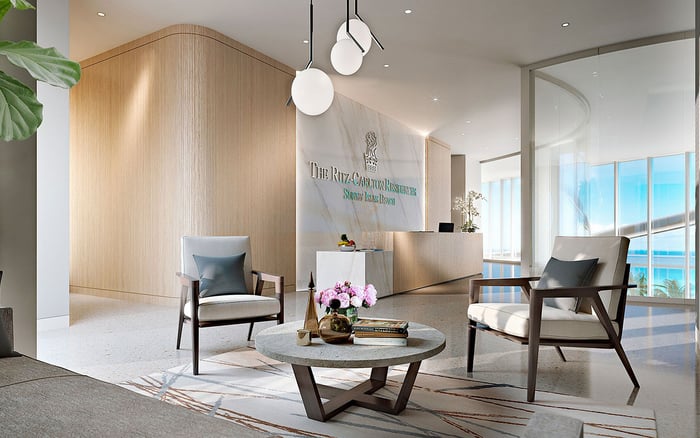
Similarly, The Ritz-Carlton Residences® Sunny Isles is marketed with a dedicated concierge team, in-residence dining, housekeeping, and valet services. For buyers, the essential questions concern scope, scheduling, charges, and responsibility-not simply whether a service appears on the menu.
Ask for a written distinction between common-area maintenance, services available inside the residence, and work reserved for private providers. Common-area housekeeping is not a promise to clean the apartment. Nor should concierge access be assumed to include supervising your employees or managing a recurring household schedule.
Then decide what remains private. A building-led arrangement might suit a household seeking occasional assistance, subject to confirmed availability. A dedicated housekeeper or chef requires a separate staffing plan. Outsourced estate management is another option to evaluate, particularly when vendor coordination matters more than daily attendance. In each case, identify who hires, directs, pays, and insures the people entering the home.
Service circulation is how employees, supplies, and maintenance personnel move through the property. It deserves the same scrutiny as the entertaining layout. A plan that photographs beautifully may still force awkward crossings between guests, groceries, cleaning equipment, and repair personnel.
When considering Jade Signature Sunny Isles Beach, apply that operational test rather than assuming a particular back-of-house arrangement. Request the actual residence plan and written building procedures. Verify any separate service elevators, secondary unit entrances, and segregated staff corridors for the specific property and unit under consideration.
Walk through three scenarios: morning housekeeping, preparation for a dinner party, and an appliance repair. Where does each person arrive? Where are supplies checked in? Which elevator may they use, and how do they enter the residence? Can work proceed without repeatedly interrupting private rooms or guest spaces?
Obtain written answers on loading access, employee registration, permitted working hours, parking, elevator reservations, and required insurance certificates. Inside the unit, assess cleaning-supply storage, laundry workflow, and food preparation space. If you contemplate live-in staffing, verify that the proposed accommodation and occupancy arrangements are permitted. A room label is not enough.
If Seattle remains part of the household's calendar, absence management should influence the purchase. Someone needs clear authority to admit vendors, receive deliveries, approve work, and communicate with building personnel.
Advertised services at St. Regis include on-site engineering and maintenance, package and mail handling, temporary grocery cold storage, and an owners' absentee program. Confirm availability and operating details in writing. Temporary storage is not the same as stocking the refrigerator, and an absentee program should not be assumed to cover every task of a private estate manager.
Request a handoff plan for deliveries and repairs. Establish who receives notice, who may authorize entry, what happens outside permitted hours, and who confirms completion. A defined chain of responsibility is more useful than overlapping promises of assistance.
Florida generally exempts domestic servants working in a private home from mandatory workers' compensation coverage. That exemption does not mean employee-injury protection is unnecessary. Voluntary workers' compensation coverage is available for Florida household employees; suitability and terms require individual review.
Before anyone starts work, ask an insurance adviser to distinguish three layers: the association's policy, the unit owner's coverage, and protection for private household employees. Do not assume that building insurance, a homeowners policy, or a personal umbrella responds to an employee injury or an employment-related claim.
Describe actual duties, schedules, and work locations, including any travel between residences. Ask the adviser to confirm current domestic-worker classifications, available voluntary compensation and employers liability provisions, exclusions, and policy wording. Historical classification references are no substitute for a current coverage determination.
For outsourced personnel, request evidence of insurance and clarify how the contract allocates responsibilities. A vendor's certificate and the building's access approval do not resolve every question about the owner's exposure. Have the insurance adviser and employment counsel review the arrangement together, particularly if the same person combines household work with other responsibilities. The objective is a deliberate coverage decision, not reliance on an exemption alone.
Florida's domestic-service workers' compensation exemption does not remove applicable federal household-employment tax obligations. Social Security, Medicare, and federal unemployment taxes may apply when the relevant thresholds are met. Applicable federal wage-and-hour rules also remain relevant.
For September 2026 planning, Florida's minimum wage is $14 an hour through September 29, rising to $15 on September 30. Confirm the applicable rate, exemptions, overtime treatment, and recordkeeping requirements with a qualified adviser before setting compensation.
If a Seattle employee will relocate or continue working across residences, commission a fresh employment and payroll review. Do not assume the existing arrangement transfers unchanged or infer a specific Washington-to-Florida legal contrast.
Before committing, assemble the residence plan, written service schedule and charges, building access procedures, staffing budget, and proposed insurance arrangements. Separate confirmed provisions from requests awaiting approval, then assign responsibility for each recurring task.
The strongest choice is not necessarily the property advertising the longest service menu. It is the residence where hospitality, household privacy, and private staffing can coexist with clear responsibilities and workable daily routines.
For a discreet property search shaped around your household's needs, connect with MILLION.
If branded residences are on your mind — as a home or as an allocation — we would be glad to share what we are seeing, privately.
Begin a quiet conversationIdentify each worker's duties, schedule, access needs, and supervisor. Use those details to evaluate the residence layout and building procedures.
Not necessarily. Common-area housekeeping and in-residence cleaning are distinct, so confirm the scope and charges in writing.
No. Confirm current availability, service terms, and inclusion in fees, especially for offerings advertised as à-la-carte.
No. Verify service elevators, secondary entrances, and staff corridors through the specific unit plan and written building procedures.
Request rules covering loading, deliveries, employee registration, permitted working hours, parking, elevator reservations, and insurance certificates.
Specify who receives deliveries, authorizes vendor entry, approves work, and confirms completion. Confirm the actual scope of any building absentee program.
Florida generally exempts this category from mandatory coverage. Confirm that the exemption applies to the actual employment arrangement with a qualified adviser.
Yes, voluntary coverage is available for Florida household employees. An insurance adviser should confirm suitable classifications, terms, and employers liability protection.
Do not assume it does. Have an adviser review employee-injury and employment-related exposures separately from association and unit-owner coverage.
No. Applicable federal household-employment taxes and wage-and-hour requirements remain relevant, and Florida's minimum wage increases from $14 to $15 on September 30, 2026.