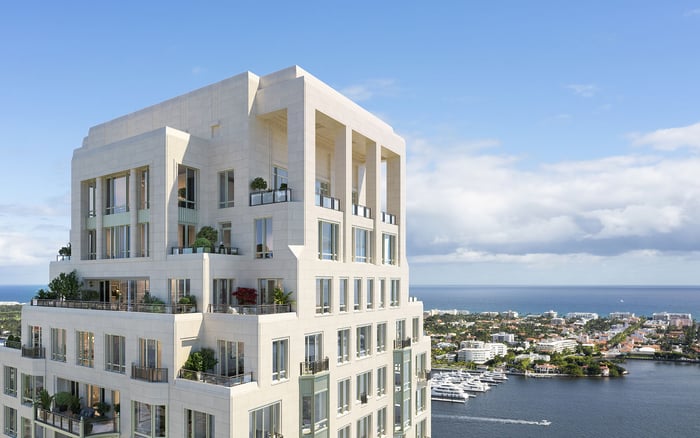
For a Melbourne buyer considering Palm Beach, the most revealing comparison is not purchase price alone. A disciplined decision recasts taxes, association charges, service expectations, gratuities, reserve growth, insurance exposure, and possible assessments into first-year and long-range ownership models.

For a Melbourne buyer, the Palm Beach property decision should begin with lifestyle and conclude with a rigorous ownership model. The acquisition price defines the initial capital commitment, but it does not reveal what the residence may require each year. Property taxes, association charges, reserve contributions, insurance, services, gratuities, and potential assessments all belong in the comparison.
This is particularly important when evaluating residences with different operating structures. A home at Palm Beach Residences should be assessed through its available budget, stated inclusions, and capital plan rather than assumptions drawn from another building. The same principle applies when comparing a Palm Beach address with West Palm Beach inventory across the water.
The right comparison converts recurring and foreseeable obligations into a consistent ownership model.
Apply the same worksheet to every candidate property. Begin with an informed property-tax estimate, then add regular association charges, separately billed services, expected gratuities, unit insurance, disclosed assessments, and a contingency for capital work that may not be fully covered by reserves. This creates a consistent annual figure and prevents a low monthly charge from dominating the decision.
Compare the scope of charges as carefully as the amount. Higher dues may support broader amenities, staffing, maintenance, or reserve funding. Lower dues may reflect a leaner operating structure, but the association documents should show whether maintenance and capital planning remain adequately addressed.
The worksheet should identify what is included, what is billed separately, and what may vary with use. It should also distinguish recurring obligations from discretionary spending so the buyer can see both the property's operating structure and the household's preferred lifestyle budget.
Do not treat a seller's historical tax bill as a dependable estimate of the buyer's future obligation. The analysis should instead reflect the contemplated acquisition, the property's location, and the buyer's intended occupancy, with qualified tax guidance where appropriate.
Primary-residence and second-home scenarios should not be treated as interchangeable. A Melbourne buyer planning a genuine move may have a different ownership profile from someone retaining the Palm Beach residence for seasonal use. The cost model should state the intended scenario clearly and avoid assuming that a prior owner's treatment will continue.
Tax timing also belongs in the cash-flow calendar. Rather than considering taxes only as an annual total, the buyer should confirm expected payment dates and plan liquidity alongside closing costs, association charges, insurance, and other early ownership obligations.
Full-service ownership can involve several overlapping categories. Association charges may cover some combination of common-area operations, maintenance, amenities, management, utilities, communications, or insurance-related expenses, but inclusions vary by property. Parking, club access, housekeeping, food and beverage, or other selected services may be handled separately.
This distinction is especially relevant when considering hospitality-led or highly serviced properties such as The Ritz-Carlton Residences® West Palm Beach. Brand positioning and amenity descriptions do not replace a written explanation of owner charges, optional services, or gratuity practices.
Request a clear schedule covering mandatory service charges, optional services, suggested or customary gratuities, billing frequency, and any staff-recognition program communicated to owners. For comparison purposes, keep mandatory charges separate from discretionary gratuities even when both form part of the expected lifestyle budget.
A written schedule also helps prevent double counting. If a service is already included in association charges, it should not appear again as a separate recurring line. Conversely, a service shown in marketing materials should not be assumed to be included without confirmation.
A reserve balance should be reviewed in relation to the building's anticipated capital obligations. The buyer should understand which major components are covered, when work may be expected, and whether the current funding approach appears aligned with the association's plans.
Request the current association budget, recent financial statements, available reserve materials, planned capital projects, disclosed assessments, and information about prior reserve decisions. Review the estimated timing of major work alongside the funds identified for it. The objective is not simply to find the lowest current fee, but to understand the visibility and possible volatility of future obligations.
For residences such as Forté on Flagler West Palm Beach and South Flagler House West Palm Beach, project category, age, and presentation should not substitute for property-specific documents. Each candidate requires its own review of the applicable operating budget, service schedule, and reserve structure.
The first-year schedule should separate recurring obligations from one-time or irregular items. Use distinct lines for property taxes, regular association charges, reserve contributions, disclosed assessments, mandatory services, discretionary gratuities, insurance, and a contingency for capital work. Confirm whether utilities, communications, parking, and club access sit inside or outside the regular charges.
Then extend the schedule into a long-range model. Allow for the possibility that dues, insurance, services, and reserve contributions may change rather than assuming they remain flat. Place disclosed capital events in the periods when they may occur, and test a less favorable scenario involving higher operating costs or an assessment.
This exercise is not a prediction for a particular building. It is a way to determine which ownership structure remains comfortable if costs differ from the buyer's preferred assumptions. It can also expose where further documentation or professional advice is needed before a decision is made.
The final choice should balance architecture, privacy, service, and location with cost transparency. A property with higher visible charges may still suit a buyer who values comprehensive services and clear capital planning. A lower-charge alternative may be equally compelling when its documents support confidence in maintenance and reserve discipline.
For tailored guidance on comparing Palm Beach residences with discretion and financial clarity, connect with MILLION.
If branded residences are on your mind — as a home or as an allocation — we would be glad to share what we are seeing, privately.
Begin a quiet conversationInclude estimated property taxes, association charges, reserve contributions, insurance, services, gratuities, disclosed assessments, and an appropriate contingency.
Purchase price reflects the initial capital commitment, while monthly dues reveal only part of the continuing ownership cost.
The buyer should obtain an estimate based on the contemplated acquisition, property location, and intended occupancy rather than relying solely on a prior bill.
A primary-residence scenario may differ from seasonal or second-home ownership, so the model should state the buyer's intended use clearly.
No. Inclusions vary by property, and buyers should request a written schedule showing what is included and billed separately.
Customary or suggested gratuities should be budgeted separately from mandatory service charges after written guidance is obtained.
Request the current budget, recent financial statements, available reserve materials, planned capital projects, disclosed assessments, and information about prior reserve decisions.
A reserve balance has limited meaning without context about the components, timing, and costs it is intended to address.
Separate recurring charges from closing-related, one-time, and irregular obligations so liquidity needs remain visible.
A long-range scenario tests whether ownership remains comfortable if operating costs, reserve contributions, or assessments differ from initial assumptions.